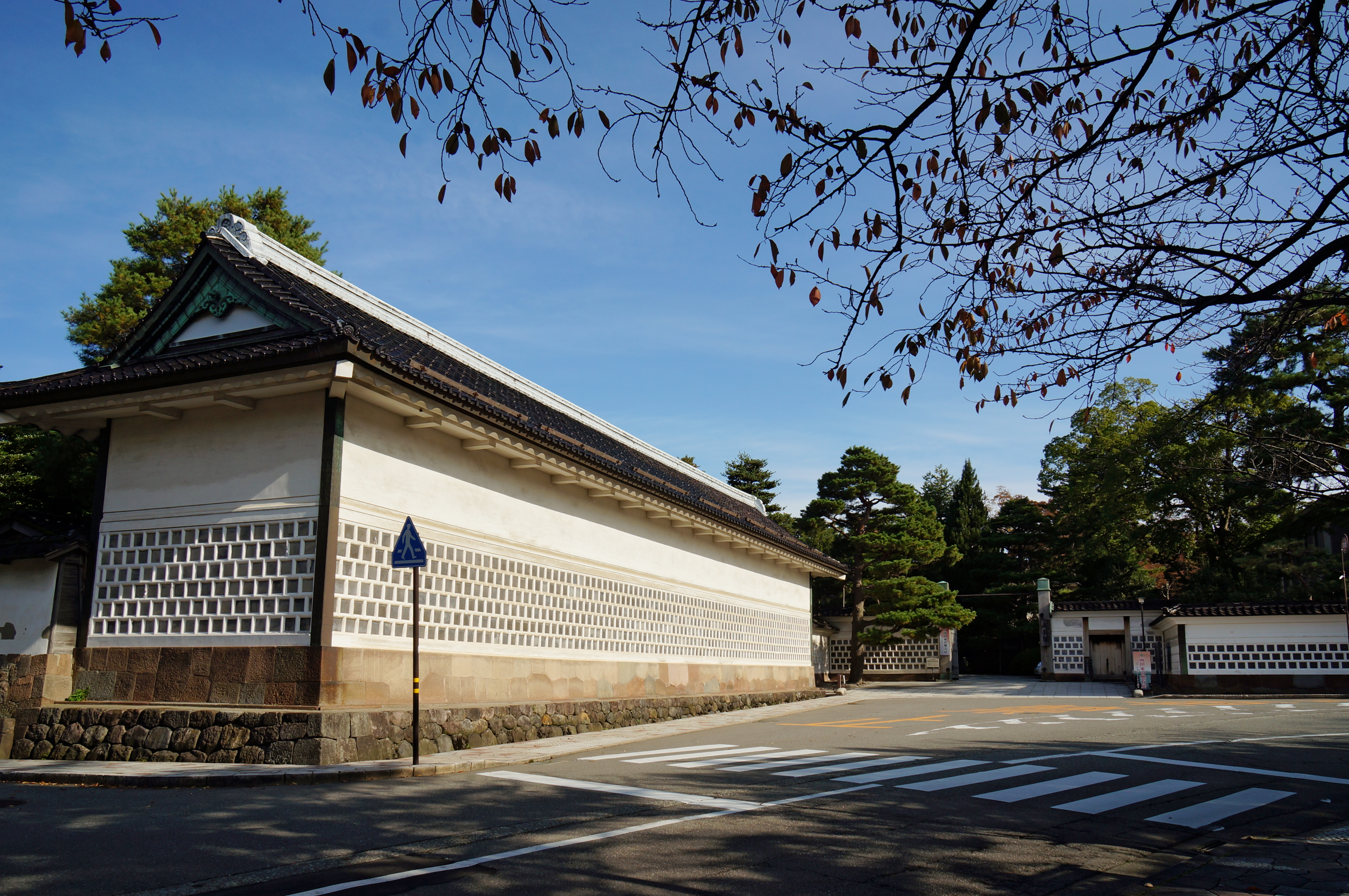
Seisonkaku
A 20-meter covered walkway stretches along the ground floor of Seisonkaku without a single supporting beam holding up its roof. The engineering secret is hidden inside the building: a cantilever extending 10 meters back into the structure, bearing the full weight of the roof from within. This was a Meiji-period architectural innovation built into a villa that otherwise breathes pure Edo-period refinement -- an early signal that the world outside Kanazawa was changing fast. Seisonkaku was completed in 1863 by Maeda Nariyasu, the thirteenth and last generation of Maeda lords to build something grand for the Kaga Domain. He built it not for himself, but for his mother, Shinryu-in. It stands today at the edge of Kenroku-en garden, one of the few buildings in Japan where you can see a daimyo family's personal possessions displayed in the rooms where they were actually used. Designated an Important Cultural Property of Japan, Seisonkaku is an intimate window into the private life of feudal power in its twilight years.
A Son's Gift at History's Edge
By 1863, the Tokugawa shogunate had ruled Japan for over 250 years, but cracks were spreading through the feudal order. Commodore Perry's Black Ships had arrived a decade earlier, and the political upheaval that would topple the shogunate in 1868 was already in motion. It was in this atmosphere of gathering change that Maeda Nariyasu, the thirteenth daimyo of the Kaga Domain, commissioned Seisonkaku as a retirement residence for his mother. The Maeda clan had been the second wealthiest in Japan for centuries, ruling from Kanazawa with an income measured at over a million koku of rice. Nariyasu was the same lord who had expanded Kenroku-en garden's Kasumi Pond and planted the famous Karasaki Pine. Building Seisonkaku at the garden's edge was his final act of family devotion -- a private palace nestled within a landscape that his ancestors had spent two hundred years perfecting.
Two Floors, Two Worlds
The ground floor of Seisonkaku is built in the formal shoin style that defined the residences of Japan's warrior aristocracy. A traditional covered walkway opens onto a small, exquisite garden. The formal guest chamber carries the restrained elegance expected of a daimyo household -- painted screens, sliding doors, and carefully proportioned rooms that communicate status through understatement. The first floor showcases extensive use of artwork integrated into the architecture itself, from painted fusuma screens to stained glass panels imported from the Netherlands. Then you climb to the second floor, and the mood shifts entirely. The upper level is decorated in the sukiya style, with bold reds, blues, and purples replacing the muted tones below. Some of the shoji screens feature glass panes, also imported from the Netherlands, that allowed Shinryu-in to watch snowfall in the garden without opening the screens and letting in the cold. It is a remarkably personal touch -- a building designed around the comfort and pleasure of one woman.
Where East Meets West Behind Closed Doors
Seisonkaku captures a specific moment in Japanese history when Western goods were filtering into elite households even as the country officially remained closed to most foreign trade. The Dutch glass panes in the shoji screens and the stained glass on the first floor were luxury imports arriving through the limited Dutch trading post at Nagasaki -- the only Western trading window the Tokugawa government permitted. These were not casual purchases. Each piece of glass traveled thousands of miles by ship, then overland across Japan to reach Kanazawa. Their presence in a private villa speaks to both the Maeda clan's extraordinary wealth and their curiosity about the world beyond Japan's borders. The colorful openwork carvings that ornament the upper floors show similar adventurousness, blending traditional Japanese craft techniques with decorative sensibilities that feel almost European in their exuberance. Seisonkaku is a building caught between eras, built with feudal resources but already reaching toward the modernity that would arrive within five years.
A Collection in Its Own Home
What makes Seisonkaku exceptional among Japan's historic buildings is not just its architecture but what remains inside. The villa displays the personal effects of the Maeda family in their original rooms -- a rarity in a country where most daimyo collections were scattered after the Meiji Restoration dissolved the feudal system in 1868. Walking through Seisonkaku, you encounter the objects of daily life for one of Japan's most powerful families: writing implements, personal accessories, ceremonial items, all positioned in the spaces where they were actually used. The garden visible through the walkway is itself designated a National Scenic Spot of Beauty, creating a layered experience where architecture, collection, and landscape are inseparable. Seisonkaku sits quietly at the edge of Kenroku-en, overshadowed by the garden's fame, but it offers something the garden cannot: a glimpse behind the walls, into the private world of the people who built one of Japan's greatest landscapes.
From the Air
Located at 36.561°N, 136.663°E at the southeast edge of Kenroku-en garden in central Kanazawa. The villa's traditional roofline is visible adjacent to the garden's tree canopy, near the distinctive red Akamon gate. Nearest airport is Komatsu Airport (RJNK), approximately 30 km southwest. The building sits in the cultural corridor between Kenroku-en and Kanazawa Castle. At 2,000-4,000 feet, look for the garden's green expanse and the villa's roof at its eastern margin.