Sekigahara: Japan's Gettysburg in a Valley of Rice Fields
There is a river in Sekigahara called Kurochigawa -- Black Blood River. The Tokugawa armies washed the severed heads of their enemies in its waters after the battle of October 21, 1600, though the grim name actually dates back further, to the Jinshin War of the seventh century, when an earlier generation of soldiers did the same thing in the same stream. The valley between the mountains has always been a bottleneck, a place where armies collide. On that autumn morning in 1600, Ishida Mitsunari's Western Alliance fielded 120,000 troops against Tokugawa Ieyasu's 75,000. Two hours later, after mass defections shattered the Western line, some 40,000 lay dead across the rice paddies. Sekigahara today is a town of just over 7,000 people. It is sister cities with Waterloo in Belgium and Gettysburg in the United States, and the comparison is precise: this is the field that decided who would rule Japan.
The Morning Everything Changed
The battle's outcome was decided by treachery as much as tactics. Tokugawa Ieyasu, representing the Eastern Alliance, was outnumbered nearly two to one. But he had spent months exploiting grievances among the daimyo aligned with Ishida Mitsunari, who fought on behalf of Toyotomi Hideyoshi's young son and heir, Hideyori. When the fog lifted on the morning of October 21, six daimyo commanding roughly 23,000 Western troops switched sides or refused to fight. The Western Alliance collapsed in approximately two hours. Ishida escaped the field but was captured and executed on November 6. The scale of destruction allowed Tokugawa to consolidate control of Japan within four months, as wavering or hostile daimyo fell in line or were crushed. The Edo Period had begun. The Tokugawa Shogunate would rule for the next 260 years, and every power arrangement in Japan -- who held which domain, who owed allegiance to whom, who prospered and who lost everything -- traced back to what happened on this ground.
Walking the Battlefield
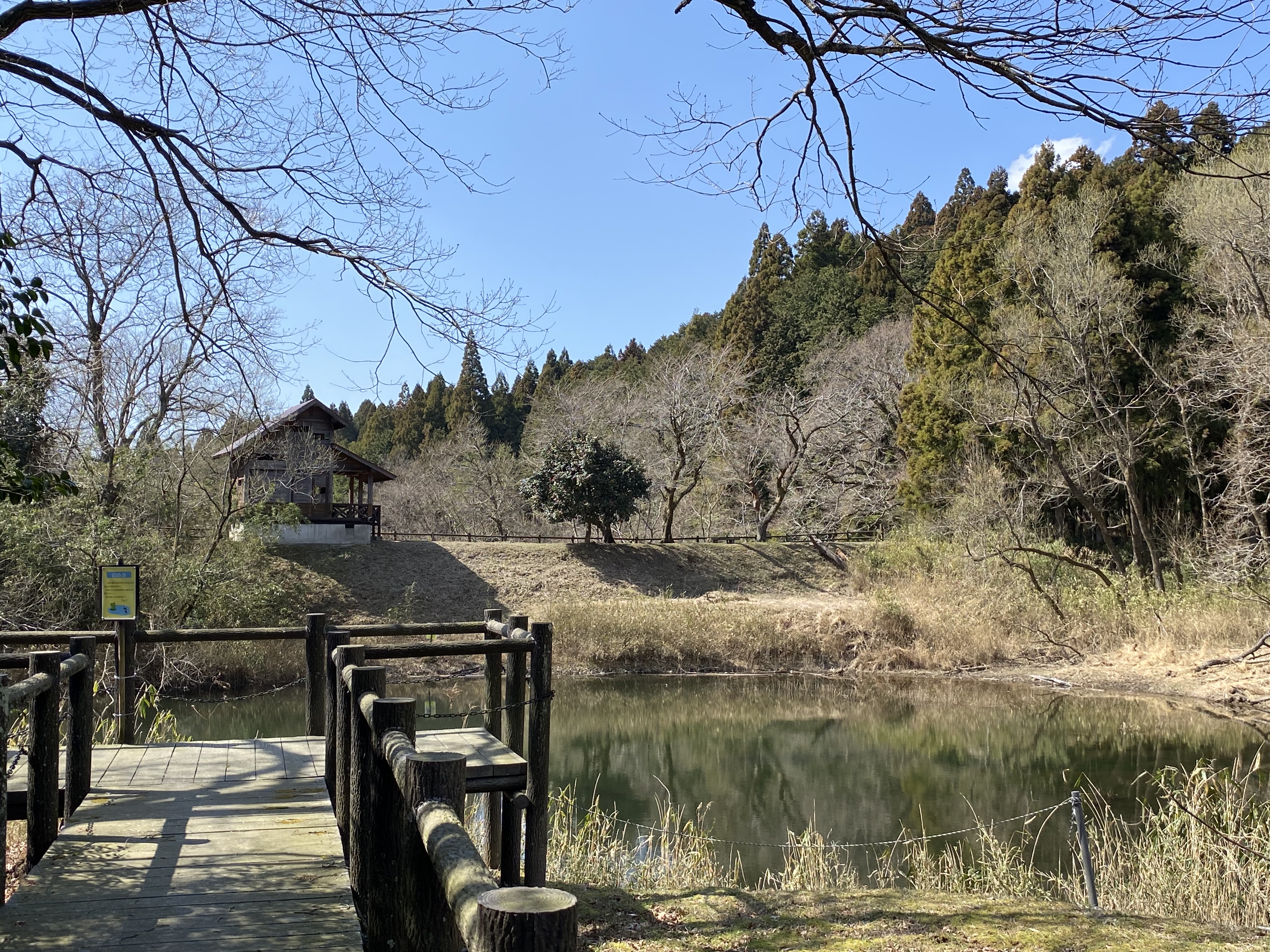
The entire battlefield can be traversed on foot in a day. Memorial posts -- jin-ato, marking the encampment sites of individual commanders -- are scattered across the valley, connected by well-marked paths that wind through rice fields, along small roads, and up forested hillsides. Each post includes historical markers explaining in Japanese and English how that particular commander's forces acted during the battle. The post at Shimadzu Yoshihiro's position, for instance, details his legendary fighting retreat straight through the Tokugawa lines. The Gifu Sekigahara Battlefield Memorial Museum anchors the experience, its tower adorned with the mon (crests) of both the Ishida and Tokugawa clans. Posters along the path from the station display information about each major commander and map the ideal walking route for visiting sites associated with that figure -- most routes take two hours or so. The paths are small roads shared with occasional cars, and some trails climb steep hillsides into forests where bears are present and insects are persistent.
A Valley Between Worlds
Sekigahara's location made it inevitable as a battlefield. The town sits in a narrow valley at the western edge of Gifu Prefecture, where the mountains squeeze the main overland routes between eastern and western Japan. The Nakasendo trail -- the great road connecting Edo to Kyoto through the mountainous interior -- ran directly through Sekigahara, and the town preserves two former post stations from that highway: Sekigahara-juku and Imasu-juku. The Tokaido Shinkansen passes through the valley today on its run from Osaka to Nagoya but does not stop -- travelers reach Sekigahara by transferring at Maibara, about 20 minutes west by local train. The small size of the town and the absence of large tour buses give the place a contemplative quality that the major tourist cities lack. This is rural Japan at its most accessible: bamboo forests, rice paddies, mountain trails, and the quiet weight of history pressing on every footpath.
Living Memory
Sekigahara leans into its identity. Each October, the Battle of Sekigahara Festival takes place on the closest weekend before the 21st, featuring a full reenactment of the battle complete with matchlock gun demonstrations -- Japan's answer to American Civil War reenactments. Souvenir shops sell shogi boards arranged like the Sekigahara battlefield, plastic katanas for visiting schoolchildren, and sake from local producers. NHK's 2023 year-long drama series about Tokugawa Ieyasu brought fresh investment, and new restaurants and cafes have opened near the station and across the battlefield. James Clavell's novel Shogun, thinly fictionalizing the rise of Ieyasu as "Toranaga," culminates in this battle, and the Emmy-winning 2024 television adaptation has drawn international attention. The classic samurai novel Musashi by Eiji Yoshikawa begins where Shogun ends, with the legendary swordsman fighting on the losing side at Sekigahara. For a town with no bars and one ryokan, Sekigahara casts a remarkably long shadow across literature, television, and the Japanese imagination.
From the Air
Located at 35.37°N, 136.47°E in a narrow mountain valley at the western edge of Gifu Prefecture. From altitude, Sekigahara appears as a small settlement of rice paddies and clustered buildings in a distinct valley gap between mountain ridges -- the geographic bottleneck that made it a natural battlefield. The Tokaido Shinkansen line is visible cutting through the valley. Best viewed at 3,000-5,000 feet AGL to appreciate the valley terrain and battlefield scale. Ogaki lies approximately 10 km to the east. Nearest airports include Gifu Air Base (RJNG) approximately 30 nm east and Chubu Centrair International Airport (RJGG) approximately 50 nm south-southeast. Lake Biwa is visible to the west beyond the mountain pass.