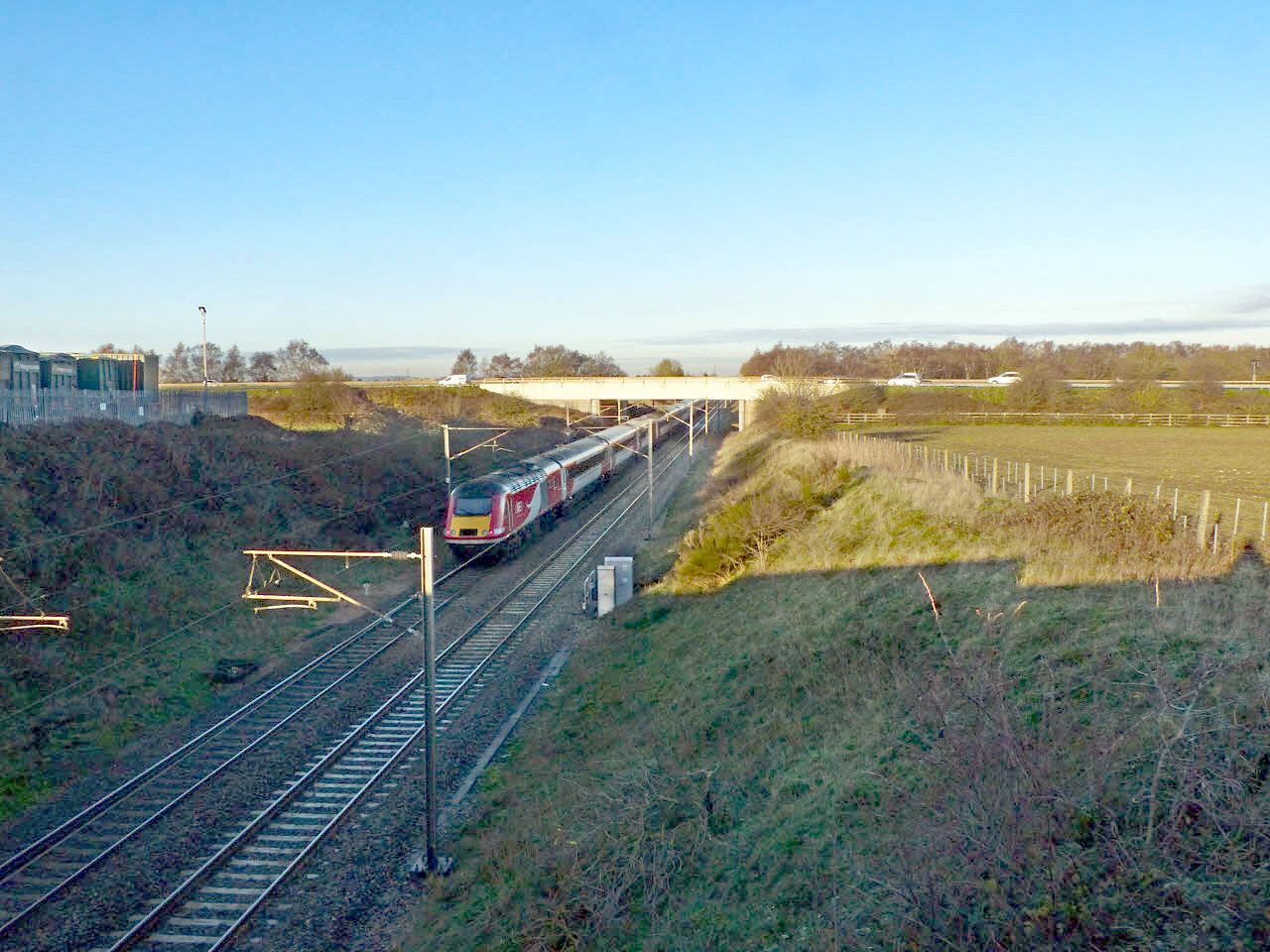
Selby Rail Crash
The M62 motorway crosses the East Coast Main Line on a bridge near Great Heck, just south of Selby in North Yorkshire. On the morning of 28 February 2001, the two worlds that usually pass above and below each other without consequence collided in the worst rail disaster of the 21st century in the United Kingdom.
A Sleep-Deprived Driver
Gary Hart had not slept properly. He had stayed up through the night talking on the telephone, and by the early morning hours of 28 February, he was driving his Land Rover westbound on the M62, towing a loaded trailer. At approximately 6:13 a.m., his vehicle left the motorway. The Land Rover crossed the hard shoulder and plunged down the embankment, coming to rest on the southbound track of the East Coast Main Line. Hart attempted to call the emergency services, but the sequence of events that followed unfolded too quickly for any intervention. A southbound GNER passenger train, the 04:45 from Newcastle to London King's Cross, was travelling at approximately 125 mph. The driver had almost no time to react before the train struck Hart's Land Rover.
Collision and Aftermath
The impact derailed the passenger train, pushing it onto the northbound track directly into the path of a Freightliner freight train carrying coal, which was travelling at about 54 mph. The collision between the two trains was devastating. The passenger train's leading coach was destroyed. Ten people lost their lives: the drivers of both trains and eight passengers. Eighty-two others were injured, many seriously. Emergency services faced a scene of tangled wreckage spread across the railway cutting. The rescue operation took hours, with firefighters cutting through steel to reach survivors trapped in the wreckage. Among the dead were people on their way to work, to meetings, to the ordinary business of an ordinary Wednesday morning. Their journeys ended in a cutting beside a stretch of motorway that, for a few critical seconds, had failed to contain one exhausted man's vehicle.
The Trial
Gary Hart was charged with causing death by dangerous driving. His defense argued that the Land Rover had suffered a mechanical failure, causing it to veer off the road. The prosecution contended that Hart had fallen asleep at the wheel due to severe sleep deprivation. The jury convicted him in December 2001. He was sentenced to five years' imprisonment. The case raised difficult questions about driver fatigue and the vulnerability of railway lines to incursion from adjacent roads. Investigators found that the stretch of the M62 where Hart left the carriageway had no barrier robust enough to prevent a vehicle from reaching the railway below. The crash prompted reviews of road and rail safety at similar locations across the country.
What Changed
In the years following the crash, barriers along motorway stretches adjacent to railway lines were reviewed and in many cases strengthened. The accident became a case study in the intersection of road and rail safety, two systems designed and regulated separately but physically intertwined at thousands of points across Britain. A memorial to the victims stands near the crash site. The East Coast Main Line, one of Britain's busiest railway corridors, runs through the flat agricultural land south of Selby much as it always has. Trains pass the spot at speed, their passengers largely unaware. The crash remains the worst rail disaster in 21st-century Britain, a reminder that catastrophe can originate not from within the railway system itself, but from the road running above it.
From the Air
Located at 53.73N, 1.05W near Great Heck, south of Selby in North Yorkshire. The crash site is where the M62 motorway crosses the East Coast Main Line. The flat agricultural landscape makes the motorway bridge and railway cutting visible from moderate altitude. Nearest airports: EGNM (Leeds Bradford) approximately 25 miles west; EGCN (Doncaster Sheffield) approximately 15 miles southeast. The Selby area is characterized by flat Vale of York terrain.