Selous Game Reserve
The man the reserve is named for is buried inside it. Frederick Courteney Selous, the most famous big-game hunter of the Victorian era and the real-life inspiration for H. Rider Haggard's Allan Quatermain, was killed by a German sniper on 4 January 1917 while fighting along the Rufiji River. He was 65 years old, still soldiering in the East African campaign of World War I. His grave sits beneath a tamarind tree in what is now the Selous Game Reserve, a protected area so vast it could swallow Switzerland twice over. At 54,600 square kilometers, it is the largest game reserve in Africa.
A Reserve Older Than Most Nations
The area's protection began under German colonial rule. In 1896, Hermann von Wissmann, the German Governor of Tanganyika, first designated the region as a protected area. It became a formal hunting reserve in 1905, and after the British took control following World War I, it was named for Selous in 1922. UNESCO inscribed it as a World Heritage Site in 1982, citing its extraordinary biodiversity and vast, undisturbed landscapes. In 2019, Tanzania's government split the reserve: the northern section became Nyerere National Park, named after Julius Nyerere, Tanzania's founding president. The remaining eastern portion retained the Selous name. The division reflected a shift in management philosophy -- Nyerere National Park is oriented toward photographic tourism, while the Selous portion continues to operate through licensed hunting concessions.
The Rufiji and Its Wild Margins
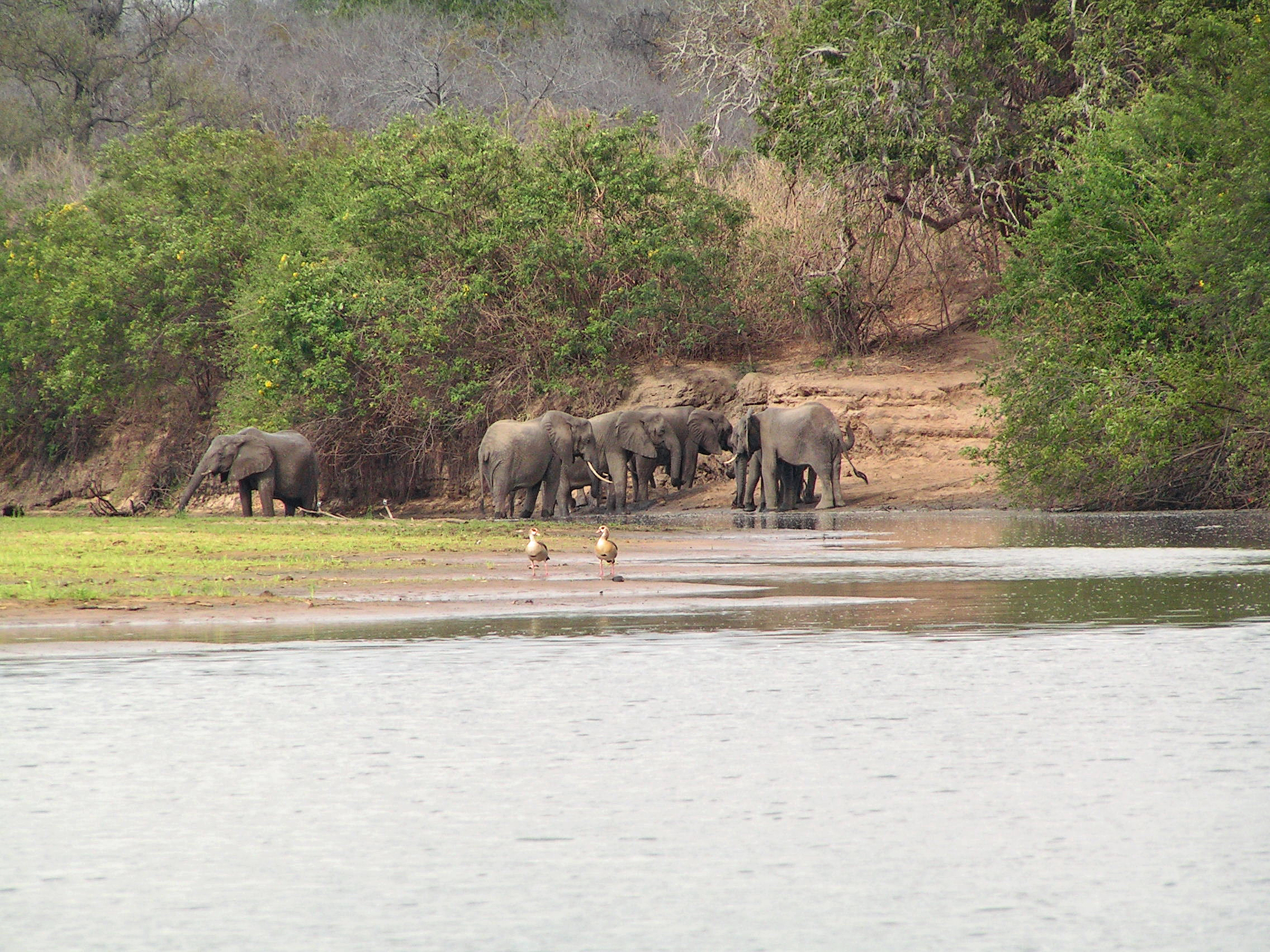
The Rufiji River is the reserve's spine. Africa's largest river system by discharge volume in East Africa, it braids through the northern section in a web of channels, oxbow lakes, and seasonal floodplains. Boat safaris along its course pass hippo pods, basking crocodiles, and elephants drinking at the water's edge. The habitats surrounding the river range from open grassland to dense miombo woodland -- the dry, deciduous forest type that dominates much of southern Tanzania. Acacia savanna fills the transitional zones, and wetlands appear wherever the river's seasonal floods deposit rich alluvial soil. This mosaic supports over 440 species of birds and populations of lion, leopard, wild dog, giraffe, buffalo, zebra, and wildebeest.
The Elephant Crisis
The reserve's elephant population tells one of conservation's most devastating modern stories. In 1976, an estimated 109,000 elephants roamed the Selous. By the 2010s, that number had collapsed to roughly 13,000 -- a decline of nearly 90 percent driven by industrial-scale poaching for ivory. Between 2006 and 2009 alone, approximately 31,500 elephants were killed. Tanzania was identified as the largest source of illegal ivory worldwide during this period, and the combination of organized criminal networks and corruption at multiple levels of government made enforcement nearly impossible. UNESCO placed the Selous on its List of World Heritage in Danger in 2014, a designation it has not shed. The crisis prompted international pressure and increased anti-poaching patrols, but the population has yet to recover to anything approaching its historical numbers.
Walking Where Others Drive
The Selous offers something rare among Tanzania's parks: walking safaris. Most Tanzanian national parks restrict visitors to vehicles, but here, accompanied by armed rangers, visitors can traverse the bush on foot -- tracking animals by spoor, listening for alarm calls, reading the landscape the way its earliest human inhabitants did. The experience is visceral in a way that vehicle-based game drives cannot replicate. Every rustle in the grass carries weight. Game drives and boat safaris on the Rufiji round out the options, with sunset boat trips along the river considered among the finest wildlife-viewing experiences in East Africa. The remoteness is part of the appeal: the six-hour drive from Dar es Salaam, with bush roads for the final hundred kilometers, deters casual visitors. Most guests arrive by small aircraft at one of several bush airstrips.
Maji Moto and the Sundowner Hour
At Maji Moto -- Swahili for "hot water" -- natural hot springs bubble up from the earth, warm enough to swim in the lower pools. The springs sit amid the bush, a surreal luxury in a landscape defined by wildness and scale. As afternoon softens into evening, the lodges and tented camps along the Rufiji perform the reserve's daily ritual: sundowners on the riverbank, cold drinks in hand, the water turning amber as hippos begin their nightly emergence. It is a scene that has played out here, in various forms, for over a century -- since the days when Selous himself walked these riverbanks, rifle in hand, cataloging species with the meticulous eye of a naturalist even as he hunted them.
From the Air
Located at 9.00S, 37.40E in southeastern Tanzania. The reserve covers 54,600 square kilometers -- visible as a vast expanse of wilderness south of the Rufiji River. The Rufiji River system is clearly identifiable from altitude, braiding through the northern section. Several bush airstrips serve the reserve; most visitors fly in from Dar es Salaam (HTDA), approximately 230 km to the northeast. Julius Nyerere International Airport is the main gateway. Recommended viewing altitude 5,000-10,000 ft AGL to appreciate the reserve's enormous scale. The miombo woodland and savanna mosaic is distinctive from the air.