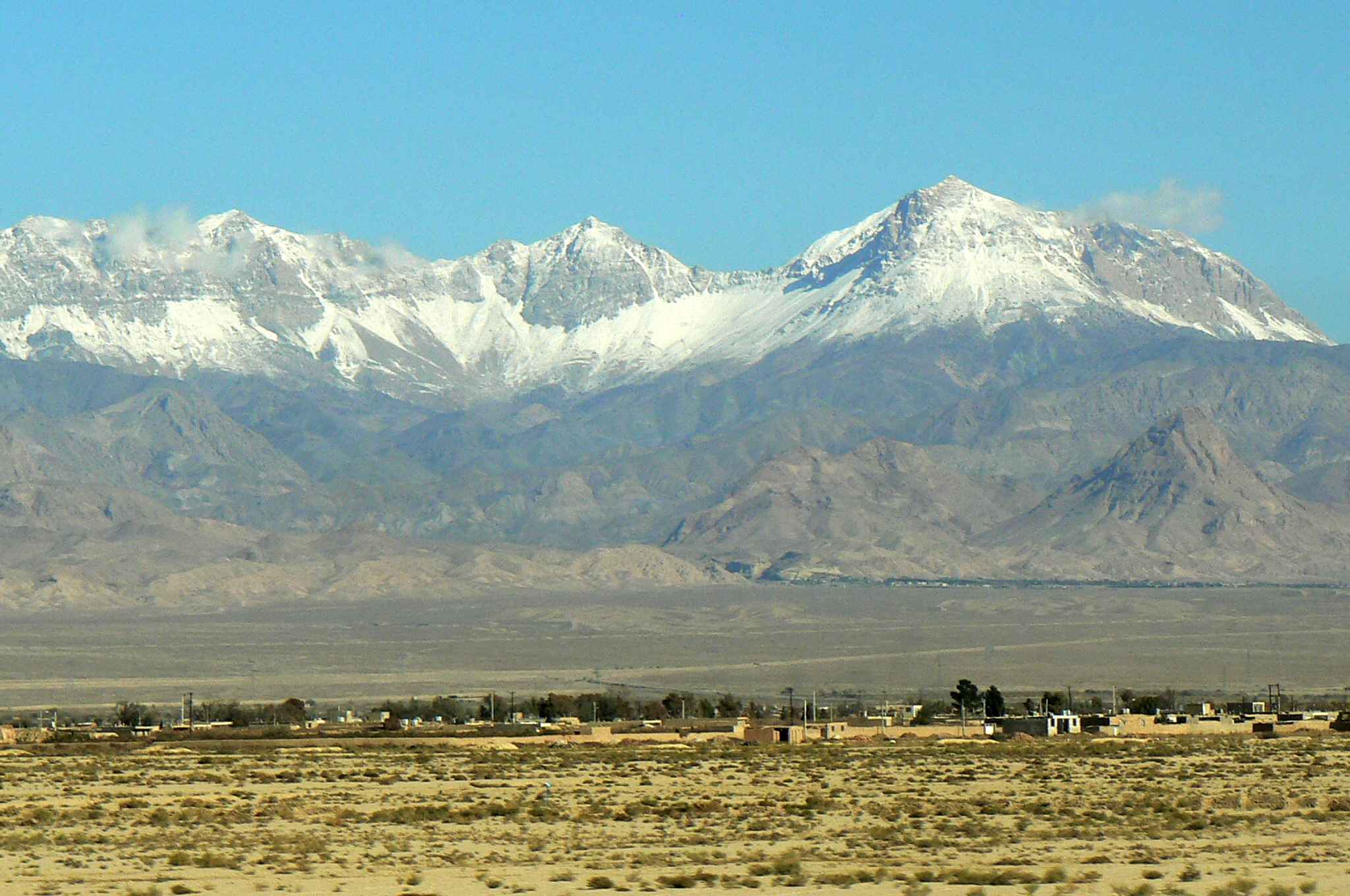
Semnan, Iran
There is an old proverb in Semnan that says a wife from this city can cook a different dish for every night of the year. The boast is extravagant, but so is the city's culinary ambition -- sour pomegranate extracts, fresh walnuts from Shahmirzad, a rotating cast of herbs the locals call sabzijat, all of it seasoned with a confidence that comes from sitting at a crossroads of civilizations for over two thousand years. Semnan is the provincial capital that Tehran overshadows and travelers overlook, a city of roughly 185,000 people wedged between the Alborz Mountains to the north and the vast Dasht-e Kavir salt desert to the south. But what it lacks in fame it compensates for in layers -- layers of faith, layers of engineering, layers of flavor.
Temples Beneath Mosques
The Jameh Mosque of Semnan stands near the city center, a structure built nearly a thousand years ago by the Seljuq Turks. Its most distinctive feature is the Seljuq-era minaret, carved with archaic geometric patterns that predate the Mongol invasions. But the mosque itself rests on something older still: the foundations of a Zoroastrian fire temple, a physical reminder that Semnan's spiritual history did not begin with Islam. The city's other mosques carry their own distinctions. The Imam Mosque, also called the Soltani Mosque, was built during the Qajar dynasty as a rare four-terrace structure. Its architects designed the complex so that every corner receives equal acoustic quality -- a worshiper standing anywhere in the building hears the imam's voice with the same clarity. The Imamzadeh Ali ibn Jafar Mosque, with its green domes and massive adobe dome, draws pilgrims for ziyarah. Each building testifies to a different era of Iranian architecture, compressed into a city small enough to walk across in an afternoon.
Engineering the Desert's Edge
Living on the rim of one of the world's most inhospitable salt deserts demanded ingenuity. Semnan's answer was the qanat, an ancient underground irrigation channel that taps water sources in the Alborz foothills and carries them to the city through gently sloping tunnels, sometimes running for kilometers beneath the surface. These qanats predate modern plumbing by centuries. Above ground, the city's rooftops bristle with badgirs -- windcatchers that funnel breezes down into buildings and, more crucially, into cisterns of drinking water called ab anbars. The system is elegant in its simplicity: wind enters the tower, descends over the cool water reservoir, and circulates chilled air through the structure. Together, qanats and badgirs allowed Semnan to prosper in a climate where summer temperatures routinely exceed 40 degrees Celsius. The southwestern quarter of the city demonstrates what all that water made possible. The Interior Gardens, known locally as Baghat Dakhil Shahr, blanket an entire section of the municipality in walnut and pomegranate trees, threaded with irrigation creeks and dotted with traditional adobe homes.
The Silk Road's Memory
Semnan's position on the Silk Road shaped its economy for centuries. Caravanserais from the route's active era still stand in the surrounding countryside, their thick walls and arched courtyards built to shelter merchants on the long journey between Tehran and Mashhad. Textiles and carpets were once the city's defining industries, and handwoven rugs called glim -- made from naturally dyed wool in tribal patterns -- are still produced today. Modern Semnan has added industrial muscle to its mercantile heritage. The Iran Khodro plant produces 100,000 Samand automobiles per year, and the Oqab Afshan facility manufactures buses at a scale making it one of the largest such plants in Asia. The Golrudbar River, flowing south from the Alborz, still irrigates fields of eggplant, potato, cotton, and herbs around the city's edges.
Jinn, Black Flags, and Samanu
Semnan's customs carry the fingerprints of its particular history. The people have historically refused to wear black clothing for mourning -- a tradition rooted not in fashion but in defiance of the Abbasid Caliphate, which marched under black banners. Centuries later, the aversion persists as cultural memory. Superstition and faith intertwine among older generations. Caravans heading south toward Isfahan once avoided the Rig-e Jenn, the Dunes of the Jinn, where locals believed demonic spirits dwelled among shifting sands. The Nowrouz celebrations carry their own local character. Beginning in the month of Esfand, a figure called Hajji Firuz appears in the bazaars -- a man dressed in red, his face blackened with charcoal, riding a wooden horse decorated with textiles. He sings in Semnani, not Persian, congratulating passersby as the holiday approaches. Women gather to cook vast batches of samanu, a sweet wheat paste, as an offering for the poor.
A Language Under Pressure
Semnani is not Persian. It is a distinct Northwestern Iranian language with its own vocabulary, grammar, and literary traditions -- a language in which bread baked in an oven is called nun while bread made by other means is sodji. Short stories passed orally through generations form a rich literary tradition, including the tale of fronse sho vu rua, or The French King and the Cat. Poets like Zabihullah Andaliba and Rahim Me'marian have written verse in Semnani, capturing the rhythms of a language that predates the standardization of modern Persian. Yet the language faces pressure. Because Semnan Province contains many dialects, the provincial television station broadcasts entirely in Persian to avoid favoring the capital city's speech. The policy angers residents who see their language eroding with each generation. Semnan sits just 216 kilometers east of Tehran, close enough for a day trip but far enough to have preserved something Tehran lost long ago -- the intimate scale of a city where gardens outnumber skyscrapers and a thousand-year-old minaret still defines the skyline.
From the Air
Semnan is located at 35.58N, 53.38E in northern Iran, at the edge of the Dasht-e Kavir desert with the Alborz Mountains visible to the north. The city is served by Semnan Municipal Airport and New Semnan Airport. The nearest major hub is Tehran Imam Khomeini International Airport (OIIE), approximately 216 km to the west. From altitude, look for the contrast between the green irrigated gardens in the southwestern part of the city and the arid terrain stretching toward the desert. The Alborz range provides a dramatic northern horizon. Mehrabad Airport (OIII) handles Tehran's domestic flights.