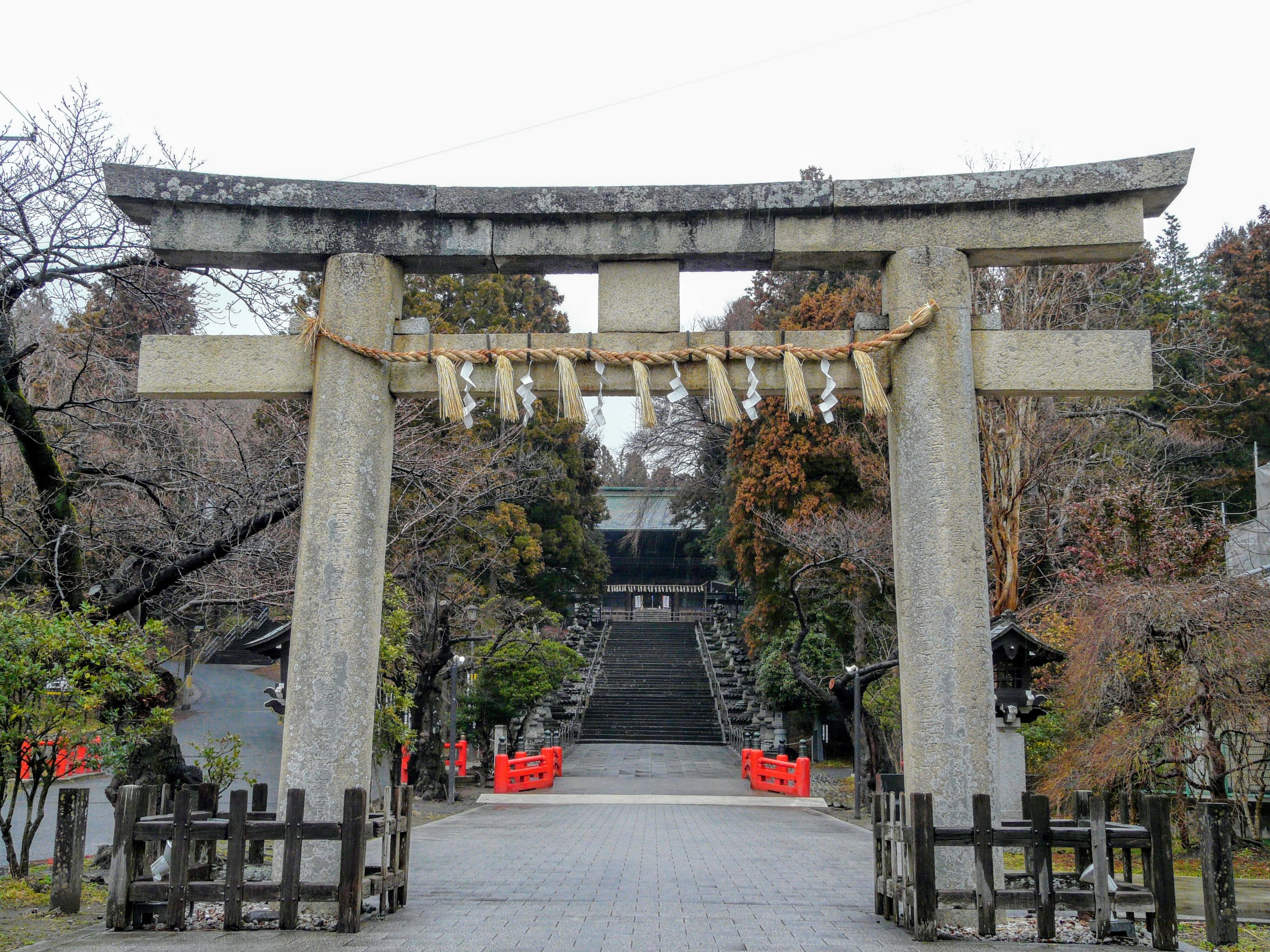
Sendai Toshogu
After a string of fires and floods devastated Sendai Domain following the death of its legendary founder Date Masamune, his son Date Tadamune looked to the heavens -- and to Edo -- for help. The Tokugawa shogunate provided financial assistance to rescue the domain from ruin. In return, Tadamune requested permission to build something extraordinary: a shrine to deify the man who had made the Tokugawa dynasty possible. Construction began in August 1649, and when the Sendai Toshogu was completed in March 1654, it stood as one of the most lavish Toshogu shrines outside the famous original at Nikko -- a monument to both spiritual devotion and political gratitude, decorated in gold leaf and clear lacquer, nestled among the cedars of northeast Sendai.
A Dynasty's Debt Made Sacred
The Toshogu shrines scattered across Japan all serve a single purpose: the veneration of Tokugawa Ieyasu, the warrior who unified the country and founded the shogunate that would rule for over 250 years. The most famous stands at Nikko in Tochigi Prefecture, but the Sendai Toshogu holds a special place in the network. Date Tadamune, the second daimyo of Sendai Domain, did not build it merely out of obligation. The shogunate had stepped in to stabilize his domain during a period of cascading natural disasters, and the shrine was Tadamune's way of making that gratitude permanent. It is said that 800,000 laborers worked across the five years of construction -- a staggering investment of human effort for a single religious complex in Japan's rural northeast.
Gold Leaf and Cedar Shadows
Five of the shrine's original buildings survive from 1654, and all five hold the designation of Important Cultural Properties of Japan, granted in 1953. The honden, or main sanctuary, is the spiritual heart of the complex -- the innermost chamber where the enshrined spirit of Ieyasu resides. The karamon, an ornate Chinese-style gate, and the sukibei, a delicate lattice fence, guard the approach to the honden. The zuijinmon, or guardian gate, stands further out along the processional path, flanked by carved warrior figures. The romon, a two-story tower gate, marks the formal entrance to the sacred precinct. Each structure is finished in clear lacquer and gold leaf, with shippo metal fittings -- a style of cloisonne-like ornamental metalwork -- adding intricate detail to surfaces that catch the filtered light beneath the surrounding cedar canopy.
Closed, Reopened, and Ranked
The shrine served as the tutelary temple of the Date clan throughout the Edo period, a role that made it inseparable from the political identity of Sendai Domain. When the Tokugawa shogunate fell in 1868 and the Meiji government took power, the new authorities initially ordered the shrine closed -- a logical step, given that the entire Toshogu network celebrated the defeated regime. But the people of Sendai pushed back. Local demand forced the shrine to reopen, and under the State Shinto ranking system it was classified as a county shrine from 1879 to 1916, then elevated to a prefectural shrine from 1916 to 1946. That ranking system was abolished after World War II, but the shrine continues to operate as an active Shinto worship site, drawing visitors who come for both its religious significance and its architectural splendor.
Shaken but Standing
On March 11, 2011, the magnitude 9.0 Tohoku earthquake and tsunami struck the coast of Miyagi Prefecture with catastrophic force. Sendai, the prefectural capital, suffered enormous damage. At the Toshogu, the stone torii gate and several of the shrine's gates sustained damage -- a sobering reminder that even structures engineered to endure centuries remain vulnerable to the forces that have shaped this earthquake-prone landscape for millennia. The repairs that followed were carried out with the same care that had gone into the original construction, restoring the shrine to its role as one of Sendai's most important historical and spiritual landmarks. Today, visitors pass through the repaired torii beneath towering cedars, walking the same processional path that Date Tadamune envisioned nearly four centuries ago.
From the Air
Located at 38.280N, 140.885E in northeast Sendai, set within a forested hillside area. The shrine precinct is identifiable from above by its dense cedar canopy and the clearing of the main compound among the trees. Sendai Airport (RJSS) lies approximately 12 nautical miles to the south-southeast. The shrine is roughly 2 km northeast of Aoba Castle ruins, and both sites are connected to the Date clan history of the city. Best viewed at 3,000-5,000 feet, where the forested shrine grounds contrast with the surrounding urban neighborhood. The Hirose River is visible to the south and west.