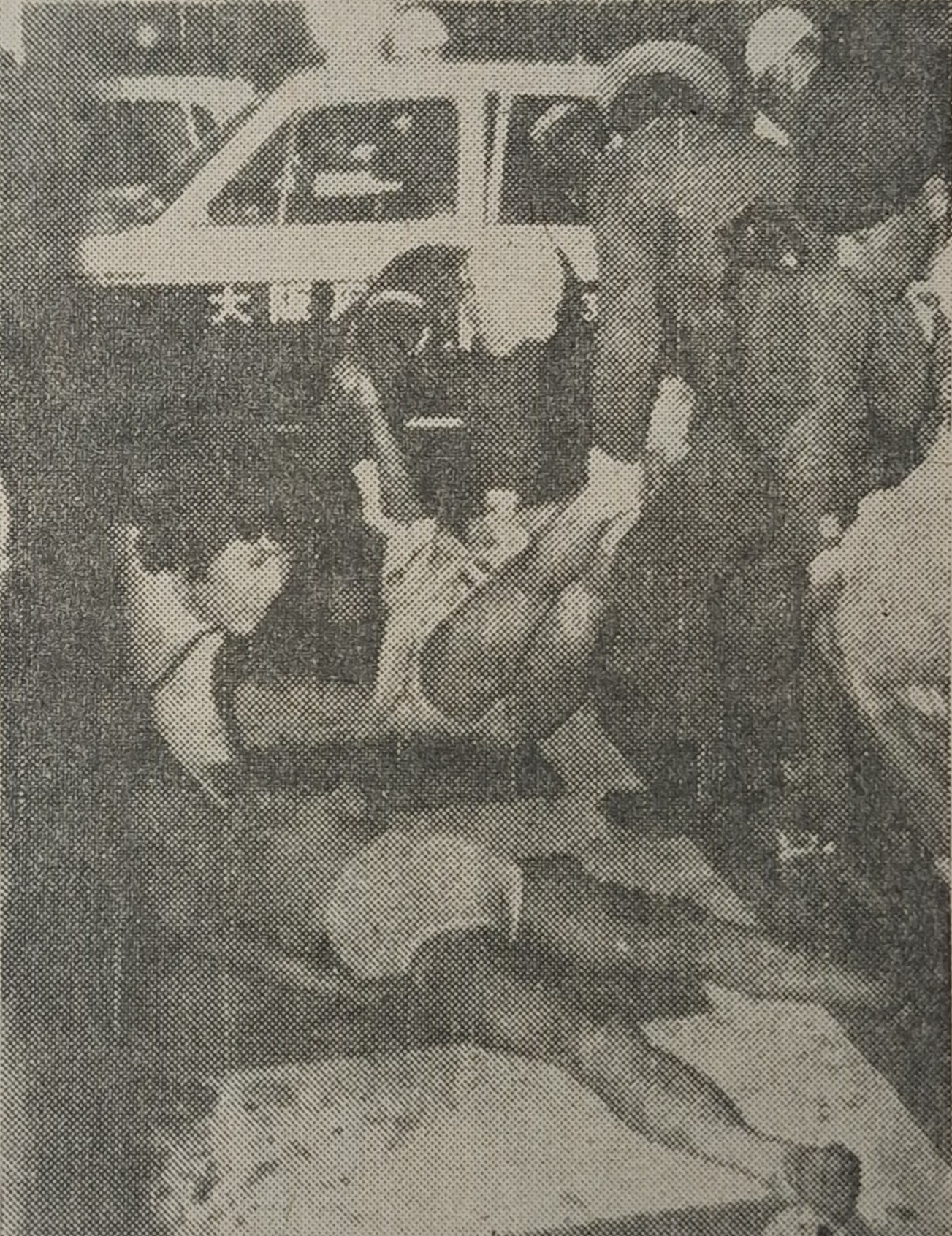
Sennichi Department Store Building Fire
When firefighters finally reached the seventh floor of the Sennichi Department Store Building on the night of May 13, 1972, they found scenes frozen in time. A man sat on a sofa still holding his glass of whisky. A singer on the cabaret stage gripped the microphone. There were no burn marks on these bodies. Carbon monoxide had moved faster than anyone's ability to react, turning a Saturday night at one of Osaka's most popular entertainment venues into Japan's deadliest department store fire. One hundred and eighteen people died, and the tragedy exposed fatal gaps in a nation's building safety codes.
A Building of Many Masters
The Sennichi Department Store Building in the Sennichimae district of Minami-ku was not one business but many crammed under a single roof. The first two floors held shops run by the department store itself. Supermarkets occupied the third and fourth floors. The fifth floor offered discount goods, and the sixth housed game corners, with part of the floor under construction for conversion into a bowling alley. Underground sat a coffee house and a haunted-house showroom. But the building's crown jewel was on the seventh floor: Playtown, a cabaret operated by an affiliated company and one of the hottest nightspots in Osaka. This patchwork of tenants and administrators meant no single entity took full responsibility for fire safety. The building, which had originally been a Kabuki theater, lacked a fire sprinkler system entirely. Fire exit partitions were non-functional. The fire shutter was broken and not automatic. Regulations at the time of the building's construction had allowed every one of these deficiencies.
Ten Twenty-Seven
At 10:27 PM on that Saturday night, fire broke out on the third floor, where women's dresses hung on racks and electricians were doing construction work. A smoldering match or cigarette left by a worker is believed to have started it. Staff tried to fight the blaze immediately but failed. Critically, notification to the fire station was delayed by thirteen minutes. The Osaka Municipal Fire Department did not receive the call until 10:40 PM and began firefighting at 10:43. By then, the women's clothing had fed the flames through four floors, from the second to the fifth, and thick black smoke was pouring upward through the stairwell. Upstairs, the seventh-floor Playtown cabaret was packed to capacity with 181 patrons enjoying their Saturday night. Toxic gases from burning construction materials climbed the building faster than any alarm.
Trapped Above the Flames
When the fire severed the building's power cables, the elevators stopped. The cabaret's exits were locked. Mass panic set in. Playtown had canvas escape chutes as an emergency measure, but the equipment was unfamiliar and improperly deployed. The three cabaret workers who knew the building's layout fled through a stairwell unknown to most customers, offering no evacuation guidance to the patrons they left behind. Eyewitnesses on the streets below watched in horror as people broke windows, climbed onto ledges, and clung there waiting for firefighters who had not yet arrived. Many fell to their deaths. Twenty-four people jumped from windows. About twenty more died attempting to use an emergency escape chute that collapsed under the load. Ninety-six were found dead inside the cabaret itself. Of all the fatalities, ninety-three were killed by carbon monoxide poisoning. Three died from compression injuries, likely trampled in the chaos. About forty-nine people were rescued unharmed, while forty-two others suffered injuries, including twenty-seven firefighters.
Justice and Reform
Two officials from the Sennichi Department Store and two from the Playtown cabaret were indicted for occupational negligence resulting in fire and casualties. The trial dragged on for nearly two decades. On November 29, 1990, the three surviving defendants were found guilty. A department administrator received a suspended sentence of two years and six months; two cabaret personnel received suspended sentences of one year and six months. One defendant had died during the protracted proceedings. The fire, together with the 1973 Taiyo Department Store fire that killed more than one hundred people, forced sweeping amendments to Japan's construction and fire regulations. New codes addressed smoke containment, sprinkler requirements, and emergency evacuation standards designed to prevent toxic fumes from trapping people in multi-use buildings.
The Ghost Stories of Sennichimae
The Sennichi Department Store Building was demolished after the disaster. In its place today stands a branch of Bic Camera, one of Japan's largest electronics retail chains. But in a culture where the spirits of those who die suddenly or violently are believed to linger, the site has never fully escaped its past. Ghost stories about the 118 victims persist among Osakans, and the location remains one of the city's most recognized urban legends. The tales are part memorial and part cautionary reminder of a night when locked doors, broken shutters, and thirteen wasted minutes turned a crowded Saturday evening into catastrophe.
From the Air
Located at 34.667N, 135.503E in the Sennichimae district of Osaka's Chuo-ku ward. The former site is now a Bic Camera store in the dense Minami entertainment district, south of the Dotombori canal. Best viewed at low altitude. Nearest airports: Osaka Itami (RJOO), approximately 15 km north; Kansai International (RJBB), approximately 40 km south on a reclaimed island in Osaka Bay.