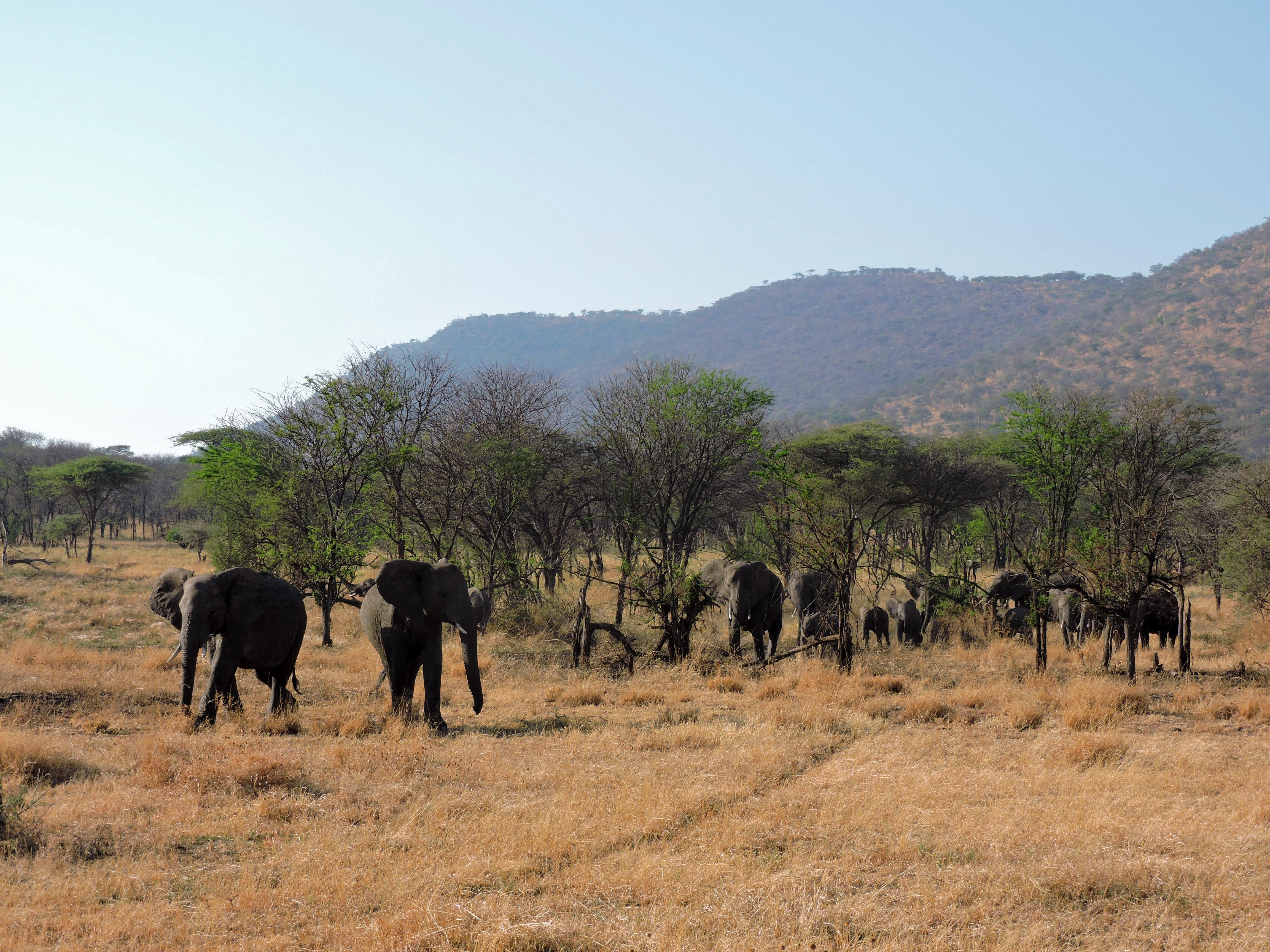
Serengeti National Park
The Maasai called it 'Siringet' - the endless plains - and the name captures the essence of what makes the Serengeti unlike anywhere else on Earth. This is the stage for the Great Migration, the largest movement of land mammals on the planet: 1.5 million wildebeest, 200,000 zebras, and countless gazelles following the rains in an eternal clockwise circuit across 30,000 square kilometers of savannah. No drought deters them, no crocodile-filled river stops them. The instinct to move is written in genes older than our species. Here, patterns of life, death, adaptation, and migration have continued essentially unchanged since early humans walked at Olduvai Gorge, two million years ago.
The Great Migration
The migration follows a rhythm set by rainfall. From December through May, the herds concentrate on the southern plains near Ndutu and the Ngorongoro Conservation Area, where nutrient-rich volcanic soils produce sweet grasses ideal for calving. In February, some 8,000 wildebeest calves are born daily - a feast for the predators that shadow the herds. As the dry season approaches, usually by June, the masses begin moving northwest toward the Western Corridor and the Grumeti River, where massive Nile crocodiles lie in wait at the crossings. By July and August, the migration reaches the northern Serengeti and spills into Kenya's Maasai Mara, crossing the even larger Mara River. By October, the short rains draw them south again, completing the circuit.
Predator Paradise
The Serengeti harbors the highest concentration of large predators in the world. Approximately 2,500 lions roam these plains - more than anywhere else on Earth - organized into prides that have been studied by scientists for over half a century. Cheetahs sprint across the short-grass plains, where flat terrain allows them to reach their full 110 km/h potential. Leopards hunt along the riverine forests and in the scattered kopjes - granite outcrops that rise from the plains like islands, providing shade and vantage points. Spotted hyenas, often dismissed as scavengers, are in fact efficient hunters here, pursuing prey in packs with remarkable coordination. Where prey is abundant, predators thrive, and the Serengeti provides abundance beyond measure.
Landscapes of Diversity
Though 'endless plains' captures the dominant impression, the Serengeti encompasses remarkable diversity. The southern region consists of the classic short-grass plains - volcanic soils from the Ngorongoro highlands create the nutrient-rich substrate that draws the migration. Central Serengeti around Seronera features acacia woodlands and kopjes, supporting permanent populations of leopards, elephants, and giraffes that don't participate in the migration. The Western Corridor follows the Grumeti River toward Lake Victoria, its riverine forests home to colobus monkeys and massive crocodiles. The northern woodlands, hillier and greener, remain productive through the dry season when the south turns parched. Each zone offers different wildlife experiences.
Ancient Ecosystem
The Serengeti ecosystem is among the oldest on Earth, its essential characteristics unchanged for at least a million years. The volcanic activity that created the Ngorongoro Crater also deposited the rich soils that make the southern plains so productive. Olduvai Gorge, where Louis and Mary Leakey discovered crucial early human fossils, lies at the ecosystem's southeastern edge - a reminder that our ancestors witnessed these same migrations, hunted these same animals, walked beneath these same acacias. Two World Heritage Sites and two Biosphere Reserves now protect the region, though the ecosystem extends well beyond park boundaries into conservation areas, community lands, and Kenya's Maasai Mara, all interconnected by the migration routes.
Safari Practicalities
Over 300,000 visitors experience the Serengeti annually, yet the park's vastness - 14,750 square kilometers - means encounters with other vehicles remain rare outside Seronera's central circuit. Most arrive via small aircraft from Arusha to airstrips throughout the park, though overland journeys through Ngorongoro offer spectacular approaches. Accommodation ranges from luxury lodges with swimming pools overlooking the plains to mobile tented camps that follow the migration, to basic public campsites for the budget-conscious. The dry season from June through October offers the best wildlife viewing, with animals concentrated around water sources and the migration in the northern reaches. But any month brings extraordinary sightings on these endless plains.
From the Air
Located at 2.33°S, 34.57°E in northern Tanzania. The Serengeti appears from altitude as vast golden-brown plains dotted with kopje outcrops and traversed by the Grumeti and Mara rivers. The southern boundary near Ngorongoro shows the transition from volcanic highlands to plains. Several airstrips are visible: Seronera in the center, Kirawira in the Western Corridor, Lobo in the north. Kilimanjaro International Airport (JRO) lies 325km to the east. The park is contiguous with Kenya's Maasai Mara to the north, with the border invisible from the air.