Serra da Bodoquena National Park
The water is so clear it seems to vanish. Swimmers floating down the Rio Sucuri in Serra da Bodoquena National Park report the uncanny sensation of hovering in midair, their bodies suspended above beds of aquatic plants that ripple in currents visible only by the swaying of green fronds. This optical trick is no illusion -- the rivers born in these forested hills of Mato Grosso do Sul carry some of the most transparent freshwater on the planet, filtered through layers of limestone before emerging as springs that feed rushing streams and waterfalls across 77,000 hectares of protected wilderness.
Where the Cerrado Meets the Pantanal
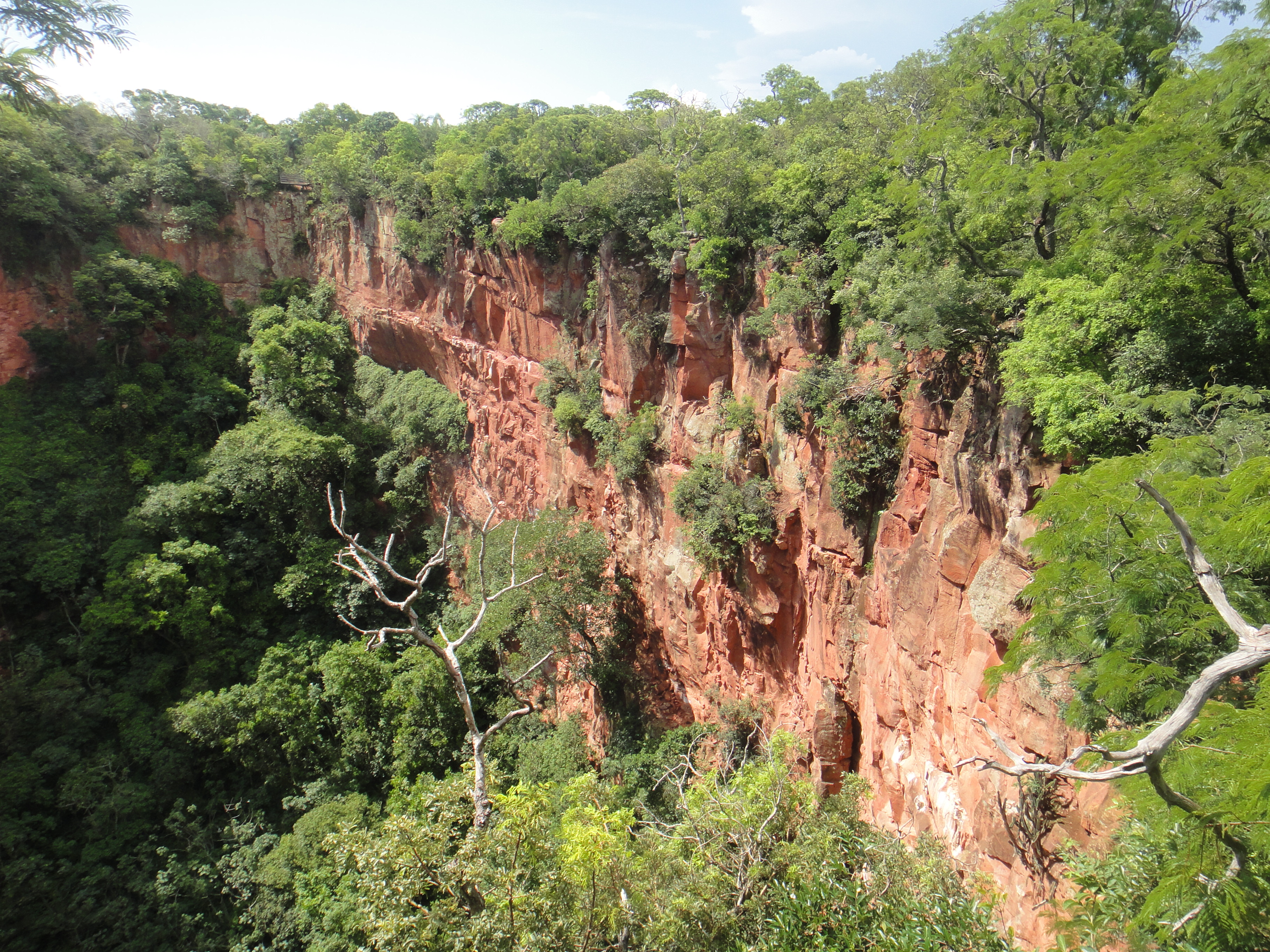
Serra da Bodoquena sits at an ecological crossroads. To the east lies the Pantanal, the world's largest tropical wetland, while the park itself preserves the cerrado -- a tropical savanna ecosystem that ranks among the most biodiverse on Earth yet receives a fraction of the attention given to the Amazon. The landscape here is anything but flat grassland. Forested hills give way to deep karst canyons where limestone has been dissolving for millennia, creating caves, sinkholes, and sheer cliffs that drop into river gorges. The Boca da Onca sinkhole plunges nearly 90 meters, its walls draped in vegetation and mist from the waterfall that tumbles into its depths. Together with several neighboring parks and wildlife sanctuaries, Serra da Bodoquena forms part of the Pantanal Biosphere Reserve, a vast corridor of interconnected habitats that allows wildlife to move freely across a landscape still largely intact.
The Macaw's Sinkhole
The park's most otherworldly feature may be the Buraco das Araras -- the Macaws' Hole -- a gaping sinkhole roughly 100 meters deep where the earth simply collapsed into the caverns below. Rather than becoming a barren pit, the sinkhole transformed into an amphitheater of life. Red-and-green macaws nest in crevices along its vertical walls, their raucous calls echoing upward. Toucans perch on ledges. Capuchin monkeys scramble along exposed roots. The sinkhole's microclimate, sheltered from wind and bathed in humidity rising from the water below, supports vegetation distinct from the surrounding cerrado. Standing at the rim and looking down into this natural arena, visitors witness an ecosystem that exists nowhere else -- a vertical world governed by its own rules of light, moisture, and gravity.
Teeth and Claws in the Understory
More than 200 bird species inhabit the park, from flocks of parakeets that streak across the canopy in flashes of green to the quieter residents of the forest floor. But the cerrado's most formidable inhabitants are its large cats. Jaguars patrol the river corridors, drawn by the abundant capybaras and caimans. Pumas, locally threatened but still present, hunt in the drier uplands. The park also shelters more than 50 mammal species, including tapirs, giant anteaters, and maned wolves. In the rivers themselves, a different kind of rarity persists: the catfish Ancistrus formoso, found only in the cave systems of this region, navigating subterranean waterways that have never seen sunlight. Created in September 2000 and managed by Brazil's Chico Mendes Institute for Biodiversity Conservation, the park protects not just charismatic megafauna but an entire web of life, from blind cave fish to the canopy-dwelling primates above.
Trails Through Living Stone
The park rewards those willing to walk. The Salabra River Canyon Trail stretches 7.5 kilometers along a gorge where turquoise water slides over polished rock. At Boca da Onca Falls, hikers descend on ropes for a 90-meter rappel alongside the cascade -- an experience that places the human body inside the waterfall's vertical geography. The Santa Maria River Trail and Poco Encantado Trail wind through forest where the air is heavy with moisture and the sound of moving water is constant. For those drawn underground, the Sumidouro and Resurgence Trail follows a river as it disappears into a cave system and re-emerges downstream, demonstrating the porous karst geology that gives the park its character. The nearest gateway town, Bodoquena, sits about 260 kilometers from Campo Grande, the state capital -- a three-and-a-half-hour drive that trades urban sprawl for increasingly wild terrain.
From the Air
Located at 21.06S, 56.69W in southwestern Mato Grosso do Sul, Brazil, at the western edge of the Pantanal region. The forested hills of the Serra da Bodoquena are visible as a green ridge rising from the surrounding lowlands. Best viewed at 3,000-5,000 feet AGL. Nearest airports: Campo Grande (SBCG) at 260 km east, and Bonito regional airport. The karst sinkholes and canyon systems are distinctive features visible from moderate altitude.