Sevagram
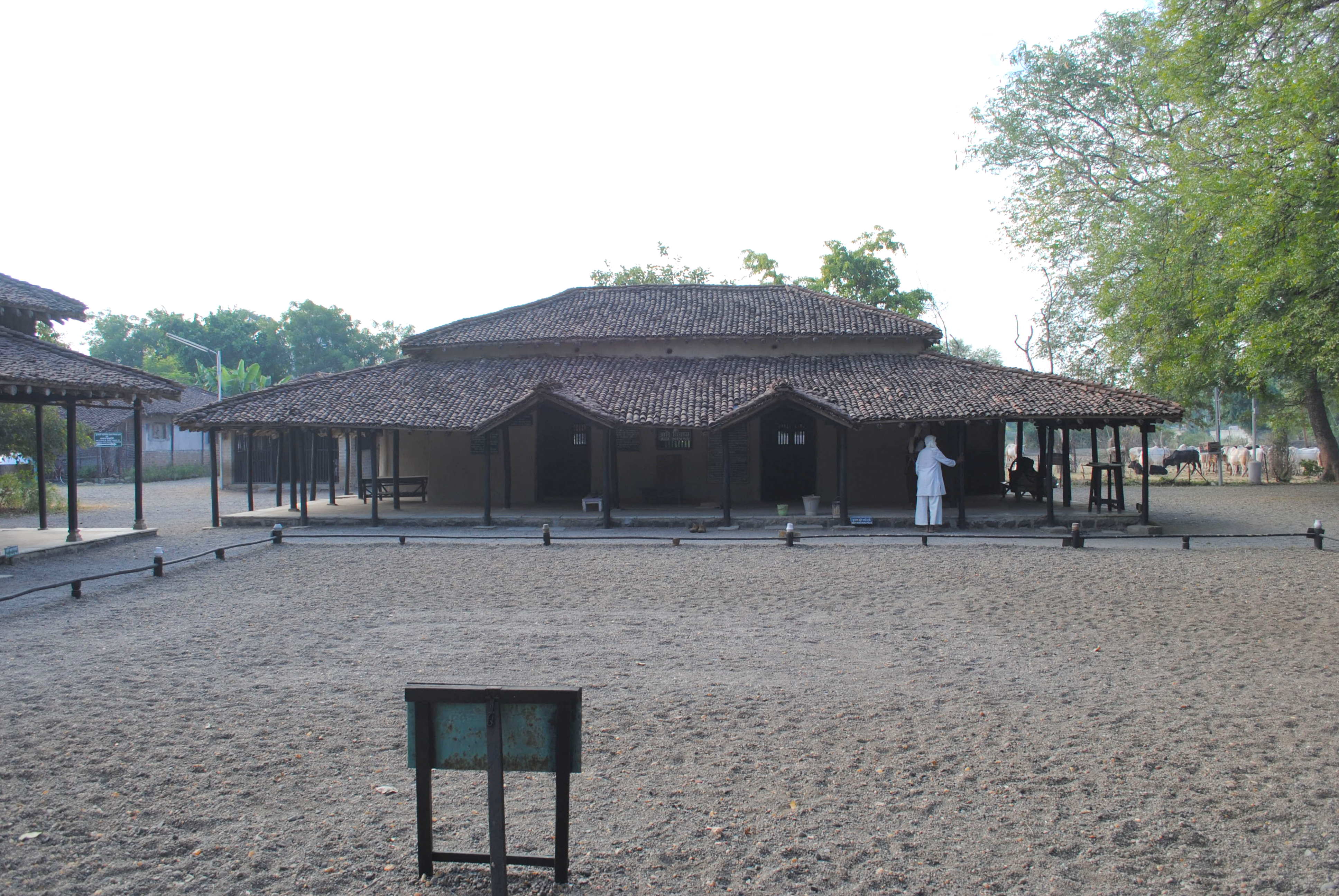
The British Viceroy Lord Linlithgow once spent a night in a mud hut in a village that had no post office. He did it because the hut belonged to Mahatma Gandhi, and by 1936 the most powerful man in India and the man trying to govern India needed to be able to talk. The Viceroy had a hotline installed in the hut called Bapu Kuti. That telephone -- an instrument of empire placed in a dwelling designed to reject everything empire stood for -- captures the paradox of Sevagram. Gandhi chose this village precisely because it had nothing. From its nothingness, he ran a revolution.
The Promise at Dandi
In 1930, Gandhi walked from his Sabarmati Ashram to the sea at Dandi, breaking British salt laws in an act of civil disobedience that electrified the independence movement. Before he left, he made a vow: he would not return to Sabarmati until India was free. He was imprisoned for over two years. When released, he traveled India looking for a new base -- not in a city, not near centers of power, but in a village in central India where he could live the principles he preached. In August 1934, he arrived in Wardha at the invitation of his follower Jamnalal Bajaj, an industrialist who understood that Gandhi's power came from renunciation, not accumulation. Bajaj provided roughly 300 acres of land near a village called Segaon, eight kilometers from Wardha and seventy-five kilometers from Nagpur.
A Village of Service
Gandhi was sixty-seven years old when he settled in Segaon in April 1936. He intended to live alone with his wife Kasturba. The pressure of the independence movement made that impossible. Colleagues gathered, and a full ashram grew organically -- mud-walled homes built in the style of ordinary village dwellings, a common kitchen that deliberately employed members of the Dalit community to challenge caste barriers, and eventually the infrastructure of a national movement headquarters. The village's name became a problem: letters kept arriving at Shegaon, a nearby town famous for the saint Gajanan Maharaj. In 1940, Gandhi renamed the village Sevagram -- "village of service." The name was not merely practical. It was a manifesto. Service was not something you performed from a distance; it was something you lived inside.
Decisions Made in Mud Huts
Between 1936 and 1948, Sevagram became the nerve center of India's struggle for independence. Key decisions about national movements were made here, not in legislative chambers or city halls but in the ashram's sparse rooms. Vinoba Bhave, who would later launch the Bhoodan land-gift movement, ran his Param Dham Ashram on the banks of the nearby Dhaam River. The institutions Gandhi established at Sevagram were experiments in nation-building designed around what he saw as India's inherent strengths: self-sufficiency, village-level governance, and manual labor as a form of prayer. The British government, recognizing that this village without a post office had become the real capital of Indian political life, provided a telephone connection so they could maintain communication with the man they could neither ignore nor control.
The Architecture of Austerity
Sevagram's built environment was itself a political statement. While the British Raj constructed grand colonial buildings in New Delhi, Gandhi's quarters were deliberately modest -- small structures of local materials, designed to be indistinguishable from any other village home in central India. Bapu Kuti, Gandhi's personal dwelling, and Kasturba's adjoining quarters still stand, preserved as they were during the independence struggle. The ashram today functions as a museum where artifacts from the freedom movement are on display. The homes remain humble. Visitors expecting a grand memorial encounter instead the radical ordinariness that was Gandhi's point: that a movement capable of ending British rule in India could be coordinated from rooms that a colonial official would have walked past without a second glance.
Legacy on the Plains
Gandhi lived at Sevagram until his assassination in Delhi on January 30, 1948. The ashram endures as both a memorial and a working institution. Sevagram railway station, formerly Wardha East, connects the village to the Howrah-Nagpur-Mumbai main line, and trains from all directions stop here. The nearest airport is at Nagpur, about 55 kilometers away. The town has grown around the ashram's legacy, hosting medical and engineering colleges run by rural trusts that carry forward Gandhi's emphasis on practical, community-oriented education. The Sabarmati Ashram in Gujarat may be more famous, but Sevagram is where Gandhi spent his longest continuous period and where the daily practice of his philosophy was most fully realized -- a village that proved a place could matter not because of what it possessed, but because of what it chose to do without.
From the Air
Located at 20.73°N, 78.66°E in Wardha district, Maharashtra, India. From altitude, Sevagram appears as a small village amid the flat agricultural plains of the Vidarbha region. The ashram complex is visible as a cluster of low buildings surrounded by farmland, approximately 8 km from the town of Wardha. The terrain is flat with the Dhaam River nearby. Sevagram railway station is identifiable as a point on the main Howrah-Nagpur-Mumbai rail line. The nearest major airport is Dr. Babasaheb Ambedkar International Airport (VANP) at Nagpur, approximately 55 km to the northeast. Wardha town is visible to the west. The landscape is predominantly agricultural with scattered villages.