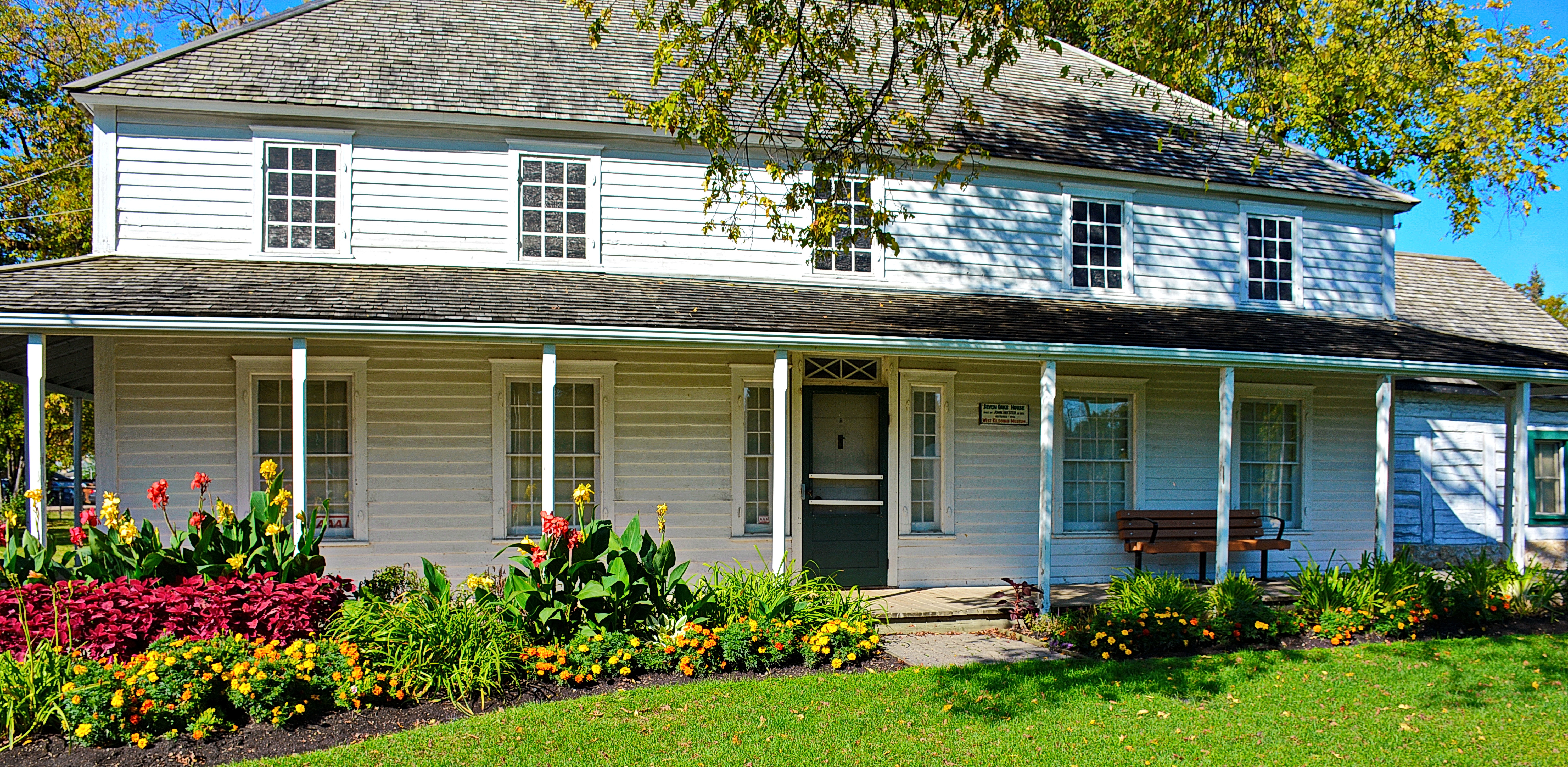
Seven Oaks House Museum
Most museums get moved. Buildings are relocated to heritage villages, propped on new foundations, surrounded by parking lots and interpretive signage that apologize for the displacement. Seven Oaks House has never gone anywhere. The two-storey oak-log home and the general store beside it still rest on the same ground where John Inkster laid their foundations in the mid-nineteenth century, the same ground where seven tall oaks once lined a creek and gave the neighbourhood its name. That creek witnessed the Battle of Seven Oaks in 1816, a violent clash between the Hudson's Bay Company's Red River settlers and the North West Company's Metis fur traders that left twenty-one men dead and helped set the terms for how the Canadian West would be governed. Two hundred years later, the homestead sits quietly amid suburban Winnipeg, its weathered logs holding stories that predate the city itself.
The Oldest Walls in Winnipeg
Two buildings survive on the Seven Oaks property, and both carry records of age that no other structure in Winnipeg can match. Inkster's General Store, built between 1826 and 1831, is the oldest building standing in the city. Originally a two-room cottage, it was renovated around 1853 to serve as a general store and post office. Its construction is a rare surviving example of Red River Frame architecture, a post-and-plank method developed by fur traders who needed sturdy buildings from available timber. Beside it stands Seven Oaks House itself, Winnipeg's oldest home, built from 1851 to 1853 in a Vernacular Georgian style using oak logs set on a stone foundation. The nine-room dwelling was substantial for its era, a statement of permanence in a settlement where most structures were far more modest.
A Scotsman on the Red River
John Inkster arrived in the Northwest in 1821 as a servant of the Hudson's Bay Company, a young Scotsman born in 1799 with ambitions that went beyond working for wages. He quickly transitioned from Company employee to independent farmer in the Red River Settlement, establishing himself as a businessman and politician. In 1826, he married Mary Sinclair, the Metis daughter of HBC Chief Factor William Sinclair. The marriage connected Inkster to both the fur trade's commercial networks and the Indigenous communities that sustained them. He designed and built Seven Oaks House himself, creating a home large enough to reflect his standing in the community. The Inkster family maintained the property for nearly a century, until 1912, when they donated the homestead to the City of Winnipeg for use as a park and museum.
Echoes of the Battle
The name Seven Oaks reaches further back than any building on the property. It comes from the creek where seven large oak trees once stood, a landmark that became infamous on June 19, 1816, when a party of Metis fighters clashed with Red River Colony settlers led by Governor Robert Semple. The Battle of Seven Oaks lasted barely twenty minutes, but it killed Semple and twenty of his men. The violence was rooted in the fierce rivalry between the Hudson's Bay Company and the North West Company, a struggle over fur-trade territory that entangled Indigenous nations, Metis communities, and European settlers alike. The battle became a founding moment in Metis identity, remembered through Pierre Falcon's victory song composed on the spot. Today the site carries no visible scar of that violence, just the quiet grounds of a homestead that grew over the battlefield's memory.
Still Standing, Still Open
What makes Seven Oaks House Museum unusual among Winnipeg's heritage sites is its authenticity of place. The buildings remain on their original foundations, and much of the surrounding homestead has never been developed. The museum is designated a Provincial Heritage Site and a Winnipeg Landmark Heritage Structure. Inside, period furnishings, some original to the Inkster family, recreate the domestic life of a prosperous Red River household. The museum opens seasonally from the Victoria Day weekend through Labour Day, welcoming visitors Wednesday through Sunday. Admission is by donation, keeping the site accessible. For a city that has grown outward in every direction, swallowing prairie and farmland into subdivision after subdivision, Seven Oaks House remains a stubborn holdout, a pocket of the 1850s that simply refused to leave.
From the Air
Located at 49.93N, 97.12W in the Seven Oaks neighbourhood of north Winnipeg. The site sits roughly 5 km north of downtown, near the junction of Main Street and Rupertsland Boulevard. Nearby airports include Winnipeg James Armstrong Richardson International Airport (CYWG) approximately 15 km to the southwest. At low altitude, look for the neighbourhood's residential grid between the Red River to the east and Main Street. Recommended viewing altitude: 2,000-3,000 feet AGL for neighbourhood context.