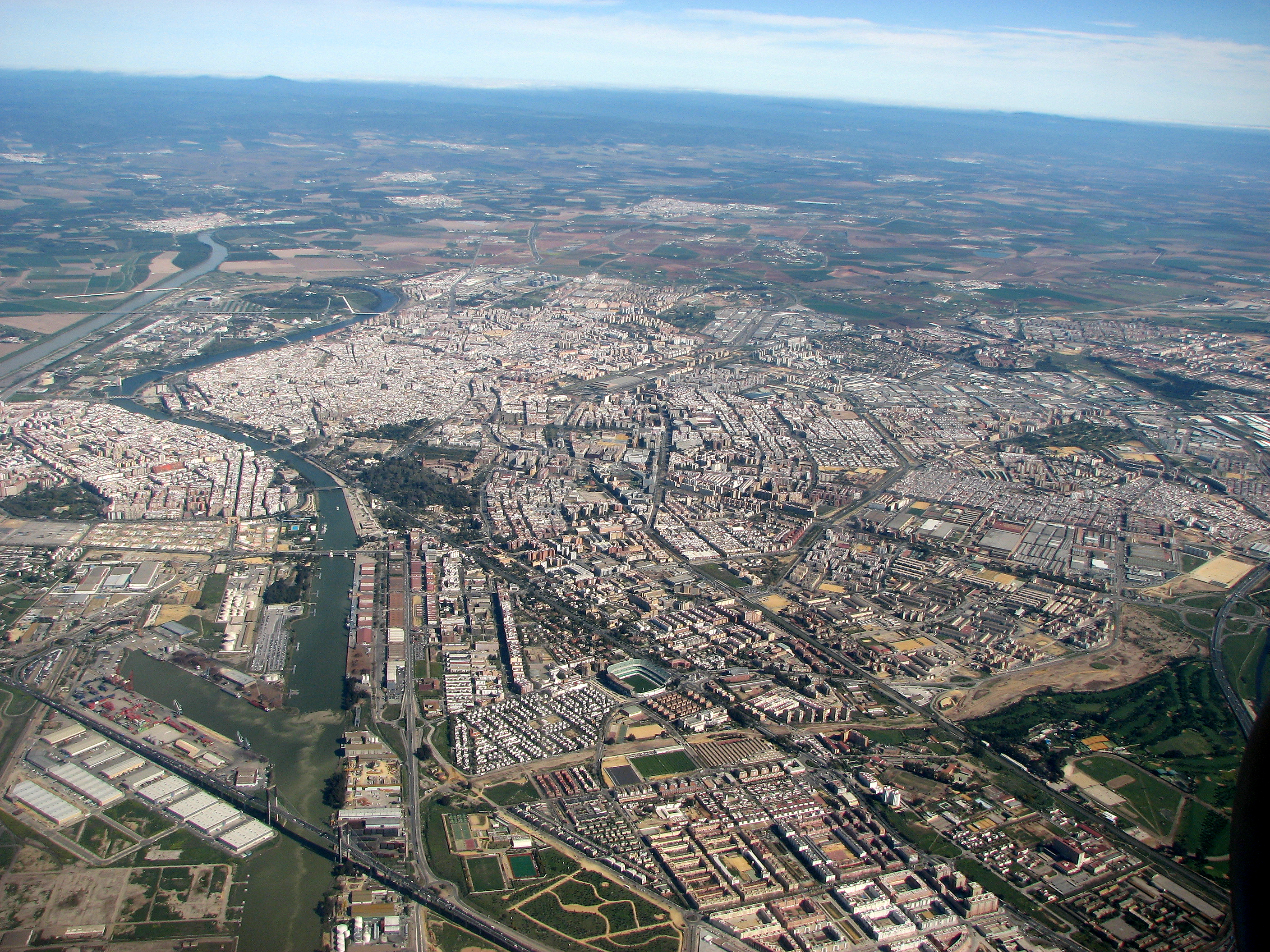
Seville Province
In the small town of Ecija, summer temperatures regularly climb above 40 degrees Celsius, earning it the nickname 'the frying pan of Andalusia.' Yet locals have adapted to this heat for millennia, retreating to whitewashed houses with thick walls and small windows, emerging in the cooler evening hours to socialize in plazas shaded by orange trees. This is Seville Province, the beating heart of Andalusia, where the legacy of Moorish rule lingers in every arabesque tile pattern and horseshoe arch, where flamenco was born in the pain and passion of marginalized communities, and where the wealth of the New World once flowed through the river port that connected Spain to its American empire.
The Capital That Conquered the World
Seville itself dominates the province, a city of such concentrated splendor that visitors often never venture beyond its limits. The cathedral - the largest Gothic church ever built - rises from the site of a former mosque, its Giralda tower originally a minaret from which the call to prayer once echoed across rooftops. The Alcazar palace complex demonstrates how Spanish kings so admired Moorish craftsmanship that they employed Muslim artisans to build in Islamic style long after the Reconquista. And along the Guadalquivir River, the Torre del Oro recalls the centuries when Seville held a monopoly on trade with the Americas, when galleons heavy with silver docked at wharves that made this inland city one of the richest in Europe.
Towers and Time
Beyond the provincial capital, smaller towns preserve their own treasures. Ecija, despite its punishing summer heat, rewards visitors with an extraordinary collection of Baroque bell towers - so many that it earned another nickname: the City of Towers. Carmona, perched on a ridge overlooking the agricultural plain, claims ten thousand years of continuous settlement, its Roman necropolis and Moorish fortress testament to the layers of civilization that have washed over this land. Osuna, once a hotbed of protest against central authority, became a filming location for Game of Thrones, its bullring and Renaissance architecture standing in for the slave city of Meereen.
Where Flamenco Lives
Seville Province remains the spiritual home of flamenco, that explosive art form born from the cultural collision of Romani, Moorish, Jewish, and Andalusian influences. In the neighborhoods of Triana and the Santa Cruz, where narrow streets wind between flower-draped balconies, small tablaos host performances that range from polished tourist shows to raw, impromptu gatherings where locals still practice the art their grandparents knew. The vineyards near Lebrija, at Seville's southern edge, contribute grapes to the sherry trade, their fruit traveling to Sanlúcar de Barrameda where pale, dry Manzanilla accompanies late-night gatherings where song and dance emerge spontaneously from the clapping of hands and the stamping of feet.
A Landscape of Plenty
The province's warm Mediterranean climate produces an abundance that defines Andalusian cuisine. Olive groves carpet the rolling hills, their fruit pressed into oils that range from delicate to peppery. The town of Estepa specializes in mantecados, crumbly shortbread cookies that appear throughout Spain at Christmas but originate here. And everywhere, the culture of tapas prevails - small plates of jamón ibérico, salmorejo, and fried fish that transform eating into a social ritual of movement from bar to bar, each establishment offering its own specialties. The gazpacho that refreshes summer days, the slow-cooked oxtail that warms winter evenings: this is food shaped by seasons as extreme as the 40-degree summers and the surprisingly cold winters that occasionally dust the hilltop villages with snow.
From the Air
Located at 37.50N, 5.50W in southwestern Spain. Seville Airport (LEZL/SVQ) serves as the main gateway, located 10 km northeast of the city center. The province is relatively flat, dominated by the Guadalquivir River valley, with the Sierra Norte natural park providing higher terrain in the north. The high-speed AVE rail line connects Seville to Madrid in 2.5 hours. Major highways include the A-4 to Cordoba and Madrid, A-92 to Granada and Malaga, and A-49 to Huelva.