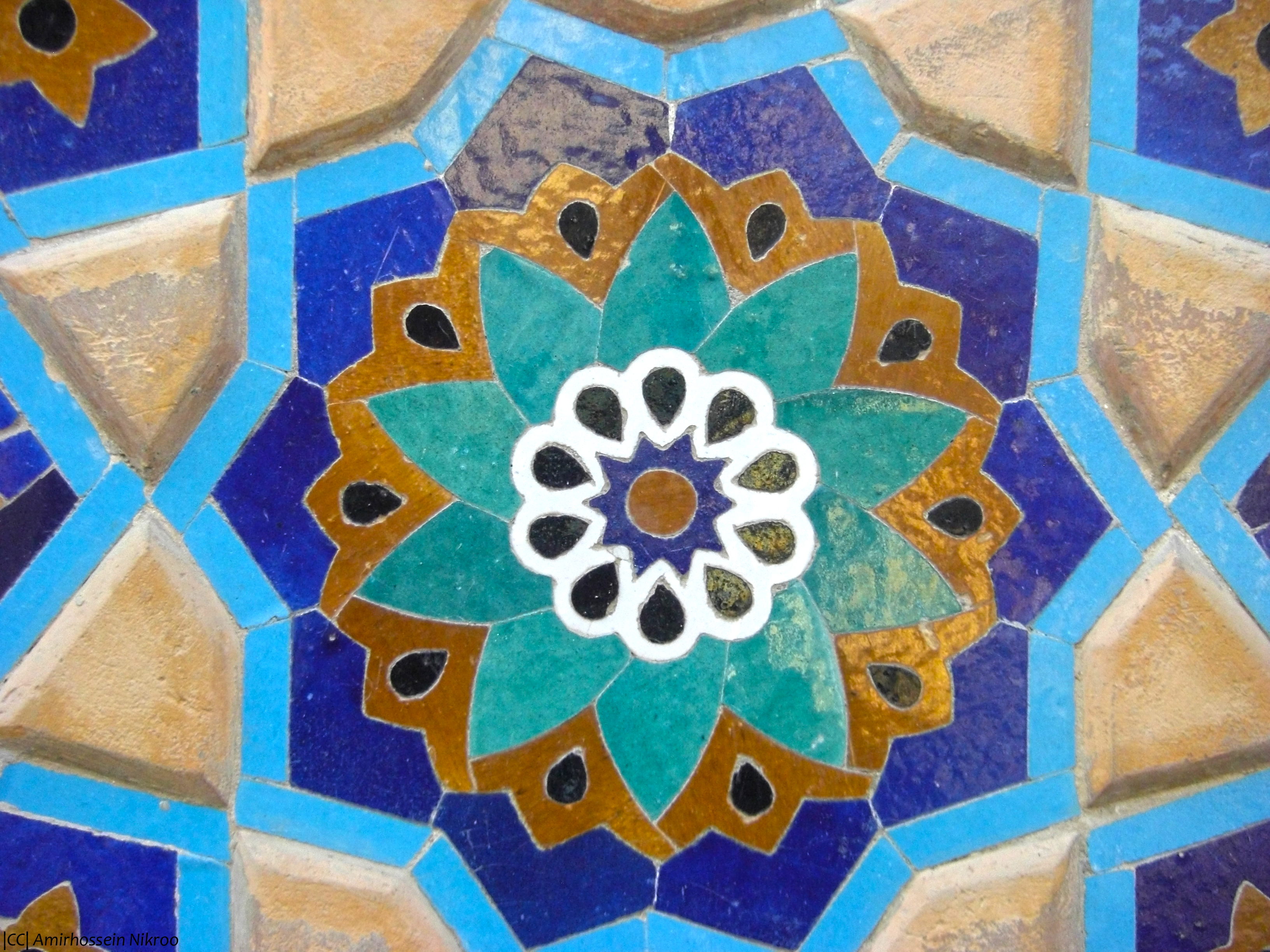
Shah Mosque (Mashhad)
The number seventy-two carries weight in Shi'ite memory. It is the count of those who died alongside Imam Hussein at the Battle of Karbala in 680 CE, a wound that has never fully closed. In Mashhad, Iran's holiest city, a mosque built during the Timurid period carries that number in its modern name: the Haftado Dotan, the Mosque of Seventy-two. Before the 1979 Iranian Revolution, it was simply the Shah Mosque, one piece of the vast Imam Reza Shrine complex that draws nearly thirty million pilgrims each year. The renaming was deliberate. Those who gave the mosque its new title wanted every visitor to remember that sacrifice echoes across centuries.
Layers of Empire in Tilework and Stone
The mosque's origins reach back to the Timurid dynasty, when a mausoleum was first built for the nobleman Amir Ghiyath al-Din Malik Shah. By 1451, that mausoleum had grown into a full mosque, its expansion reflecting the rising importance of Mashhad as a center of Shi'ite devotion. The Timurid rulers who shaped it were the same dynasty that gave the world Samarkand's Registan and Herat's great minarets. Their architectural fingerprints remain in the proportions and the geometric precision of the tilework. But the mosque did not freeze in the fifteenth century. During the Safavid era, Shah Soltan Hoseyn ordered extensive renovations, layering new artistry over the Timurid bones. Later still, Nader Shah Afshar completed a final renovation, adding his own mark to a structure already centuries old. Each ruler left something behind, and the mosque became a palimpsest of Persian power.
Inside the Imam Reza Complex
To understand the Shah Mosque, you must understand its context. It sits within the Imam Reza Shrine, the burial place of the eighth Shi'ite Imam, Ali al-Rida, who died in 818 CE. The shrine complex sprawls across the heart of Mashhad, a city whose very name means "place of martyrdom." Courts and corridors connect mosques, libraries, seminaries, and museums in a labyrinth that has grown over twelve centuries. The Goharshad Mosque, commissioned in 1418 by the Timurid empress Goharshad, stands nearby. The Shah Mosque is smaller, less celebrated, but its iwan -- the grand arched portal characteristic of Persian mosque architecture -- catches the eye with intricate muqarnas and calligraphy that reward close attention. The tomb of Amir Ghiyath al-Din Malik Shah remains inside, a quiet presence amid the devotional energy of the complex.
A Name Reborn in Revolution
When the Iranian Revolution swept the country in 1979, the mosque's identity shifted. The new name, Haftado Dotan, honored those killed during the revolutionary upheaval, deliberately choosing the number seventy-two to link their sacrifice to the foundational tragedy of Shi'ite Islam. At Karbala, Imam Hussein and his followers stood against the Umayyad caliph Yazid, knowing they would not survive. The parallel was intentional and deeply felt. Renaming the mosque was not mere politics. It was theology made architectural, a declaration that the revolution's dead stood in a line stretching back thirteen centuries. The mosque's front portico was later converted into an office building and closed to the public, a practical transformation that sits uneasily alongside the monument's spiritual weight.
Mashhad's Magnetic Pull
Mashhad is Iran's second-largest city, but its importance is measured in pilgrims, not population. Nearly thirty million visitors arrive each year, making the Imam Reza Shrine the most visited pilgrimage site in the Islamic world. The Shah Mosque exists within that gravitational field. It was added to the Iran National Heritage List on 9 July 1932, an early recognition of its architectural significance. An 1861 illustration by Alexandre de Bar, published in the French journal Le Tour du Monde, captured the mosque for European audiences, its domes and minarets rendered in careful black-and-white. Today the mosque stands as a reminder that sacred spaces are never finished. They accumulate meaning the way they accumulate tilework -- one generation at a time, each layer answering the last.
From the Air
Located at 36.288N, 59.611E in the heart of Mashhad, Iran's second-largest city. The Imam Reza Shrine complex is visible as a large cluster of domes and minarets in the city center. Nearest airport is Mashhad Shahid Hasheminejad International (ICAO: OIMM), approximately 8 km from the shrine. Best viewed at 3,000-5,000 feet AGL for context of the complex within the urban fabric. The golden dome of the shrine is the primary landmark.