Shah Tepe: Buried Lives on the Gorgan Plain
In 1933, Swedish archaeologist T.J. Arne began cutting into an oval mound on the Gorgan Plain, 13 kilometers northwest of the city of Gorgan and 20 kilometers from the Caspian Sea. He dug eight square shafts, each 10 meters on a side, into earth that rose just over 8 meters above the surrounding farmland. What he found was a compressed archive of human existence: 257 skeletons layered through the mound, the oldest dating to the Chalcolithic period, the newest to the Islamic era. Between those extremes lay the Bronze Age, its dead curled on their sides in pits beneath the floors of their own homes, their clay vessels and alabaster jars and copper ornaments placed carefully beside them. Shah Tepe is not monumental. It has no palace, no inscription, no famous king. It has something rarer - the intimate details of ordinary lives lived and ended on this plain across four thousand years.
Reading the Layers
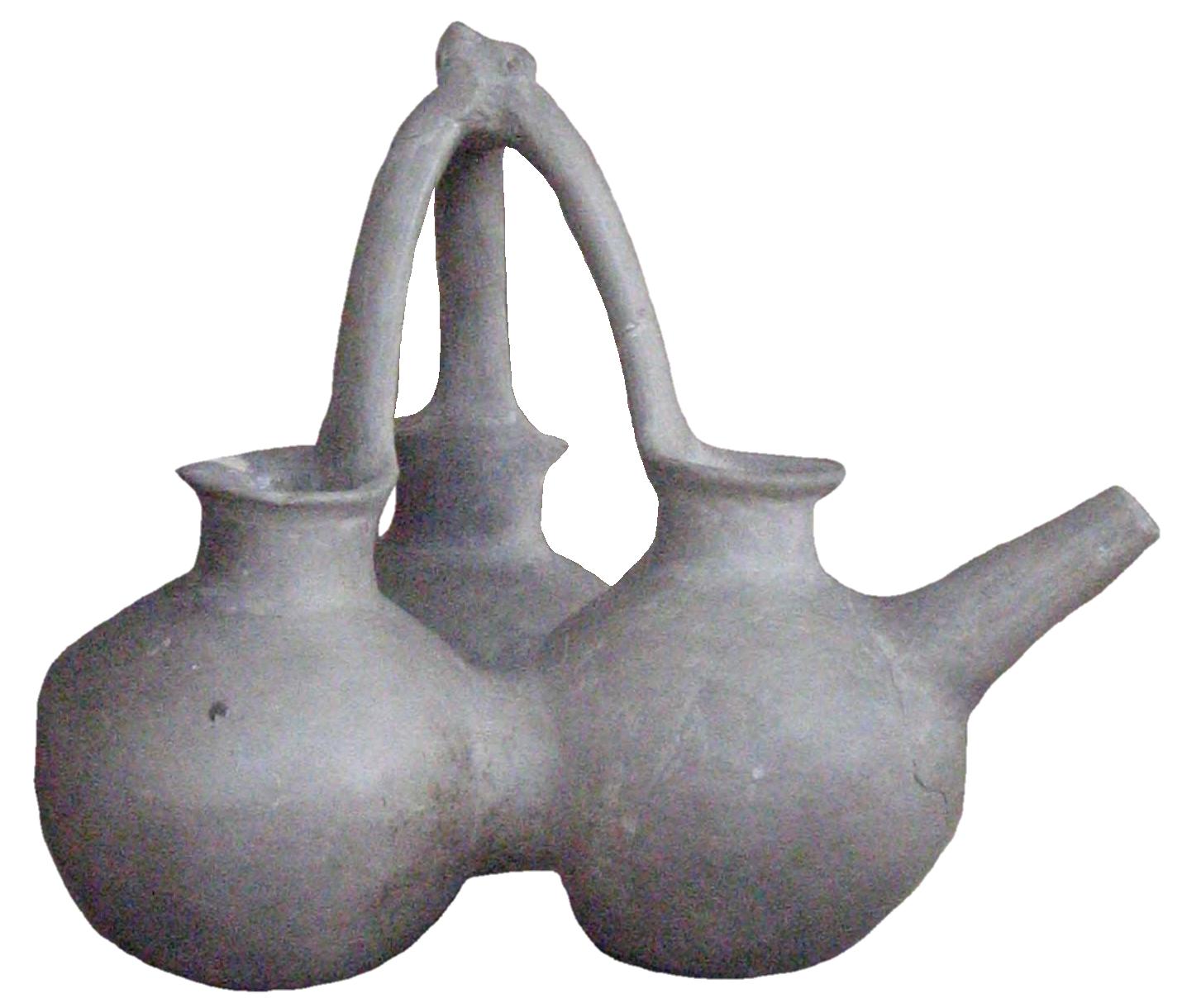
Archaeologists divide Shah Tepe into three periods, numbered from top to bottom in the reverse of time. Shah III, the deepest and oldest layer, belongs to the Chalcolithic period - the Copper Age, when metalworking was new and settlements on the Gorgan Plain were already well established. The graves from this era contain black and grey pottery alongside painted vessels decorated with dark patterns on a reddish ground. Above this, Shah IIB and Shah IIA represent the Bronze Age, when the pottery darkened and alabaster vessels appeared among the burial goods. The uppermost layer, Shah I, held Muslim graves from the Islamic period. The mound itself is 165 meters long and 135 meters wide, its eastern face steep and straight, its western side rounded and gently sloping. Eight meters of accumulated human presence, each stratum a chapter in a story no one wrote down but the earth preserved.
The Dead Beneath the Floor
The prehistoric inhabitants of Shah Tepe buried their dead beneath the floors of their houses. This was not unusual in the ancient Near East - many Neolithic and Bronze Age communities kept their dead close, perhaps believing the deceased remained part of the household. Of the 176 prehistoric skeletons Arne excavated, almost all lay contracted on their sides in simple individual pits, knees drawn up, as though sleeping. Nearly half faced east, toward the rising sun. The burials were accompanied by pottery vessels, copper ornaments, beads of stone and faience and glass, and occasional tools of bone. Weapons were rare. In two cases, a mother and child had been buried together. In another, two adults - possibly husband and wife - shared a single grave. These small details resist interpretation but invite imagination: people who lived together, died, and were placed together in the earth beneath their own hearth.
The Collective Grave
One burial stood apart from all the others. Five individuals had been placed together in a single grave, their bodies showing signs of mutilation. Offerings of sheep and goats accompanied them. Arne's published account does not elaborate on what kind of violence these five people experienced or why they were buried together, but the combination of mutilation, collective burial, and animal sacrifice suggests something beyond ordinary death - possibly warfare, possibly ritual, possibly both. The grave remains an unsettled question, a reminder that even the most careful excavation cannot recover the stories behind the bones. What is clear is that these five people were treated differently in death than the others at Shah Tepe, and that their community marked the difference with ceremony.
A Swedish Expedition on Persian Soil
T.J. Arne's expedition to Shah Tepe was part of a broader Swedish archaeological campaign in Iran during 1932 and 1933. The excavated materials - pottery, ornaments, skeletal remains, field photographs - were shipped to Stockholm, where they are housed today at the Museum of Mediterranean and Near Eastern Antiquities. Arne published his initial findings in 1935 in the journal Acta Archaeologica and a full excavation report in 1945. Shah Tepe sits within a wider landscape of archaeological richness. The Gorgan Plain alone holds more than 50 Neolithic and Chalcolithic sites, including the nearby mound of Tureng Tepe. This density reflects a region that was hospitable to human settlement for millennia - well-watered by Caspian moisture and mountain runoff, fertile enough to sustain communities long before the great empires gave the region its political shape.
From the Air
Located at 36.94°N, 54.35°E on the Gorgan Plain in Golestan Province, northeastern Iran, about 13 km north-northwest of Gorgan and 20 km east of the Caspian Sea. From altitude, Shah Tepe appears as a low oval mound rising approximately 8 meters above the flat agricultural plain - subtle but identifiable, particularly in low-angle light that accentuates the mound's shadow. The nearest airport is Gorgan International Airport (OING), approximately 15 km to the southeast. The Caspian Sea coast is visible to the west. The surrounding plain is dotted with similar archaeological mounds, though most are less prominent. Best viewed at low to moderate altitude (2,000-5,000 feet) to distinguish the mound from surrounding terrain.