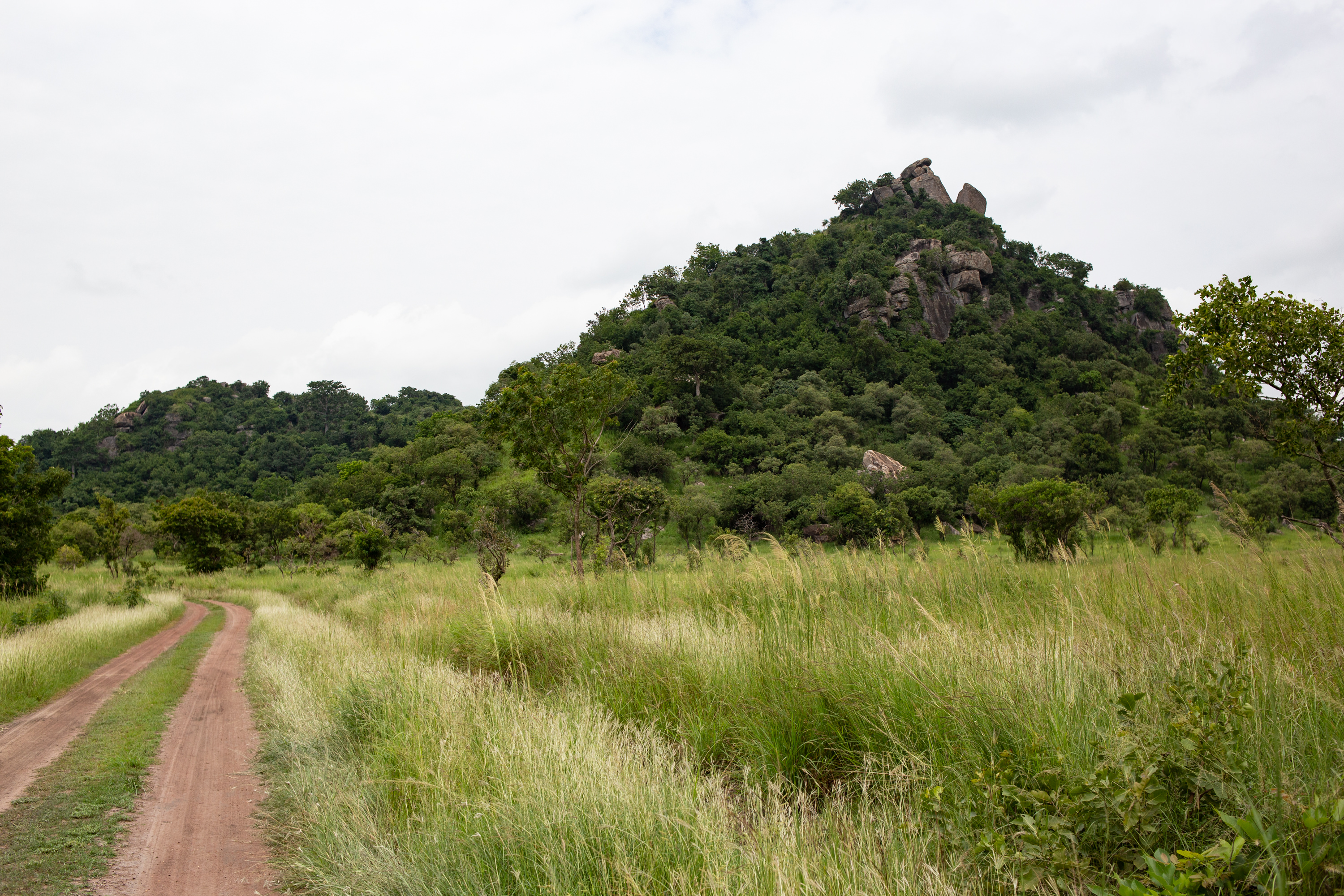
Shai Hills
Baboons sit along the highway shoulder like commuters waiting for a bus. Olive-furred and unhurried, they watch vehicles pass on the Tema-Akosombo road, some with infants clinging to their backs. This is the first sign that you have reached Shai Hills Resource Reserve, a 51-square-kilometer patch of rocky savanna just 57 kilometers north of Accra. It is the closest wildlife reserve to Ghana's capital, and one of the few places near a major African city where grassland antelopes, green monkeys, and dozens of bird species share the landscape with the ruins of a civilization that predated European contact by centuries.
A People Written in Stone
The Dangme-Shai people settled among these rocky outcrops sometime around AD 1000, building a civilization that would endure for nearly nine centuries. The hills offered natural fortification, their caves providing shelter and their heights giving strategic advantage over the surrounding plains. The Shai became skilled potters and bead makers, and the caves served more than defensive purposes. Mogo Hill was where young women were brought for their Dipo initiation, a formal rite of passage into adulthood that could last up to six months. Relics of Shai domestic life remain scattered throughout the reserve today: pottery fragments, stone tools, and markings on cave walls that visitors encounter during guided hikes. In 1892, British Governor Griffith sent colonial troops to the hills, alleging that the Shai, Krobo, and Osudoku peoples were conducting human sacrifices. The Dangme communities were driven from their ancestral settlements, ending a habitation that had lasted the better part of a millennium.
Savanna Between the Rocks
The landscape at Shai Hills defies the lush tropical stereotype many associate with West Africa. Rocky inselbergs jut from open grassland, and the vegetation shifts between wooded savanna and thin, sun-scorched plains. Bushbucks and duikers pick through the grass in the early morning. Lesser spot-nosed monkeys occupy the gallery forests along seasonal streams, while violet turacos flash iridescent plumage from the canopy. Birders come for the red-billed hornbills, yellow-fronted tinkerbirds, and paradise flycatchers, but the reserve's most reliable wildlife spectacle requires no binoculars at all. The olive baboon troops that congregate near the main road number in the dozens, their social hierarchies playing out in full view of anyone willing to stop and watch. The reserve was formally established in 1962, when the Ghanaian government set aside 47 square kilometers to protect the area's flora and fauna. The boundaries expanded to 51 square kilometers in 1973.
Caves, Quarries, and a Railway
Hiking the reserve's trails is as much an archaeological experience as a natural one. The caves that sheltered Shai families now shelter bats, and the paths between them wind past rock faces still bearing evidence of human habitation. Several stone quarries operate in the surrounding hills, their presence a reminder that the same geology that made the area defensible also made it commercially valuable. At the reserve's eastern boundary, a railway station once connected Shai Hills to Ghana's national rail network. The line served as a suburban terminus, and for the communities east of Accra it was a primary link to the capital. Though passenger service has dwindled, the station remains a landmark, a piece of infrastructure that hints at a time when the area was both more connected and more populated than it appears today.
Close to the Capital, Far from the Crowd
What sets Shai Hills apart from Ghana's better-known reserves, Mole National Park in the north and Kakum National Park with its famous canopy walk, is proximity. Accra's traffic permitting, a visitor can reach the reserve entrance in under two hours and return the same day. This accessibility makes it one of the most visited natural areas in the Greater Accra Region, drawing school groups, weekend hikers, and international tourists who want a taste of Ghanaian wildlife without committing to the long drive north. Rock climbing routes scale the inselbergs, nature walks thread through the savanna, and camping is available for those who want the baboons' dawn chorus as an alarm clock. Quad bike tours appear occasionally, though the reserve's primary appeal remains quieter: a landscape where geological drama and human history intersect within earshot of one of Africa's fastest-growing cities.
From the Air
Located at 5.90N, 0.07W in the Greater Accra Region. The rocky inselbergs of Shai Hills are visible as dark outcrops amid lighter savanna grassland northeast of Accra. Nearest major airport is Kotoka International (DGAA/ACC), approximately 57 km to the southwest. The Tema-Akosombo Highway passes directly along the reserve's western edge. Best viewed from 3,000-5,000 feet AGL where the contrast between rocky outcrops and surrounding plains is most apparent.