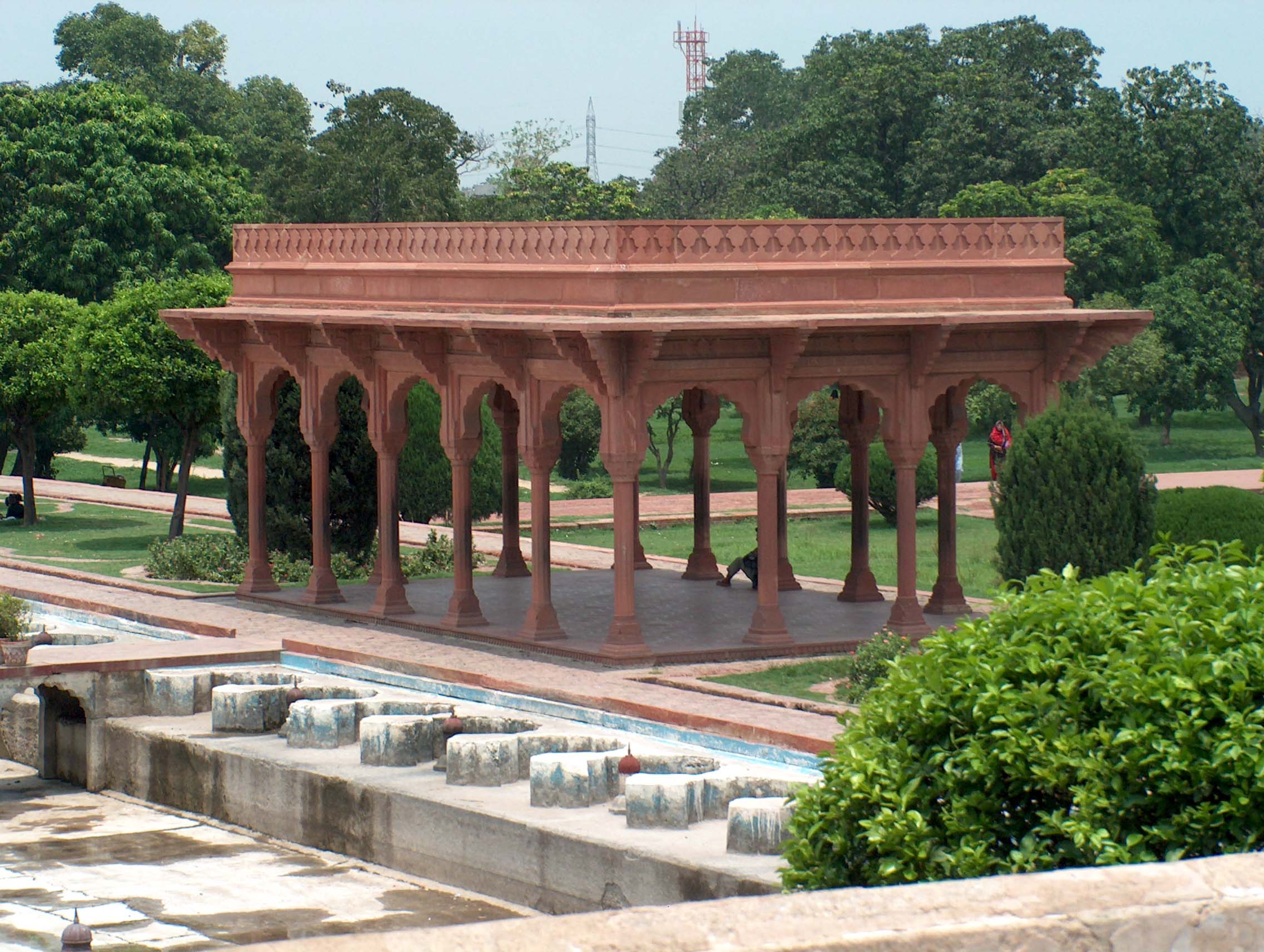
Shalamar Gardens, Lahore
Even the name is disputed. Scholars have argued for decades whether Shalamar means the "abode of joy," the "abode of streams," or -- in one delightfully obscure reading from Kashmiri roots -- "black soil for growing rice paddy." Maharaja Ranjit Singh, never easily convinced, believed the word derived from the Punjabi for "curse of God" and renamed the place entirely. He called it Shahla Bagh, the garden of the black-eyed sweetheart. None of this mattered to the Mughal Emperor Shah Jahan, who ordered the gardens built in Lahore in 1641 and saw them completed the following year. What mattered to Shah Jahan was the idea they embodied: a Persian paradise garden, a charbagh where geometry and flowing water could create an earthly echo of heaven. UNESCO agreed that the idea had been realized beautifully enough to merit World Heritage status in 1981.
Water Descending in Three Acts
The Shalamar Gardens are organized across three descending terraces, each with its own character and purpose. The highest terrace was reserved for the emperor and his court, a private retreat above the noise of the world. The middle terrace held the gardens proper -- orchards, flower beds, pavilions where courtiers gathered. The lowest terrace was open to the public, a rare gesture of inclusion in Mughal design. Water connects them all. Channels fed by a canal called the Shah Nahar carry water from terrace to terrace through a system of cascades, chutes, and over 400 fountains. The hydraulic engineering is as much the achievement as the horticulture. Water flows over carved marble chutes called chadar, their surfaces textured to catch sunlight and fragment reflections. At night, lamps placed in niches behind the cascades turned the falling water into sheets of liquid light. The effect was precisely calculated: paradise made visible through engineering.
A Garden Built at the Zenith
Shah Jahan commissioned the gardens during what historians consider the artistic and aesthetic peak of the Mughal Empire. This was the same emperor who would build the Taj Mahal, whose reign elevated white marble and pietra dura inlay to their highest expression. The Shalamar Gardens reflect that ambition. Pavilions of red sandstone and marble dot the terraces, their arches framing views designed to be experienced in sequence -- a walk through the gardens is choreographed, not accidental. The original planting scheme followed Mughal convention: fruit trees provided shade and fragrance, while flowering plants filled the geometric beds with color arranged by season. Mango, cherry, and almond trees lined the walkways. The gardens covered roughly 80 acres in their original form, enclosed by high walls of red brick that separated the manufactured paradise within from the flat Punjab plain outside.
Rulers Who Remade What They Found
No garden in Lahore passed through a single set of hands. After the Mughal period, the Sikh Empire took the Punjab, and Ranjit Singh made the Shalamar Gardens his own. He held court here, renamed the place, and altered structures to suit Sikh tastes. The British, arriving after the Anglo-Sikh Wars in the 1840s, converted portions of the grounds for colonial administrative use. A railway line punched through the western wall of the gardens in 1849, severing an entire section -- a wound that remains visible today. Each successive ruler treated the gardens as both inheritance and raw material, preserving what suited their purposes and discarding what did not. The result is a palimpsest: Mughal geometry overlaid with Sikh modifications, colonial intrusions, and modern Pakistani restoration efforts that have attempted, with varying success, to recover the original vision.
Paradise Under Pressure
The UNESCO inscription came with a caveat. The Shalamar Gardens were placed on the World Heritage in Danger list in 2000 after the construction of a road and other infrastructure threatened the site's integrity. Pakistan undertook restoration work, and the gardens were removed from the danger list in 2012. But the pressures have not disappeared. Lahore has grown enormously -- it is now Pakistan's second-largest city, with over 13 million residents -- and the gardens exist within a dense urban fabric that presses against their walls. The hydraulic system that once fed the fountains through a gravity-fed canal now depends on mechanical pumps, and the fountains do not always run. Air pollution darkens the marble. Yet visitors still come by the thousands, families picnicking on the terraces on weekends, couples strolling the walkways, children chasing each other around fountains that, when they flow, still catch the light the way Shah Jahan's engineers intended nearly four centuries ago.
From the Air
The Shalamar Gardens (31.59N, 74.38E) are located in the Baghbanpura area of northeastern Lahore, Punjab, Pakistan. From altitude, the rectangular garden complex and its three descending terraces are visible as a green rectangle within the dense urban fabric. The nearby GT Road runs along the southern boundary. Nearest airport: Allama Iqbal International Airport (OPLA/LHE), approximately 12km southwest, with runways 36L/18R and 36R/18L. Lahore Fort and the Walled City lie roughly 5km to the southwest. Flat terrain throughout; clear visibility most of the year outside monsoon season (July-September).