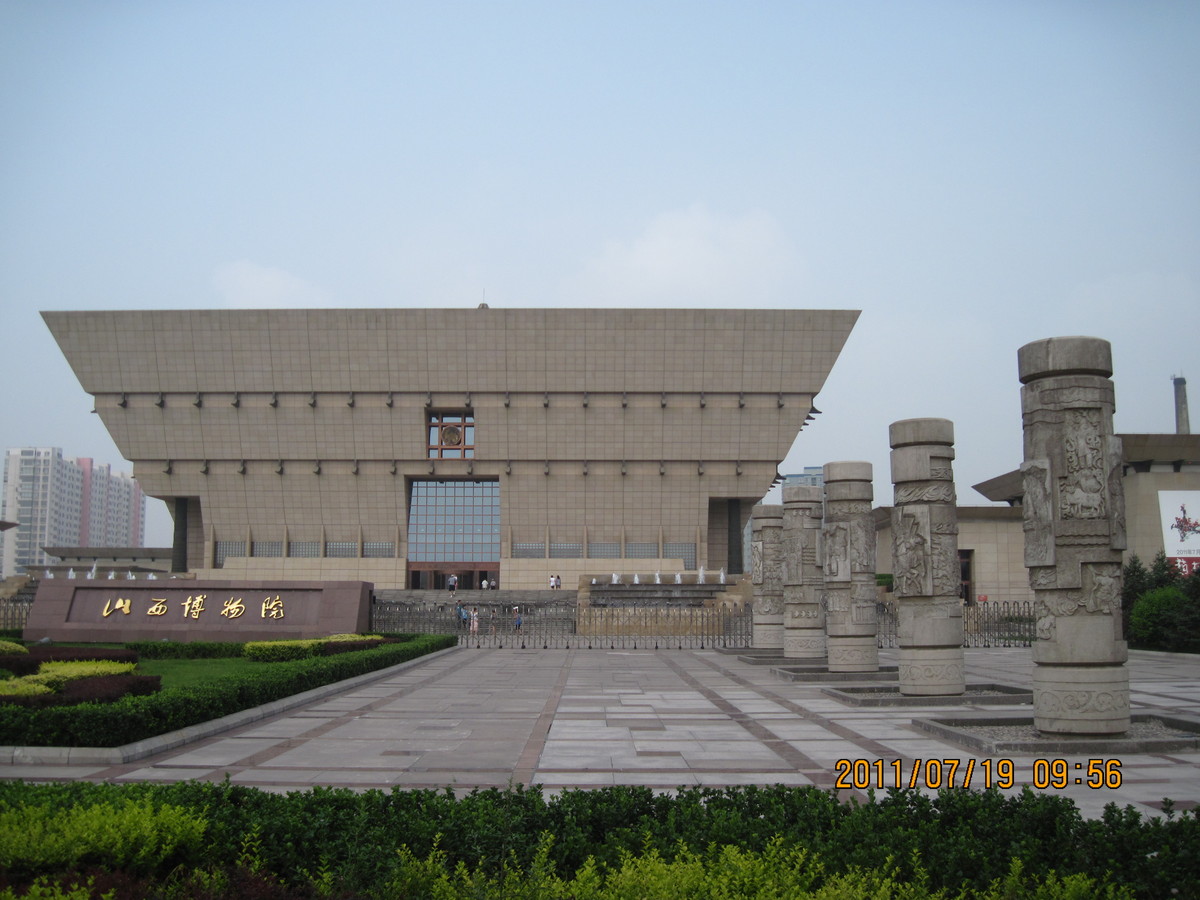
Shanxi Museum
Four hundred thousand objects and nowhere near enough time. The Shanxi Museum in Taiyuan holds one of the densest concentrations of historical artifacts in China, spanning from Neolithic pottery to Qing dynasty jade vessels, with 110,000 old books stacked on top of that. The institution traces its roots to 1919, making it one of the earliest museums in the country, and since March 2008, admission has been free with a valid ID. That decision opened the doors to millions who might never have paid to enter.
A Century of Collecting
The museum began its life on October 9, 1919, as the Education Library and Museum of Shanxi, at a time when China was reimagining itself after the fall of the Qing dynasty. It was among the first museums established anywhere in the country, part of a modernizing impulse that saw education and public access to cultural heritage as tools for national renewal. The path from 1919 to the present was not smooth. During the Second Sino-Japanese War, the institution's collections suffered heavy damage. Some artifacts were carried off to Japan, a loss that still resonates. The museum rebuilt, reorganized, and in 2005 moved into a new purpose-built facility, at which point it was officially renamed the Shanxi Museum.
The Dead Who Still Speak
Among the museum's most prized holdings are artifacts from the tomb of Sima Jinlong, a nobleman who died in 484 CE during the Northern Wei dynasty. His tomb yielded a remarkable array of figurines, including some made with lead-glazed ceramics, a technique that gives them an eerie, almost metallic sheen. A tomb plaque from Sima Jinlong's burial also resides here, while related artifacts can be found at the Datong Museum further north. Together, these objects reconstruct the aesthetic world of a fifth-century aristocrat who lived during one of China's most turbulent and creative periods, when nomadic traditions from the northern steppes blended with the established culture of the Chinese heartland.
Bronze, Jade, and the Weight of Dynasties
Walking through the Shanxi Museum's galleries is walking through the full chronological arc of Chinese civilization as expressed through material culture. Western Zhou bronzes with intricate geometric patterns sit alongside Warring States vessels decorated with cloud motifs. Spring and Autumn period pottery molds show the industrial sophistication of ancient metalworkers. Qing dynasty jade vessels demonstrate the refinement that comes from millennia of accumulated craft knowledge. Shanxi province occupies a unique position in Chinese history, a mountainous territory that served as both defensive stronghold and cultural crossroads, and the museum's collections reflect that geographic fortune.
Where Silk Road Meets Yellow River
The museum also houses Sogdian funerary art, including panels from the tomb of Yu Hong that depict feasting, hunting, and religious scenes blending Central Asian and Chinese visual traditions. These artifacts testify to Shanxi's role as a meeting point between the Silk Road's cosmopolitan merchant culture and the settled agricultural civilization of the Yellow River basin. Taiyuan, the museum's home city, was a major garrison town and trade hub during the Northern Dynasties and Tang dynasty periods, and the objects in these galleries give physical form to encounters that might otherwise survive only as entries in dynastic histories.
From the Air
Located at 37.86N, 112.52E in western Taiyuan, Shanxi province. The museum building is a modern structure on the west bank of the Fen River. Nearest major airport: Taiyuan Wusu International (ZBYN), approximately 15 km southeast. Recommended viewing altitude: 3,000-5,000 feet for Taiyuan city context.