Sharya Forest Museum Railway
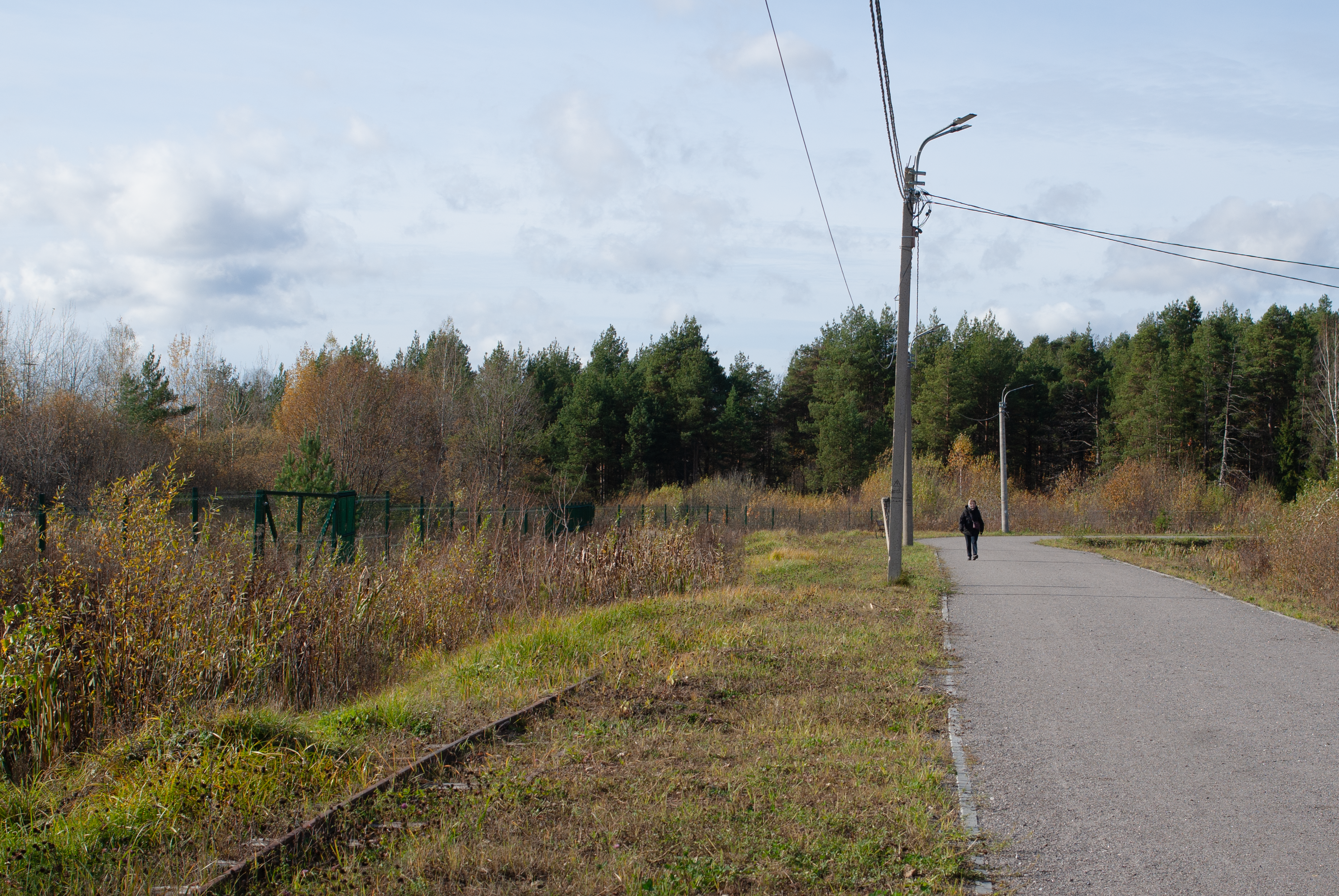
The locomotive sits on its narrow-gauge track in Sharya Park, going nowhere. That is precisely the point. Opened in 2014, the Sharya Forest Museum Railway is not a transportation system but a memorial to one -- a 2-kilometer loop of 750mm-gauge track that commemorates the forest railways which once threaded through the taiga of Kostroma Oblast, hauling timber from places no road could reach. The museum railway arrived decades after the logging lines themselves fell silent, an act of preservation motivated less by nostalgia than by the recognition that an entire industrial chapter was vanishing from living memory.
Iron Threads Through the Taiga
Russia's narrow-gauge forest railways were never glamorous. Built cheaply, maintained minimally, and operated in conditions that would give a safety inspector cardiac arrest, they served a single brutal purpose: extracting timber from the immense boreal forests of the country's interior. Kostroma Oblast, roughly 600 kilometers northeast of Moscow, was prime territory for this industry. The region's dense stands of birch, pine, and spruce fed Soviet-era sawmills and paper factories, and the narrow-gauge lines were the arteries connecting forest to factory. At their peak, hundreds of kilometers of these spindly tracks laced through the oblast, carrying logs on flatcars behind small diesel locomotives that growled and clattered through landscapes no wider-gauge train could have navigated.
A Park Becomes a Graveyard -- and Then a Museum
By the time the Sharya Forest Museum opened in the city park in 2014, the working forest railways of the region had largely disappeared. Roads improved, trucks replaced trains, and the old narrow-gauge infrastructure rusted into the undergrowth. The museum gathered what it could: a TU8 diesel locomotive (No. 0167), a TD-5u draisine, a PV-40T passenger car, and an assortment of tractors, skidders, and forestry machines that once worked alongside the railways. There is even an An-2 biplane -- the legendary Soviet workhorse used for everything from crop dusting to forest fire patrol -- parked among the exhibits, registration RA-29327 still visible on its fuselage. The collection is eclectic, assembled with the urgency of people who understood that every year meant fewer surviving machines.
The Railway That Does Not Run
The 2-kilometer loop of track exists, the rolling stock sits on it, but the Sharya Forest Museum Railway has struggled to achieve regular operation. A shortage of qualified personnel and the lack of a proper locomotive refueling facility have kept the trains largely stationary. It is a paradox familiar to small heritage railways everywhere: preserving the machines is one challenge, finding the people and infrastructure to actually run them is another entirely. The museum remains an open-air exhibit rather than a functioning railway, its locomotives patient monuments waiting for the day someone figures out the logistics. In the meantime, visitors walk the track, examine the equipment up close, and get a tangible sense of the scale of machinery that Russia's forest industry once demanded.
Sharya and the Narrow-Gauge Legacy
Sharya itself is a modest city of about 23,000 people in eastern Kostroma Oblast, perched on the main railway line between Moscow and the Urals. Its park, where the museum sits, offers a green respite in a town whose economy has long depended on timber and rail. Russia's narrow-gauge railway heritage is vast but fragile. The 750mm gauge was the standard for forest and industrial lines across the country, and while a few operational heritage railways survive elsewhere, many collections exist only as static displays. The Sharya museum belongs to this quieter category -- no steam whistles, no scenic excursions, just the machines themselves, weathering slowly in the open air, asking visitors to imagine the forests and the labor they once served.
From the Air
Located at 58.38°N, 45.49°E in Kostroma Oblast, Russia. The museum sits in Sharya's city park. Sharya lies along the main Trans-Siberian corridor. Nearest significant airport is Kostroma (Sokerkino), ICAO: UUBA, approximately 250 km southwest. The city is visible along the railway line running east-west. At 3,000-5,000 ft AGL, the park and railway loop may be distinguishable in clear weather. The surrounding landscape is flat taiga forest with scattered settlements.