Shaw University
In April 1960, a Shaw University alumna named Ella Baker gathered hundreds of student activists on this 24-acre campus in downtown Raleigh and changed the course of American history. The meeting she organized gave birth to the Student Nonviolent Coordinating Committee, the organization that would drive sit-ins from Greensboro to Nashville and send Freedom Riders across the segregated South. But that singular moment was no accident. It happened at Shaw because Shaw had spent nearly a century building the kind of institution where such a movement could ignite. Founded on December 1, 1865, just months after the Civil War's end, Shaw University is the oldest historically Black university to begin offering courses in the Southern United States, and its story reads like a chronicle of everything Black Americans built when given even the narrowest opening.
A Theology Class in a Hotel Room
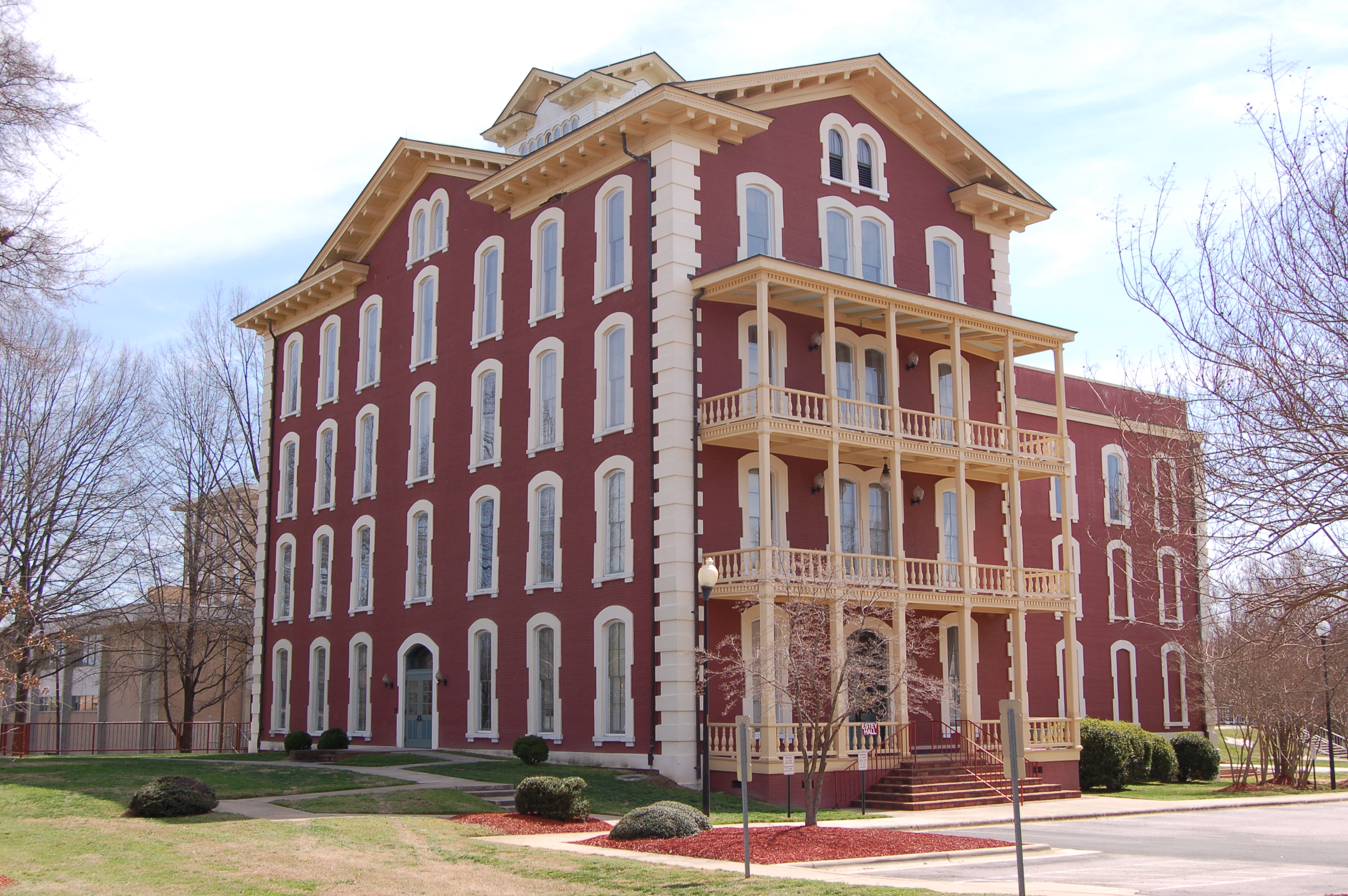
The school began with almost nothing. Henry Martin Tupper, a Union Army veteran and Baptist minister, arrived in Raleigh in 1865 and formed a theological class of freedmen in the Guion Hotel. The following year the classes moved to a wooden building at Blount and Cabarrus Streets, operating under the name Raleigh Institute. In 1870, the school relocated to the former property of Confederate General Rufus Barringer and renamed itself the Shaw Collegiate Institute, honoring benefactor Elijah Shaw. Tupper had ambitions that far exceeded a divinity school. By 1873, Estey Hall rose on campus, funded by Deacon Jacob Estey of Brattleboro, Vermont, who contributed $8,000. Shaw Hall, with its 165-foot frontage and four-story tower, became the most commodious school building in all of North Carolina. Tupper's vision was relentless: by 1881, the Leonard Medical School opened as the first four-year medical school to train African American doctors in the South. Seven years later, in 1888, the Shaw University Law School became the first law school for African Americans in the country. By 1900, the university had trained more than 30,000 Black teachers.
Where Movements Were Born
Shaw's campus did not merely educate students; it shaped the people who reshaped America. Ella Baker graduated in 1927 and went on to become one of the most influential organizers of the civil rights era. When she returned to Shaw in April 1960 to convene student leaders, Martin Luther King Jr. himself attended the meeting. The Student Nonviolent Coordinating Committee that emerged became a driving force for voter registration in Mississippi, sit-ins across the South, and the Freedom Rides. The university's civil rights legacy extends beyond SNCC. Adam Clayton Powell Jr. received his honorary doctorate from Shaw in 1934 and went on to serve as a congressman from New York for over two decades. Angie Brooks, class of 1949, became the first African woman elected President of the United Nations General Assembly. Gladys Knight, the legendary singer, earned her degree here in 1966. The campus that Tupper built from a hotel room theology class had become a launchpad for figures who changed the world.
Righting a Half-Century Wrong
One of Shaw's most remarkable contributions came not from a classroom but from a research study. In the early 1990s, the university led an investigation into why no African American soldier from World War II had ever received the Congressional Medal of Honor. The 272-page study concluded that racial discrimination had caused the military to overlook Black soldiers' contributions. Researchers identified ten men whose records warranted the nation's highest military honor. In January 1995, the findings went to the Department of Defense. By April 1996, the Pentagon agreed that seven of the ten should receive the Medal of Honor. On January 13, 1997, President Bill Clinton awarded the medals. Only one recipient, First Lieutenant Vernon Baker of St. Maries, Idaho, was alive to receive his. The families of the other six accepted posthumously. It was only the third time in American history that the military re-evaluated records to award the Medal of Honor, and it happened because of a small university in Raleigh that refused to let courage go unrecognized.
Brick, Stone, and Survival
The campus itself is an architectural anthology. Five buildings hold national or state historic landmark status: the Frazier House, Estey Hall, Tyler Hall, Leonard Hall, and the Rogers-Bagley-Daniels-Pegues House. Leonard Hall's twin Romanesque Revival turrets stand alongside buildings designed by Raleigh architect George S. H. Appleget in Second Empire and Italianate styles. Later decades brought Brutalist additions. The university has weathered financial crises, enrollment declines, and literal disaster. During the tornado outbreak of April 2011, a tornado struck the campus, severely damaging two dormitories, the student union, and the roof of Estey Hall. Classes were cancelled for an entire semester. But Shaw rebuilt, as it always has. The campus memorial garden holds the tombs of founder Henry Martin Tupper and his wife Sarah, and the university bell tower stands as a monument to everyone who has passed through these grounds since 1865. Shaw co-founded the CIAA, the oldest African American athletic conference in the country, and its Bears have claimed 60 conference championships across multiple sports.
From the Air
Shaw University sits at 35.77N, 78.64W in downtown Raleigh, in the East Raleigh-South Park Historic District. The 24-acre campus is visible south of the North Carolina State Capitol complex. Raleigh-Durham International Airport (KRDU) is approximately 12 nautical miles to the northwest. Best viewed at 2,000-3,000 feet AGL. Look for the distinctive twin turrets of Leonard Hall and the Estey Hall roofline among the downtown Raleigh grid.