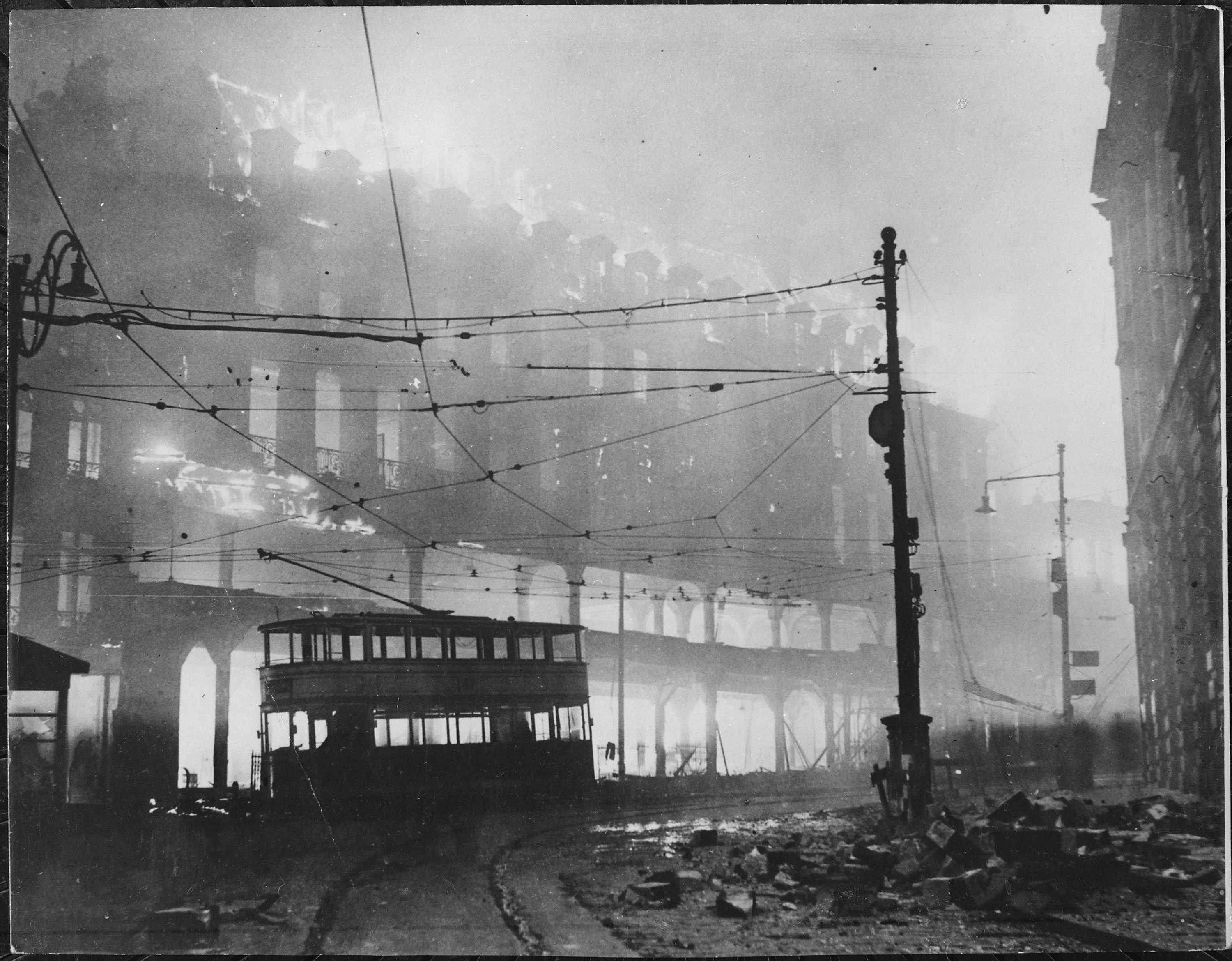
Sheffield Blitz
The Germans called it Schmelztiegel. Crucible. They knew exactly what Sheffield was worth. In 1940, the city of 560,000 people was the beating heart of Britain's war production, its East End packed with steelworks and armaments factories along the River Don. Hadfields steelworks was the only facility in the United Kingdom capable of producing eighteen-inch armour-piercing shells. When the Luftwaffe came for Sheffield on two cold, clear December nights, they came with a target list that read like an industrial directory: Atlas Steelworks, Brown Bayley Steelworks, Meadowhall Iron Works, River Don Works, East Hecla Works. The full moon fell on 14 December, and the bombers used it.
The First Night
On the afternoon of Thursday 12 December 1940, British monitoring stations detected X-Gerat radio beams being laid across northern England and calculated that Sheffield was the likely target. The beams, which German pathfinder aircraft followed to mark targets with incendiary bombs, gave only a few hours' warning. The raid began after dark. At about 9:30 pm, bombs fell on Campo Lane and Vicar Lane, demolishing the west end of Sheffield Cathedral. At 10:50 pm, a 500-kilogram bomb destroyed the C&A and Burtons buildings in Fitzalan Square. Less than an hour later, the Marples Hotel received a direct hit. Seventy-eight people died in that single explosion, the worst single incident of the entire blitz. They were sheltering in the cellar, a deep concrete box beneath the building. Rescue workers found the dead packed together in the enclosed space, crushed and suffocated. The police made extensive efforts to identify every victim, records that survive in the Sheffield City Archives.
Operation Crucible
The second raid came on the night of 15 December, three days later. Together, the two nights of bombing killed over 660 people, injured more than 1,500, and made tens of thousands homeless. The attack destroyed or damaged thousands of houses, shops, churches, and public buildings across the city centre. Yet the Luftwaffe partially failed in its strategic objective. While the residential areas and city centre were devastated, the industrial works along the Don suffered less damage than the Germans intended. Sheffield's steel production was disrupted but not destroyed, and the factories continued to supply the war effort. The irony of the codename Schmelztiegel, Crucible, was not lost on Sheffield's residents. The crucible steel process had been invented in their city by Benjamin Huntsman in the eighteenth century. The Germans were trying to destroy the place that had given them the word.
The City That Forged On
Sheffield's response to the blitz followed the pattern of other bombed British cities: grief, resilience, and a determined refusal to stop working. Damaged factories were repaired and put back into operation with remarkable speed. The steel and armaments that Sheffield produced throughout the rest of the war, including specialised alloys for aircraft engines, gun barrels, and naval armour plate, were essential to the Allied war effort. The human cost was borne heavily by the working-class communities of the East End and city centre, who lived in the shadow of the factories the bombers were aiming at. The Cathedral was rebuilt. The city centre was reconstructed, though the post-war architecture that replaced the Victorian buildings destroyed in the raids has itself become a subject of debate. The Marples Hotel site remained a gap in Fitzalan Square for years, a silent memorial before any formal one was erected.
Remembering the Crucible
The Sheffield Blitz occupies a particular place in the city's memory, less widely known than the bombing of Coventry or London but no less devastating to those who lived through it. Operation Crucible, a play by Kieran Knowles that dramatises the events of those December nights, has been performed in London, Sheffield, and New York, bringing the story to audiences who might never have heard of it. Documents captured at the war's end confirmed the precision of the German targeting: the factories, the collieries, the coke ovens, each listed by name. Sheffield was not bombed indiscriminately. It was bombed because it made the steel that made the weapons that were killing German soldiers. The city survived, kept making steel, and in the process cemented an identity that persists to this day: Sheffield, the Steel City, the place the crucible was named for, and the place the Luftwaffe could not break.
From the Air
Sheffield city centre is at 53.383N, 1.467W. The Blitz targeted the East End industrial areas along the River Don. Nearest airports: Sheffield City/Doncaster (EGCN, 18nm east), East Midlands (EGNX, 30nm south). The former steelworks areas along the Don Valley are visible from 2,000ft. Sheffield Cathedral, rebuilt after the Blitz, is in the city centre.