Shenyang Aircraft Corporation
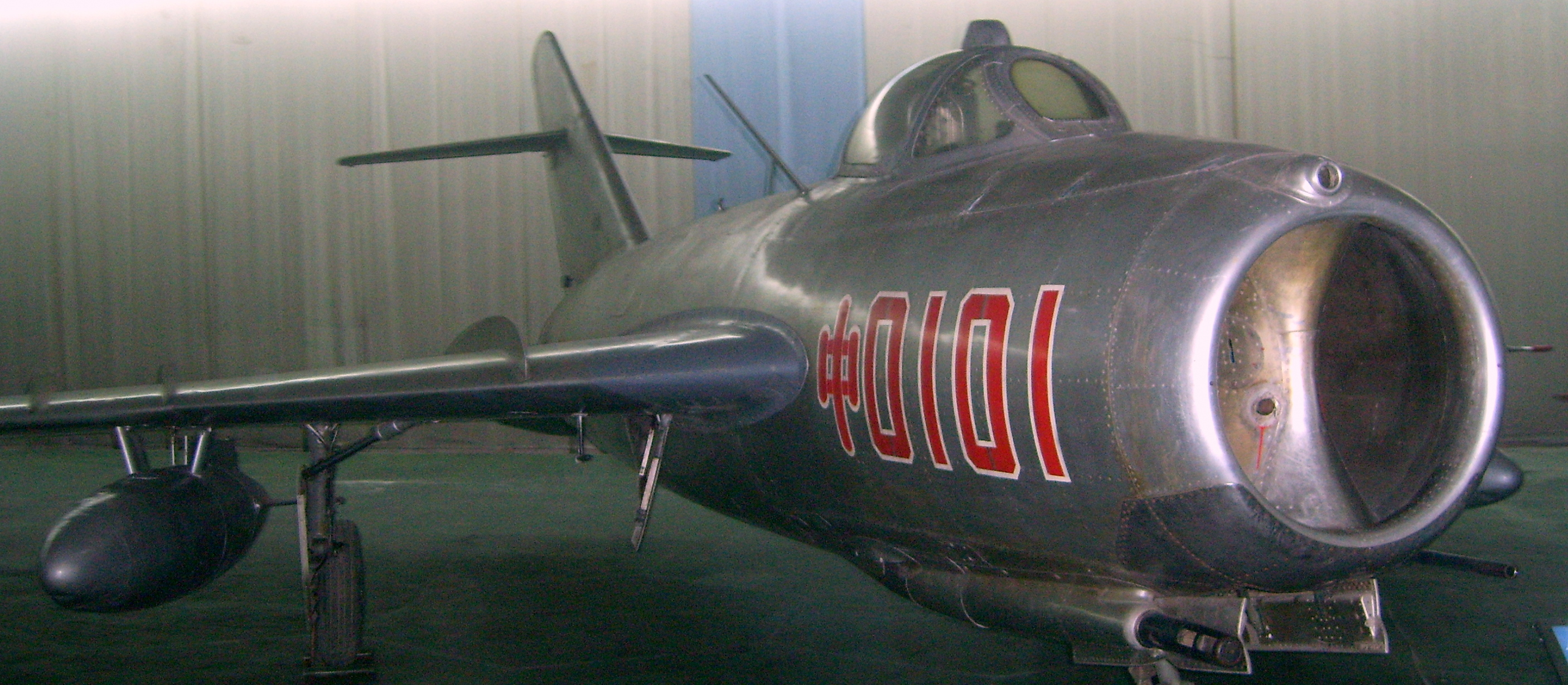
In the classified nomenclature of early Communist China, it was simply the 112 Factory. No name, no public identity, just a number and a mission: build aircraft for a nation that had none. Founded in 1951 in Shenyang, a city already synonymous with heavy industry, the Shenyang Aircraft Corporation became the birthplace of Chinese military aviation. Its first products were licensed copies of Soviet designs. Seven decades later, the same facility produces the J-35, a fifth-generation stealth fighter, and components for the civilian ARJ21 regional jet. The trajectory from copying MiGs to designing stealth aircraft traces the arc of Chinese industrial ambition itself.
Learning by Copying
SAC's early history is a catalog of Soviet aircraft reproduced under license. The J-2 was a Chinese variant of the MiG-15. The J-5 reproduced the MiG-17. The J-6 mirrored the MiG-19. Even the J-7, based on the MiG-21, began life in Shenyang before production moved to Chengdu in the 1970s. This was not mere imitation but a deliberate industrial strategy: absorb foreign technology, build manufacturing capacity, and train a generation of engineers who could eventually design their own aircraft. The approach worked, though it took longer than anyone anticipated. The Nanchang Q-5 fighter bomber was designed in Shenyang before moving to Nanchang for production, one of the first signs that the design bureaus were beginning to think independently.
The Finback and Beyond
The J-8, which NATO designated "Finback," represented SAC's first truly indigenous fighter design. It was a third-generation aircraft that drew on lessons learned from years of Soviet-derived production but reflected Chinese requirements and capabilities. The J-11, a licensed variant of the Russian Sukhoi Su-27, marked a return to foreign cooperation, but this time the technology transfer was deeper. The J-15 carrier-borne fighter and the J-16 strike aircraft followed, each representing an incremental step toward full design independence. SAC also developed its own turbofan engines, including the WS-10 Taihang and the WP-14 Kunlun turbojet, reducing dependence on imported Russian powerplants.
Stealth and the Sixth Generation
The J-35, a mid-weight fifth-generation stealth fighter, represents SAC's current cutting edge. Publicly revealed at the 2014 Zhuhai Air Show as the FC-31, it has since evolved into a production aircraft intended for both domestic use and potential export. Beyond the J-35, reports indicate work on the J-50, a cranked-arrow configuration aircraft with sharply swept wings that may represent a sixth-generation fighter concept. Whether the J-50 reaches production or remains a technology demonstrator, its existence signals that SAC has moved decisively from follower to competitor in advanced fighter design.
Beyond Military Jets
SAC's work extends well beyond its own fighter programs. The corporation produces tail sections and cargo doors for Boeing, fuselage components for the Bombardier Dash 8 and CSeries airliners, and parts for McDonnell Douglas aircraft. A partnership with Cessna to manufacture the Cessna 162 SkyCatcher light sport aircraft ran from 2007 to 2014, producing 192 units before the program was discontinued. SAC also collaborates on the ACAC ARJ21 regional jet, China's first domestically designed commercial aircraft. These civilian programs reflect a broader strategy of using military aviation expertise to build credibility and capability in the commercial market, a path that aerospace manufacturers worldwide have followed for decades.
From the Air
Located at 41.87°N, 123.43°E in northern Shenyang. The SAC facility includes airfields and large manufacturing buildings visible from altitude. Nearest major airport is Shenyang Taoxian International Airport (ZYTX), approximately 15 km to the south. Shenyang Bei'an Airport, associated with SAC operations, is nearby.