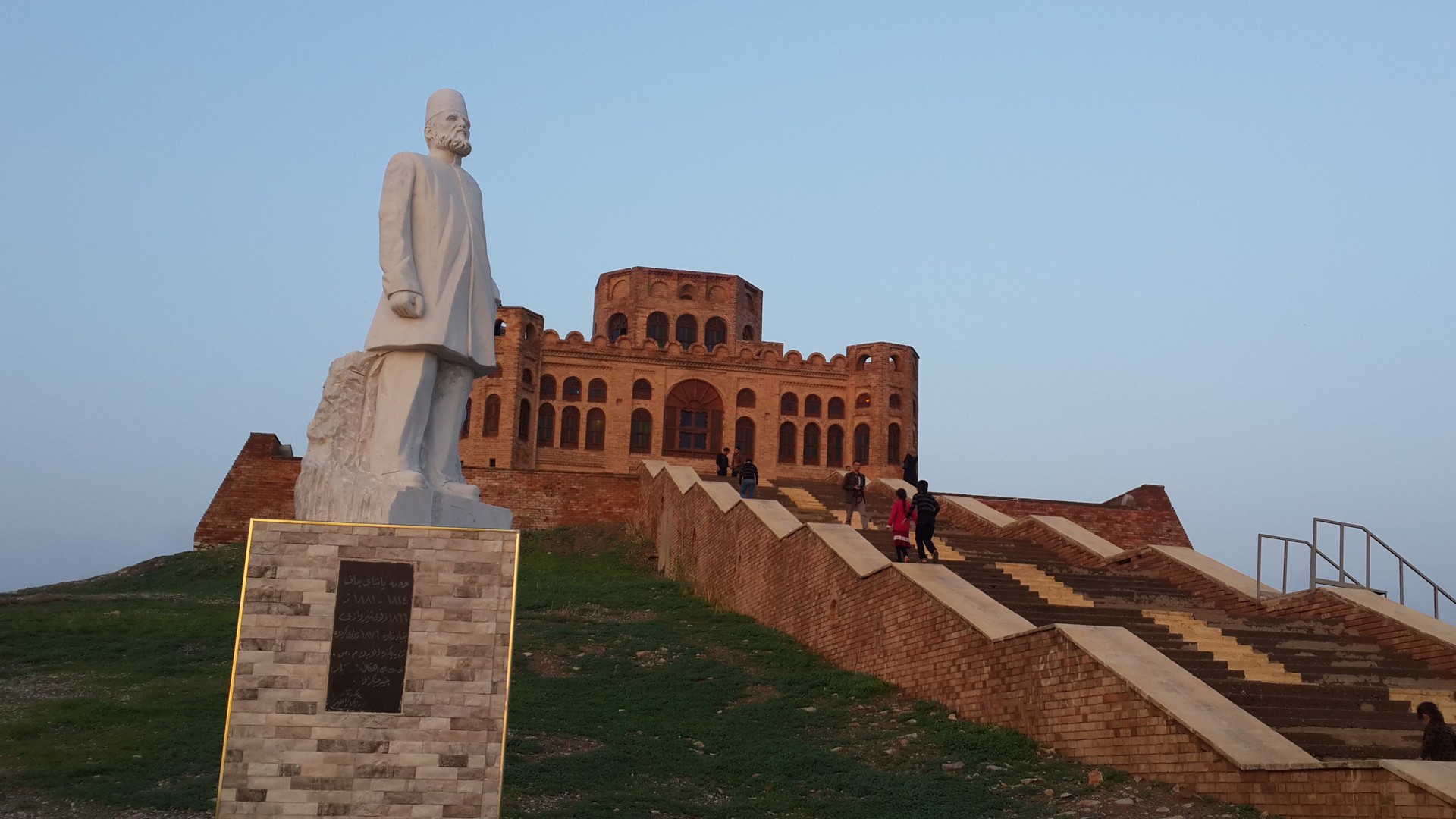
Sherwana Castle
Most Kurdish castles did not survive the twentieth century. The British, who occupied Mesopotamia after World War I, systematically destroyed the palaces and fortresses that had served as power bases for Kurdish leaders. Sherwana Castle, standing on the banks of the Shirwan River in the city of Kalar in Iraq's Kurdistan Region, was the exception. The Jaff family who built it had maintained good relations with the British, and so their fortress was spared. That diplomatic instinct -- knowing which empire to accommodate and when -- was the same quality that had allowed the Jaff to build the castle in the first place.
A Pasha Builds His Stronghold
Mohamed Pasha Jaff erected the fortress in 1866, positioning it on the riverbank to guard against a roster of enemies that included rival Kurdish tribes, Persian incursions, and restive factions within his own confederation. The Jaff were a nomadic Kurdish people whose caravans ranged across a vast territory, from Khanaqin and Qizil Rubat to Penjwen in the Shahrizor region. Their ascent had begun after the Mamluk governor of Baghdad, Suleiman Pasha, defeated the Persian occupation of northern Mesopotamia and drove out the rival Baban confederation in 1850. With the Babans gone and the Ottomans content to leave them in peace, a golden age began for the Jaff. Mohamed Pasha needed a seat of power worthy of his position, and the banks of the Shirwan provided it.
Rivals, Russians, and the Great War
The castle was more than a home; it was a statement. From its walls, Mohamed Pasha consolidated control over the Shahrizor, suppressing pro-Baban Jaff factions led by Aziz Beg Jaff and confronting the Hamavand tribe, rivals who resisted Ottoman authority and, according to the sources, resisted nearly everything else as well. The Hamavands eventually traveled to the Caucasus, fought for the Russians against the Ottomans, and returned armed and intent on creating chaos. Mohamed Pasha's son, Mohammed Ali Beg Jaff, inherited the fortress as Osman Pasha Jaff turned his attention to governing Halabja and Gulanbar. When World War I reached the region, the Jaff faded from prominence. The war's decisive battles in Mesopotamia were fought further south, around Kut, where the Ottomans inflicted one of Britain's worst defeats before eventually signing the Armistice of Mudros.
The Castle That Was Spared
British occupation brought destruction to Kurdish heritage across Iraq. Sheikh Mahmud Barzanji's revolts in Sulaymaniyah in 1919 and again between 1922 and 1924, which drew in segments of the Jaff tribe, gave the British reason to demolish the fortifications that could shelter resistance. Palaces and castles fell across the region. Sherwana Castle survived because the Jaff rulers had maintained a relationship with the occupying power that other Kurdish leaders had not. The castle became a symbol of pragmatic diplomacy -- the fortress that endured not because its walls were strongest but because its builders understood that in a land contested by empires, survival required more than stone.
Damage and Defiance
The decades that followed tested the castle further. Military operations in the 1990s damaged the structure. Heavy rains in 2014 cracked the walls. In 2017, an earthquake -- the same seismic event that devastated communities across the Iran-Iraq border region -- destroyed thirty-five percent of the castle, including a partial collapse of the cupola. Restoration began in 2018. Today the castle stands in Kalar as the ancestral home of the Jaff family, a relic of the era when Kurdish pashas navigated between Ottoman suzerainty and Persian ambition. Its walls bear the scars of every force that has shaped Kurdistan: weather, war, earthquakes, and the political calculations that determined which buildings would stand and which would be razed to the foundations.
From the Air
Located at 34.61N, 45.31E in Kalar, Kurdistan Region, Iraq. The castle sits on the banks of the Shirwan River, visible as a fortified structure within the city. Nearest major airport is Sulaymaniyah International Airport (ORSU), approximately 80 km to the northeast. The terrain is transitional between the Mesopotamian plains to the south and the Zagros foothills to the east and north. Best viewed below 3,000 feet AGL to distinguish the castle structure along the riverbank.