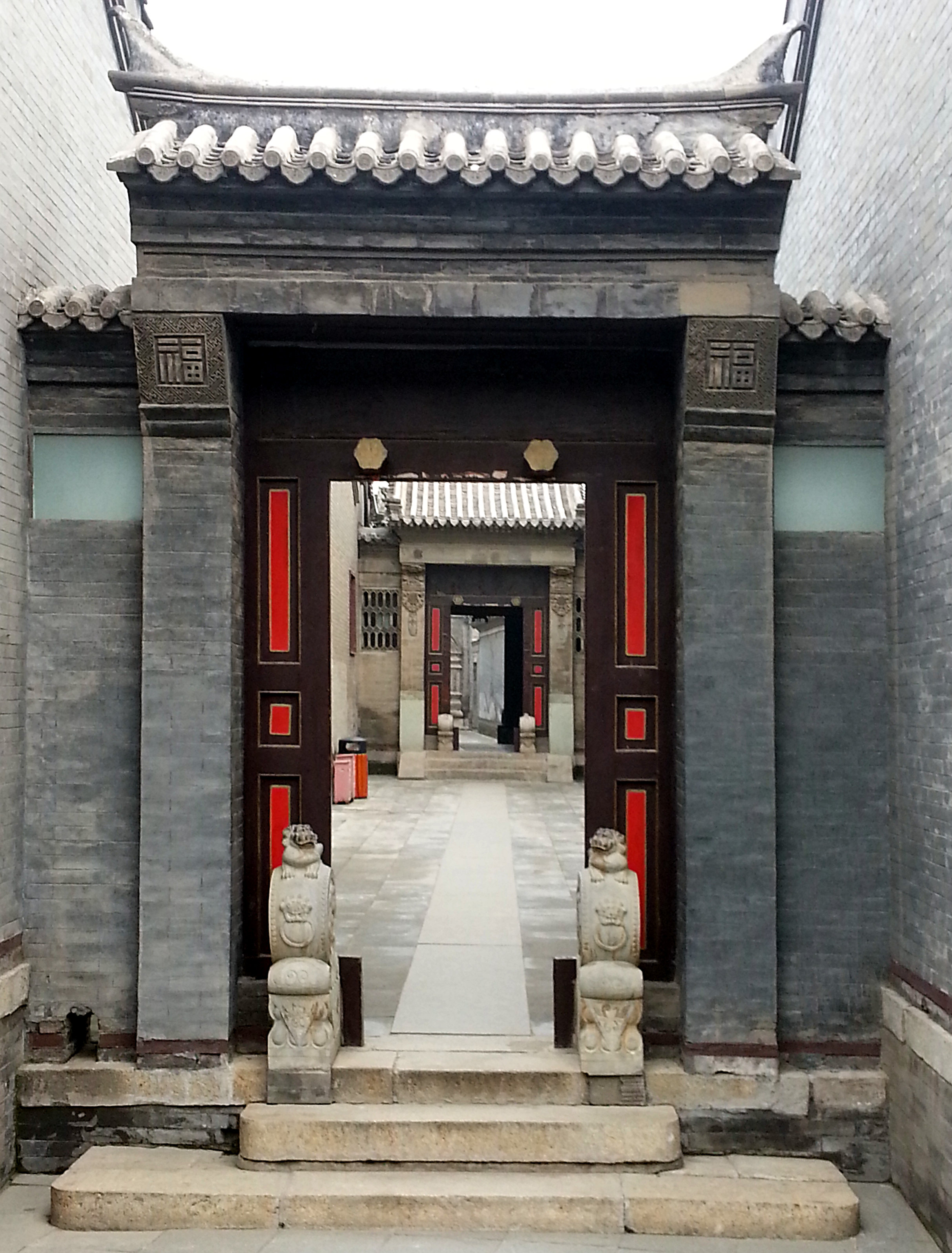
Shi Family Grand Courtyard
The Shi family made their fortune moving grain by water. Generations of river commerce, hauling cargo along the trade routes of northern China, built the wealth that Shi Yuanshi -- fourth-generation scion and the family's most capable businessman -- poured into a residence that would become known as the First Mansion in North China. Built beginning in 1875 in the market town of Yangliuqing, west of Tianjin, the Shi Family Grand Courtyard sprawls across 10,000 square meters of courtyards, halls, apartments, and gardens. It contains over 275 rooms, a private theater, and the Shifu Garden, which blends the formality of imperial garden design with the refined intimacy of southern Chinese landscaping.
From River to Residence
The Shi family's origins trace to Dong'e County in Shandong Province, where they began as grain transport operators, moving essential commodities along China's inland waterways. As wealth accumulated over generations, the family relocated to Yangliuqing and began acquiring large tracts of land. Shi Wancheng, one of the eight great masters of Tianjin, established the family's prominence in the city's mercantile hierarchy. His fourth son, Shi Yuanshi, proved to be both a shrewd businessman and a meticulous household manager. Under his direction, the residence was enlarged multiple times until it reached its present scale -- a compound so extensive that it contained distinct zones for living, worship, business, entertainment, and servant quarters, each arranged with formal symmetry along a central axis.
Architecture of Order
The courtyard's design is built on symmetry. A central passageway forms the axis, punctuated by four archways that mark the progression from public to private space. On the eastern side, traditional single-story houses surround four-sided courtyards in the classic northern Chinese pattern, once the living quarters of the Shi family. The north side housed the accountants' office, the nerve center of the family's commercial operations. The western section contains the grander structures: a family hall for Buddhist worship, the private theater, and a south-facing reception room for guests. Flanking the main residence on both sides are narrower yard rooms where maids and servants lived, a spatial arrangement that made the social hierarchy of the household legible in the architecture itself.
Stage Set for History
Today the Shi mansion stands as a surprisingly well-preserved monument to China's pre-revolution mercantile spirit. Many rooms still feature period furniture, paintings, and calligraphy, offering visitors a tactile sense of how wealth was lived in late Qing dynasty Tianjin. The compound has found a second life as a filming location for Chinese historical dramas, its authentic courtyards and period details providing production designers with settings that no studio lot could replicate. Part of the complex has been converted into the Yangliuqing Museum, with exhibits focused on the symbolic elements embedded in the courtyard's construction, local folk art traditions including the famous Yangliuqing New Year woodblock prints, and the traditional crafts and customs of the region.
A Garden Between Two Traditions
The Shifu Garden, which completed a major expansion in October 2003, occupies 1,200 square meters and represents an unusual aesthetic synthesis. Its design draws on two distinct Chinese garden traditions: the formal grandeur of imperial gardens from Beijing and the north, and the delicate, intimate style of the private gardens found in southern cities like Suzhou. The result is a space that feels both authoritative and refined, as if the Shi family -- merchants who grew wealthy enough to emulate emperors but shrewd enough to appreciate subtlety -- had instructed their garden designers to split the difference. Walking through it, you move between openness and enclosure, formality and surprise, in a way that reflects the complex identity of a family that was neither aristocratic nor common but something distinctly Chinese: commercially powerful, culturally ambitious, and rooted in a specific place.
From the Air
Located at 39.13°N, 117.00°E in Yangliuqing, Xiqing District, western suburbs of Tianjin. The courtyard complex is within the town fabric and not individually distinguishable from altitude, but Yangliuqing town is identifiable along the Ziya River west of central Tianjin. Tianjin Binhai International Airport (ZBTJ) is approximately 40 km to the east. Recommend viewing at 3,000-5,000 ft to see the relationship between Yangliuqing and the river system that made the Shi family's fortune.