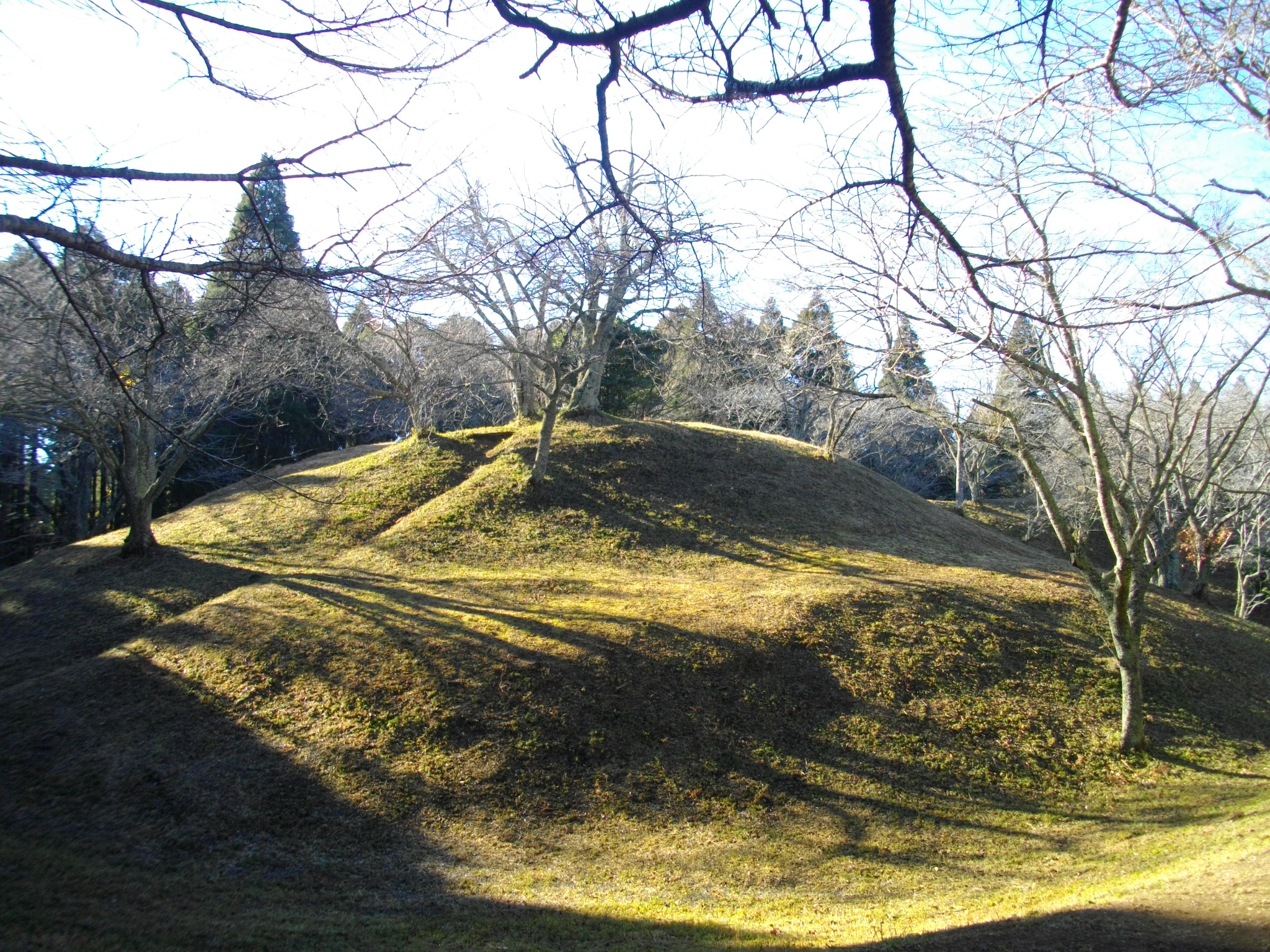
Shibayama Kofun Cluster
Fifty meters of mourners, sculpted in clay, marching in eternal procession toward a burial chamber that has not been opened in nearly fifteen hundred years. The Shibayama Kofun Cluster, a group of ancient burial mounds on a plateau overlooking the Kido River in Chiba Prefecture, preserves one of the most extraordinary archaeological finds in Japan: a complete funeral procession rendered in haniwa -- terracotta figures placed around tombs during the Kofun period. Designated a National Historic Site in 1958, the cluster sits not in its namesake town of Shibayama but in neighboring Yokoshibahikari, on the Kujukuri Plain of the Boso Peninsula. The mounds have endured here since the latter half of the 6th century AD, silent witnesses to a vanished aristocracy.
Keyhole Kingdoms
The cluster contains 15 burial mounds: two large keyhole-shaped kofun and 13 smaller dome-shaped tumuli. The keyhole shape -- a square front joined to a circular rear -- is a distinctly Japanese tomb form called zenpokoenfun, reserved for rulers and elites. The larger of the two keyhole mounds, known as the Tonozuka, stretches 88 meters in total length, built in two tiers and surrounded by a double rectangular moat. The smaller Himezuka measures 58.8 meters, constructed parallel to the Tonozuka just 30 meters to its north. First excavated by Waseda University in 1956, the site yielded treasures that redefined understanding of Kofun-period burial practices in the Kanto region.
A Tomb Painted Red
The Tonozuka's horizontal stone burial chamber was painted red on the interior -- a ritual practice believed to symbolize vitality and the power of the deceased. When archaeologists explored the double moat, they discovered that dozens of haniwa had been preserved in the soft mud where they had fallen over the centuries. The north side of the moat contained clay horses, dogs, cows, female deer, wild boar, ducks, and other waterfowl. Human figures -- men and women -- emerged from around the posterior circular portion of the mound. Grave goods told of wealth and status: magatama beads, gold rings, iron swords, gold bells, and bronze ornamental horse fittings, all sealed away with the dead.
The Procession That Never Ends
The Himezuka yielded the cluster's most astonishing discovery. Its haniwa were found in situ -- still standing exactly where they had been placed some 1,500 years earlier. Stretching 50 meters from the front of the tumulus to the rear burial chamber entrance, a procession of clay figures marches in frozen ceremony. Leading the column are men on horseback wearing formal hats, followed by four horses fitted with sandals and five armed warriors. Behind them, 16 men accompany a wheel-shaped haniwa, trailed by a group of seven women and ten more men. Among the individual figures are a bearded warrior, a farmer holding a hoe, and a man kneeling with a musical instrument. These haniwa, dated to the latter half of the 6th century AD, represent the peak of haniwa artistic expression in Japan -- a snapshot of an entire society rendered in clay for the afterlife.
Guardians in Clay
The remaining 13 dome-shaped tumuli in the cluster, each roughly 20 meters in diameter, remain unexcavated and well preserved. Many of the artifacts recovered from the Tonozuka and Himezuka are displayed at the Shibayama Haniwa Museum, housed in the grounds of the temple Kannonkyo-ji in the town of Shibayama. The museum brings visitors face-to-face with the clay warriors, farmers, and animals that once stood sentinel over the dead. The site itself sits on the east bank of the Kido River, accessible by a five-minute walk from the Yokoshiba Nakadai bus stop on the shuttle bus from Keisei Narita Station -- a quiet, unassuming plateau where centuries of human ambition lie just beneath the surface.
From the Air
The Shibayama Kofun Cluster is located at 35.68N, 140.42E on the Kujukuri Plain of the Boso Peninsula in Chiba Prefecture. From altitude, the area appears as flat agricultural and suburban terrain east of Narita. The mounds themselves are subtle ground features, difficult to distinguish from the air without low-altitude passes. Narita International Airport (RJAA) lies approximately 10 nm to the west-northwest. When flying over this area, note the flat coastal plain stretching east toward the Pacific and the Kido River running through the landscape below.