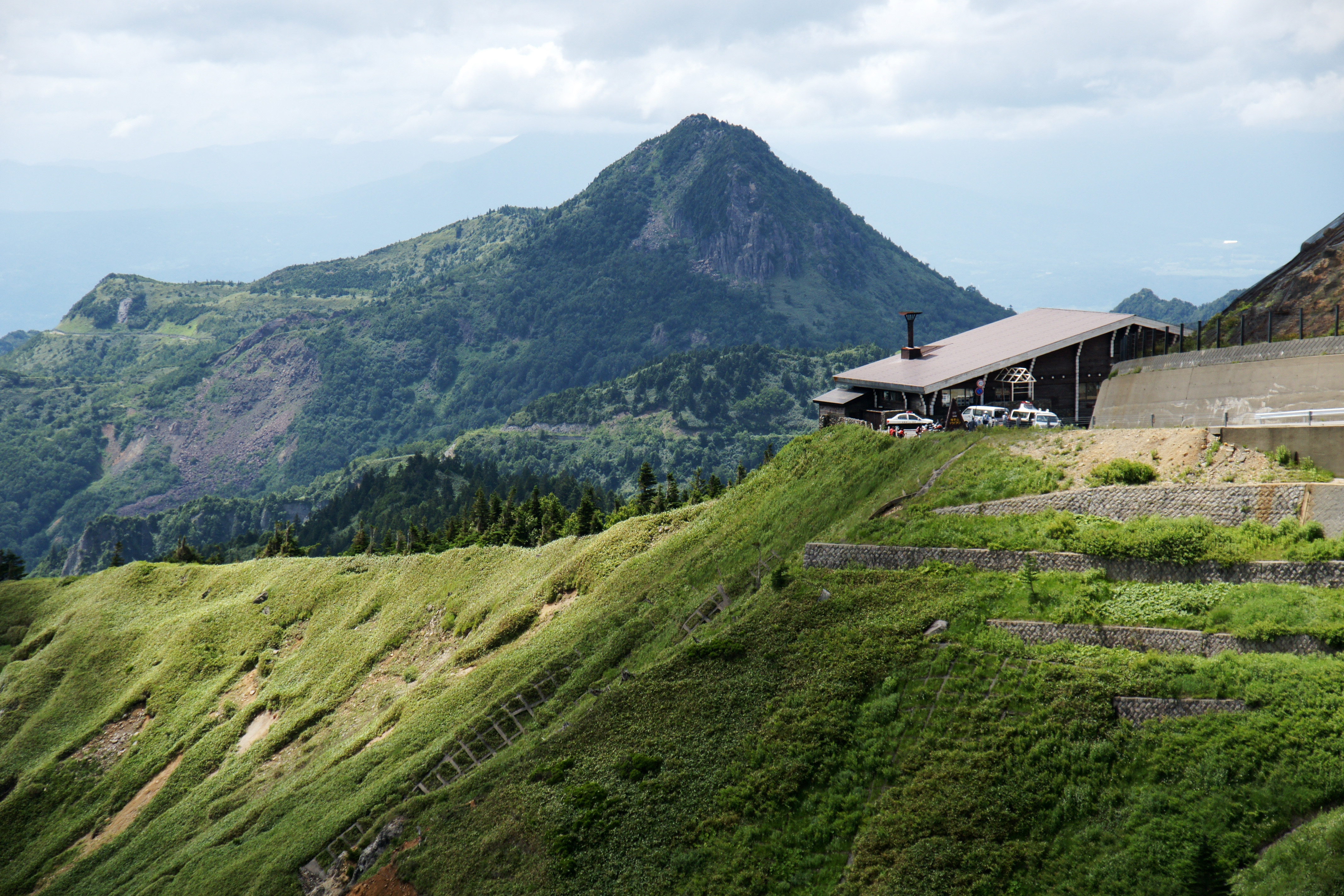
Shiga Highlands
Eighteen ski resorts stitched together across a volcanic highland, linked by lifts, shuttle buses, and a single pass. Shiga Kogen sprawls across 4.25 square kilometers of ridgelines and bowls in the Joshinetsu Kogen National Park, making it arguably the largest ski resort in Japan and the second highest in elevation, with runs reaching 2,307 meters above sea level. When the 1998 Nagano Winter Olympics needed alpine venues worthy of the world stage, they came here for the slalom, Super G, and women's downhill. But Shiga Kogen was famous long before anyone strapped on skis. The hot springs that bubble up through volcanic rock drew visitors for centuries, and in 1980, UNESCO designated the highlands a Man and the Biosphere Reserve, recognizing an ecosystem where beech forests give way to alpine meadows and Japanese macaques soak in steaming pools just down the valley.
An Olympic Playground
The resort is made up of 18 smaller, interconnected ski fields served by 48 lifts. Starting in the 2015-16 season, all areas opened to both skiers and snowboarders, ending a long tradition of restricting certain zones to skiers only. The ski season stretches from mid-November through Golden Week in early May, one of the longest in Japan. More than 100 hotels spread across the resort, offering everything from traditional washitsu rooms with tatami mats to Western-style accommodations. A free shuttle bus network connects the various ski fields and hotel areas throughout the season, running daily unless severe weather forces an early shutdown. The Commemorative Hall of the Nagano Winter Olympics and Paralympics, located in the Hasuike area, displays medals and memorabilia from the 1998 Games.
Before the Skiers Came
Shiga Kogen was an onsen destination long before it became a ski resort. More than seven natural hot spring sources feed the highlands, and many of the resort's hotels pipe volcanic water directly into their own bath facilities. After a day on the slopes, guests can soak in mineral-rich water heated deep beneath the mountains. The tradition connects the resort to a much older Japanese ritual of bathing, meditation, and renewal. The hot springs also support one of the region's most iconic residents: just down the valley at Jigokudani Monkey Park, Japanese macaques gather in steaming pools surrounded by snow, their red faces peering through curtains of rising steam. The same bus that carries skiers to Shiga Kogen stops at the monkey park trailhead.
A Living Biosphere
The UNESCO Biosphere Reserve designation covers a landscape that shifts dramatically with altitude. Lower slopes are cloaked in beech and Japanese oak forests. Higher up, coniferous woods take over, eventually giving way to alpine plant communities near the ridgelines. Japanese larch and white birch cover the plateaus between peaks, their pale trunks striking against dark evergreens. The highlands harbor more than 40 lakes and ponds, and the park is home to Japanese macaques and Japanese serow, the goat-like antelopes that haunt the mountain forests. The Shinshu University Scientific Research Institute occupies the forest around Mount Shiga, studying the rare lava-based soil that makes this area ecologically distinctive. A Nature Observation Trail is open to the public year-round.
Four Seasons on the Plateau
When the snow melts, Shiga Kogen transforms. Hiking trails thread through the highlands, connecting lakes, botanical gardens, and mountain huts. The Higashitateyama Botanical Garden sits atop Mount Higashitate, offering nature trails through alpine flora. Fishing is permitted at Maru Pond and Biwa Pond, while Zako River is one of the few remaining habitats for iwana, the prized Japanese char. Boats can be rented on three of the highland ponds. Golfers, horseback riders, and tennis players find their own corners of the plateau in summer and autumn. The Yokote Sancho Hyutte, a mountain hut perched at a lofty elevation, operates what claims to be the highest bakery in Japan, serving fresh bread and pastries to hikers who have earned the altitude.
Getting to the Highlands
Buses connect Shiga Kogen to Nagano Station and Iiyama Station, making the resort accessible by Shinkansen from Tokyo. The drive up from the valley is an experience in itself: the road is steep and rough, flanked by sharp drop-offs, and in winter it is often covered in ice and snow. Snow tires are mandatory, and four-wheel drive is strongly recommended. Supplies are limited on the mountain. There are no supermarkets, only small convenience stores tucked inside hotels, stocking essentials alongside local craft beers, sake, and souvenir items. The remoteness is part of the appeal. Up here, above the tree line, the modern world feels distant and the mountains feel very close.
From the Air
Located at 36.706N, 138.508E in the highlands of Yamanouchi, Nagano Prefecture, within the Joshinetsu Kogen National Park. The resort area is visible from altitude as a series of cleared ski runs across multiple ridgelines, with surrounding dense forest. Peak elevation reaches 2,307 meters (7,569 feet). The nearest airport is Matsumoto Airport (RJAF/MMJ), approximately 80 km to the southwest. Nagano City lies in the valley below to the west. The terrain is mountainous with volcanic features. Best viewed at 5,000-8,000 feet AGL to see the full extent of the interconnected ski areas across the highland plateau.