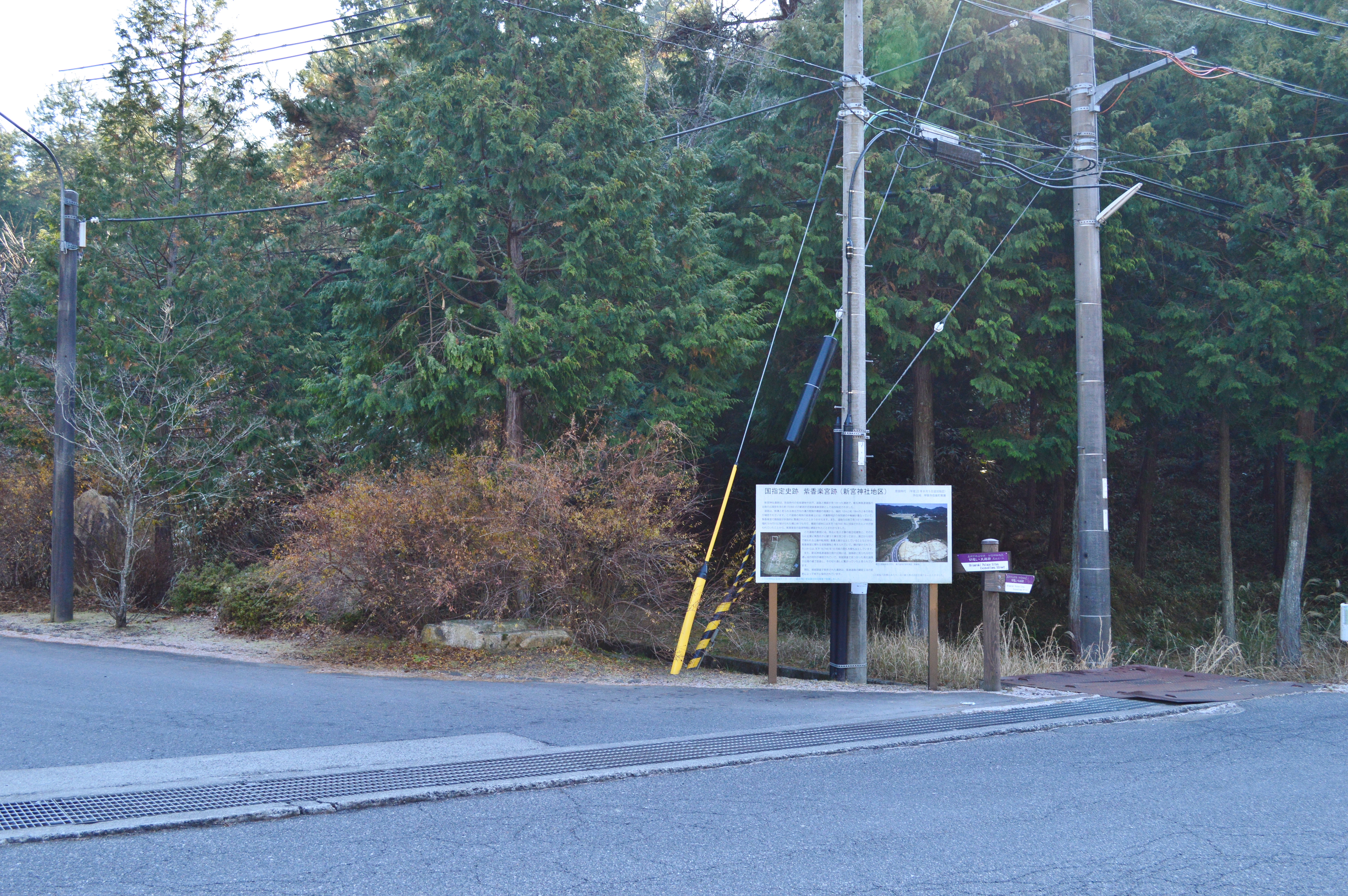
Shigaraki Palace: The Emperor's Mountain Capital That Vanished
An emperor wanted to move heaven to the mountains. In 742, Emperor Shomu began spending more and more time at a detached villa called Rakumura, tucked deep in the forested hills of southern Omi Province, far from the political maneuvering of the established capital. Two years later, he declared this remote retreat -- Shigaraki Palace -- the capital of Japan. He announced plans for a monumental bronze Buddha inspired by the Longmen Grottoes of Tang dynasty China. The pillar for the great statue went up in November 744. Then wildfires swept through the mountains. An earthquake shook the ground. His own vassals resisted the staggering expense. By 745, Shomu had retreated to Nara, and the grand vision of Shigaraki was abandoned. The palace site itself was eventually forgotten, misidentified for decades, and only correctly located by archaeologists in the early twenty-first century.
A Fugitive Emperor's Retreat
Emperor Shomu's decision to build Shigaraki Palace did not emerge from calm deliberation. In 740, the rebellion of Fujiwara no Hirotsugu rattled the court, and Shomu responded by relocating his seat to Kuni-kyo, in what is now Kizugawa, Kyoto. But Kuni was a power base for Tachibana no Moroe, the minister who held de facto control over the daijo-kan council. Shigaraki, deep in the mountains, may have represented Shomu's attempt to escape the influence of any single faction. Historians have offered competing theories: the rival Fujiwara clan under Fujiwara no Nakamaro may have been engineering a political comeback that made the mountains look safer. Alternatively, Buddhist prelates like Roben and Gyoki may have persuaded the emperor that the area held spiritual significance. Whatever the reason, Shomu chose one of the most inconvenient locations imaginable for a national capital -- a mountain basin reachable only by narrow roads through dense forest.
The Colossus That Moved to Nara
Shigaraki Palace was never just meant to be a seat of government. Emperor Shomu envisioned it as the home of a monumental Vairocana Buddha, a cosmic Buddha representing the light that illuminates the universe. The plan was staggering in ambition: Shomu intended to emulate the great Buddha carvings of the Longmen Grottoes in Tang China, but in cast bronze rather than stone. In 744, the palace's name gradually shifted from Shigaraki to Koka, and a Buddhist temple called Koka-ji was established on the grounds to house the great image. That November, workers erected the central support pillar for the statue. In 745, Koka was officially proclaimed the capital. But the project devoured resources at a rate that alarmed the court. Natural disasters compounded the political resistance -- wildfires raged through the mountain forests and the Tenpei Earthquake shook the region. Shomu abandoned Shigaraki and returned to Heijo-kyo, the old capital at Nara. The dream of a mountain Buddha did not die, however. It was transferred to Nara, where it became the Nara Daibutsu -- the Great Buddha of Todai-ji, one of the largest bronze statues in the world, which still sits in its enormous wooden hall today.
Lost and Found Twice
After Shomu's departure, Shigaraki Palace slipped from the physical landscape. The Shoku Nihongi, Japan's official chronicle of the period, records its existence, but the actual location was lost for centuries. In the modern era, ruins in the Urano neighborhood of Shigaraki were identified as the palace site and designated a National Historic Site in 1926. For decades, scholars accepted this identification. Then archaeologists began investigating a site two kilometers to the north, in the Miyamachi neighborhood. What they found was unmistakable: the foundations of large buildings and a trove of wooden tags -- mokkan -- that recorded tax payments to the imperial government. These administrative records pointed clearly to a functioning capital, not a mere temple complex. In 2005, the Miyamachi site was officially redesignated as the Shigaraki Palace ruins. The original Urano site, so long honored as the palace, turned out to be the ruins of Koka-ji -- the very temple Shomu had built to house his never-completed Buddha.
Walking Where an Emperor Dreamed
Today the Shigaraki Palace site lies within the city of Koka, Shiga Prefecture, about twenty minutes on foot from Shigarakigushi Station on the Shigaraki Kogen Railway -- a small local line that itself carries a dramatic history. The ruins were designated a National Historic Site in 1974 under their corrected identification. The excavation sites have been backfilled for preservation, so visitors see rolling terrain and interpretive markers rather than exposed foundations. Some of the artifacts recovered from the site, including the mokkan tax tags, can be viewed at the Koka City Museum. The landscape remains remarkably unchanged from Shomu's era -- forested mountains closing in on all sides, the sense of remoteness palpable even now. Standing here, the emperor's choice makes a certain emotional sense if not a practical one. This is a place that feels set apart from the world, a basin of silence where an eighth-century ruler might have believed he could start civilization over again, closer to the heavens, with a Buddha tall enough to prove it.
From the Air
Located at 34.93°N, 136.08°E in the mountainous interior of Shiga Prefecture, Japan, within the modern city of Koka. The palace ruins occupy a mountain basin surrounded by dense forest, visible from altitude as a small clearing in the wooded hills south of Lake Biwa. The Shigaraki Kogen Railway line threads through the valley below. The nearest major airport is Chubu Centrair International Airport (RJGG), approximately 55 nautical miles to the east-southeast. Osaka Itami (RJOO) is about 40 nautical miles to the southwest. Best viewed at 3,000-5,000 feet AGL to appreciate the mountain-enclosed geography that made this such an unlikely choice for a national capital.