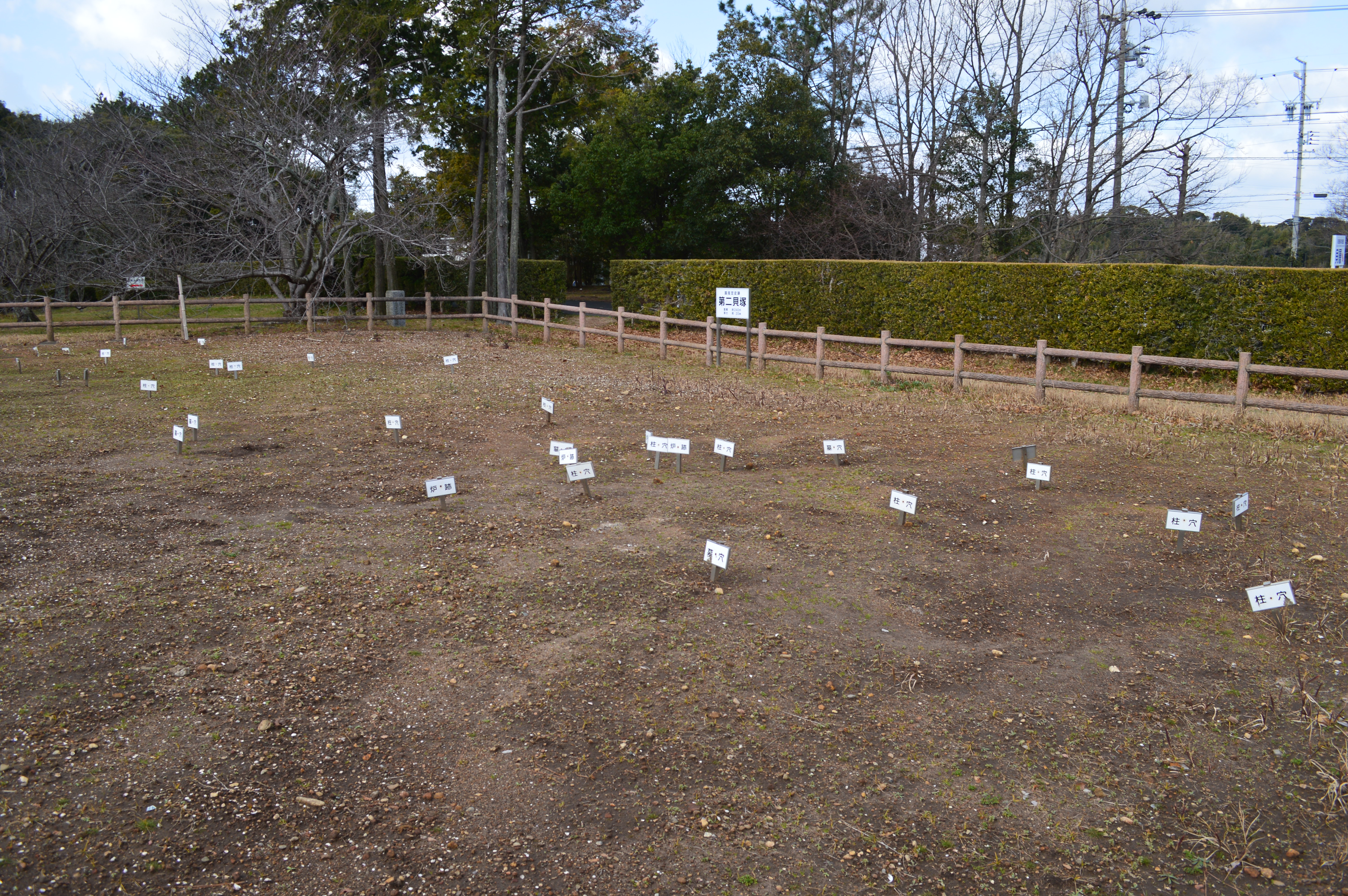
Shijimizuka Site
The clams gave the place its name. Shijimizuka -- "clam mound" -- sits on a small plateau in what is now central Hamamatsu, about a kilometer from Lake Sanaru. For roughly a thousand years, from around 2000 BC to 1000 BC, Jomon people lived here, gathering freshwater shijimi clams and smelt from the lake, hunting deer and wild boar in the surrounding forests, and fishing the saltwater channels nearby. They discarded their shells in great heaps that grew, layer by compressed layer, into mounds containing millions of individual specimens. Those middens, modest-looking hillocks of compacted shell and earth, turned out to be one of the most detailed records of prehistoric daily life in all of Japan.
When the Sea Was Higher
To understand why the Jomon chose this spot, you need to rewind the climate. During the early to middle Jomon period, roughly 4000 to 2500 BC, sea levels stood five to six meters higher than today, and average temperatures ran about two degrees Celsius warmer. Japan's Pacific coastline was a different shape entirely, with bays and inlets reaching further inland. Coastal settlements flourished, and their inhabitants left behind middens packed with bone, botanical material, pottery fragments, stone tools, and the shells of countless molluscs. Most of these garbage heaps of deep time are found along the Pacific coast. Shijimizuka is one of the richest. Lake Sanaru, teeming with clams and fish until the early 1930s, was once the pantry that sustained this community across a full millennium.
Farmers, Scholars, and a Visiting American
The mounds were no secret. Mid-Edo period records noted the enormous shell deposits in the area, and by the 1830s, local farmers were mining the calcium-rich shell material for fertilizer, destroying portions of the site in the process. The turning point came in 1877, when the American zoologist Edward S. Morse excavated the Omori Shell Midden near Tokyo -- Japan's first modern archaeological dig. The excitement generated by Morse's discoveries turned scholarly attention toward Hamamatsu, and in 1889, Tokyo Imperial University sent investigators to Shijimizuka. They recovered Jomon pottery fragments and stone tools, confirming the site's deep antiquity. Further excavations in 1895 and 1915 unearthed human remains from thirty grave sites, along with shell jewelry -- necklaces and bracelets crafted from the same material the inhabitants ate.
Layers of a Thousand Years
Kyoto Imperial University dug into the site between 1920 and 1922, uncovering the foundations of twenty rectangular pit dwellings -- semi-subterranean homes with earthen floors that were typical of Jomon settlements. Shizuoka University returned with modern methods in 1954-1955 and again in 1983, bringing systematic stratigraphic analysis to the mounds. Today the shell midden is preserved in four sections. One displays its cross-section to a depth of approximately 1.5 meters, each visible layer a chapter in the story of habitation spanning a thousand years. Mixed among the freshwater clam shells are the bones of saltwater fish, proof that the Jomon residents exploited both marine and forest resources with remarkable versatility. Iron arrowheads, jewelry, and pottery recovered from the site now fill display cases at the Hamamatsu City Museum, located within Shijimizuka Park on the south side of the ruins.
Walking Among Ghosts
The Japanese government designated Shijimizuka a National Historic Site in 1959, and in 1984 it was expanded and opened to the public as an archaeological park. Several pit dwellings have been reconstructed on their original foundations, their thatched roofs and sunken floors offering a visceral sense of scale -- these were compact, practical homes built by people who knew exactly how to live off what the land and water provided. The park also preserves a late-nineteenth-century farmhouse, creating an accidental timeline: Jomon dwelling, Meiji farmhouse, and the modern city of Hamamatsu pressing in on all sides. Visitors walking the grounds stand atop layers of discarded shells that accumulated grain by grain across ten centuries, each one a meal consumed, a day lived, a small transaction between humans and their environment recorded in calcium carbonate.
From the Air
Located at 34.714N, 137.703E in central Hamamatsu, roughly 1 km south of Lake Sanaru. The park is small and embedded in the urban grid, so it is best identified by proximity to the lake. Hamamatsu Air Base (RJNH) lies approximately 4 nm to the southeast. Shizuoka Airport (RJNS) is about 27 nm to the east-northeast. Expect urban haze; best visibility in winter months.