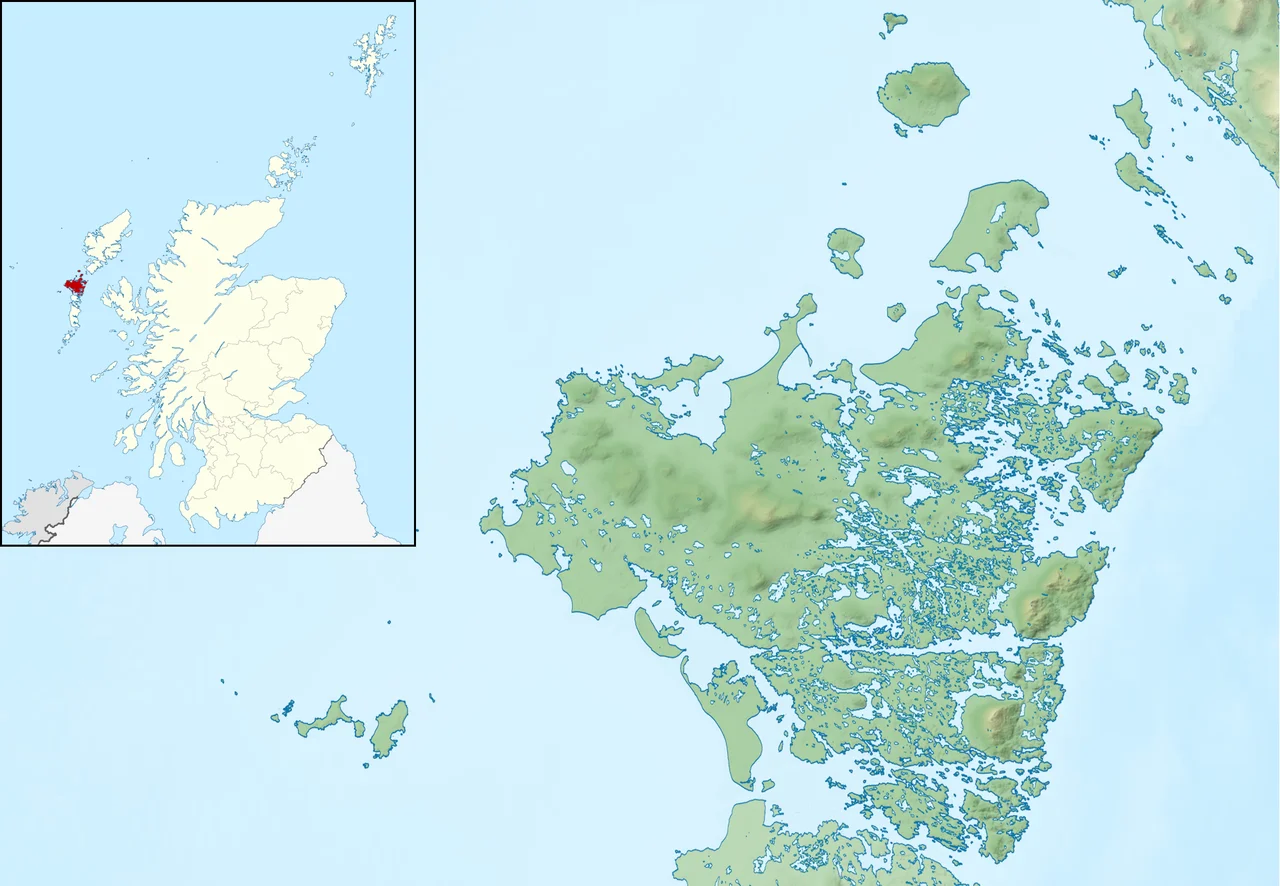

Shillay, Monach Islands
A lighthouse keeper carved two words into a stone at Shillay: 'Eternity Oh Eternity.' No one knows precisely when, or who. The stone was later removed from the lighthouse and built into the wall of the church at Paible on North Uist, where it can still be seen. Whether the carving referred to the small island just to the south of Shillay - called Eilean Siorraidh, the Island of Eternity - or to the keeper's own state of mind during long nights on this Atlantic outpost is unrecorded. The two interpretations are not mutually exclusive.
Seal Island
Shillay - in Scottish Gaelic Siolaigh or Seilaigh - takes its name from the Old Norse selrey, meaning Seal Island. The Norse who named these islands had reached the Hebrides by sea, and they named what they saw: the seals hauling out on the rocks, in numbers large enough that the entire island took its identity from them. The Monach Islands, the small archipelago of which Shillay is the westernmost member, still host one of the most important grey seal breeding colonies in Britain - thousands of pups are born here every autumn, in the season when the storms come in unbroken from the Atlantic. The seals were Norse currency. Their skins clothed sailors, their oil lit lamps, their meat fed crews. The name has lasted a thousand years on essentially the same logic.
A Confused Geography
The Monach Islands present a small puzzle. Ceann Iar, one of the larger islands in the group, has a name that literally means 'western headland' - and yet Shillay, not Ceann Iar, is the westernmost island. The naming presumably reflects a moment when Shillay was not yet recognised as part of the group, or when the names were assigned from a viewpoint that has since been forgotten. Like most of the Monach Islands, Shillay has thin, sandy soil over a bedrock of ancient gneiss. In the sixteenth century, a huge wave - probably a North Atlantic storm surge of historic violence - eroded much of the soil that had accumulated. The damage is still visible. Around Shillay sit several smaller islets: Eilean Siorraidh, Odarum to the north, and Raisgeir. Each is a separate fragment of the same exposed reef.
The Stevensons and the Red Brick Tower
The Shillay lighthouse was built in 1864 by David and Thomas Stevenson - the second generation of the Stevenson lighthouse dynasty that lit the dangerous Scottish coast. Thomas Stevenson's son was Robert Louis Stevenson, the novelist, who failed at engineering but absorbed the family discipline into his prose. The Shillay tower is red brick - unusual for Hebridean lighthouses, most of which were built in white-painted stone - and stood as one of the lonelier postings in the Northern Lighthouse Board's network. It went dark during the Second World War in 1942 and was not relit after the war ended in 1948. For nearly half a century, Shillay had no light. Then in 1993 the oil tanker Braer ran aground in Shetland, and the resulting environmental disaster prompted a review of Atlantic navigation. A new light was recommended for the deep-water route west of the Hebrides.
An Aluminium Mistake, and a Return
In 1997 an automated aluminium light was installed at Shillay, intended as a permanent replacement for the old Stevenson tower. It did not work well. The light was too low, the visibility too short, the maintenance more expensive than expected. By 2005 it had become clear that the cheapest solution was to refurbish the original red brick lighthouse that had been dark since 1948, rather than try to raise the aluminium replacement to adequate height. In 2008, after sixty years of darkness, the Stevenson tower was put back into use - automated now, unmanned, but still recognisably the same building those Victorian engineers had raised on the empty Atlantic edge. The keepers who served here are long gone. The stone with the carving sits in the wall of the Paible church. The light still burns each night, watching the deep-water lane where the Braer's successors pass.
From the Air
Shillay sits at 57.527 degrees north, 7.693 degrees west, the westernmost of the Monach Islands roughly 8 nautical miles west of the North Uist coast. The nearest airport is Benbecula (ICAO: EGPL), about 23 nautical miles east-southeast across the open water. From altitude on a clear day the Monach group appears as a low, broken chain of pale sandy islands rising barely above the Atlantic swell, with Shillay marking the western end. The red brick lighthouse is a distinctive feature against the otherwise featureless terrain. Atlantic weather is harsh - expect strong westerlies, frequent low cloud, and quickly changing visibility. VFR conditions are infrequent and brief.
Nearby Stories
- Howmore 11 km away
- Amhuinnsuidhe Castle 15 km away
- German submarine U-722 19 km away
- St Clement's Church, Rodel 20 km away
- Hebrides 38 km away
- St Kilda, Scotland 41 km away
- German submarine U-516 145 km away
- The Laki Eruption: The Volcano That Changed World History 882 km away