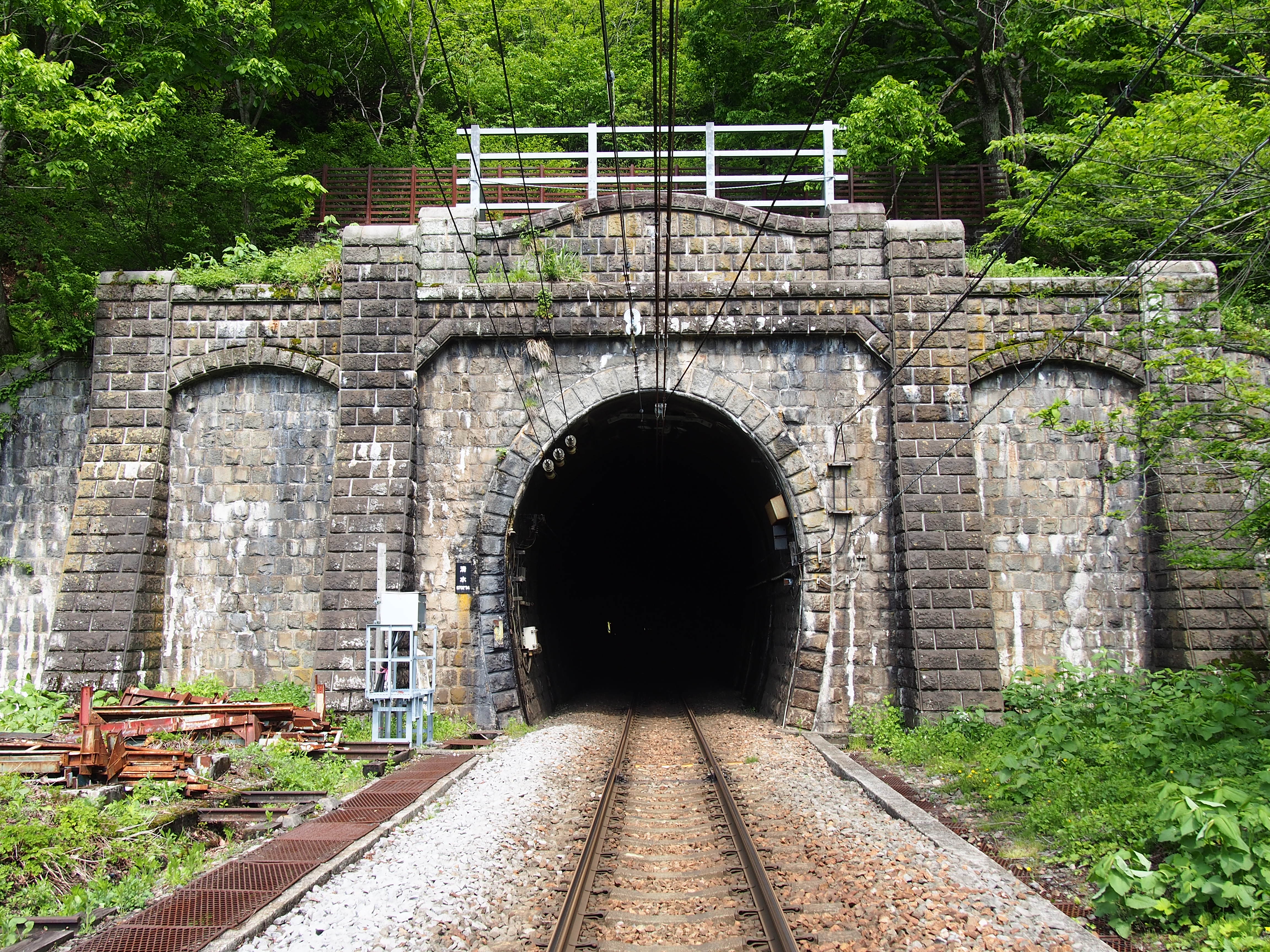
The Shimizu Tunnels: Boring Through the Backbone of Japan
In 1922, Japanese engineers drove the first drill into the mountain range that separates the Pacific side of Honshu from the Sea of Japan coast. Nine years later, in 1931, they emerged on the other side with a 9,702-meter tunnel -- the longest in Japan at the time -- and shaved four hours off the journey between Tokyo and Niigata. That tunnel was only the beginning. The same mountain pass would be bored through twice more over the next five decades, each tunnel longer, faster, and more ambitious than the last, until the Daishimizu Tunnel opened in 1982 at 22.2 kilometers -- then the longest railway tunnel in the world. Three tunnels through one mountain, three eras of Japanese engineering, one obsession: connect the capital to the snow country.
Nine Years in the Dark
The original Shimizu Tunnel was an act of brute determination. Construction began in 1922 on the Joetsu Line, JR East's rail corridor linking Tokyo to Niigata Prefecture. The engineers faced a mountain range that forms the geographic spine of central Honshu, separating the Pacific watershed from the Sea of Japan. Punching through 9,702 meters of rock required not just the main bore but two additional spiral tunnels along the mountain pass route to manage the elevation changes. When the tunnel opened in 1931, it eliminated the need for trains to cross the Usui Pass, slashing travel time to Niigata by four hours. The tunnel was too long for steam locomotives -- exhaust fumes would have been lethal -- so the tracks in and around the bore were electrified from the start, making Shimizu one of Japan's earliest electrified rail corridors.
The Parallel Twin
By the 1960s, traffic on the Joetsu Line had outgrown a single track. The solution was not to widen the original tunnel but to drill an entirely new one beside it. The Shin-Shimizu Tunnel was completed in 1967, running 13,500 meters mostly parallel to its older sibling. The pair now operates as a one-way system: northbound trains toward Niigata use the newer, longer Shin-Shimizu Tunnel, while southbound trains toward Tokyo pass through the original 1931 bore. Deep inside the Shin-Shimizu Tunnel, 70 meters underground, sits Doai Station -- the deepest train station in Japan. Its platform is reachable only by descending 486 steps, with no elevator or escalator. Locals have nicknamed it Japan's Number One Mole Station, a place where catching a train means first descending into the mountain itself.
The Bullet Train Breaks Through
The third and most ambitious tunnel arrived with the Shinkansen. The Daishimizu Tunnel was completed in 1978 for the Joetsu Shinkansen, the high-speed line connecting Tokyo to Niigata that opened in 1982. At 22.2 kilometers, it was the longest railway tunnel in the world when finished, holding that record until the Seikan Tunnel beneath the Tsugaru Strait surpassed it. The Daishimizu Tunnel transformed the Tokyo-to-Niigata journey from a grinding multi-hour rail trip into a smooth ride of approximately one hour and forty minutes -- three hours faster than the conventional Joetsu Line. The tunnel bores through the same mountain range as its two predecessors, but at far greater depth and length, carrying bullet trains at speeds unimaginable when the first drill bit entered the rock in 1922.
A Half-Century in Cross-Section
Viewed together, the three Shimizu tunnels form a cross-section of modern Japanese engineering. The 1931 original, with its spiral approach tunnels and pioneering electrification, represents the ambition of prewar Japan to bind its provinces together by rail. The 1967 Shin-Shimizu, with its doubled capacity and underground station, reflects the postwar economic boom that overwhelmed single-track infrastructure. The 1982 Daishimizu, carrying Shinkansen passengers at high speed beneath the mountain, embodies the bullet-train era that made Japan synonymous with modern rail travel. All three tunnels bore through the same mountain pass near the border of Gunma and Niigata Prefectures, all three serve the same purpose -- bridging the continental divide between Tokyo and the Sea of Japan -- and all three still operate today.
From the Air
The tunnel entrances are located near 36.846N, 138.931E on the Gunma-Niigata prefectural border, beneath the same mountain range as Mount Tanigawa. The tunnels themselves are invisible from the air, but the Joetsu Line and Shinkansen rail corridors are visible threading through the mountain valleys on both sides of the pass. The southern (Gunma) portals are near Doai Station in the Minakami area; the northern (Niigata) portals emerge near Yuzawa. Nearest airports are Niigata Airport (RJSN) roughly 100 km north and Tokyo Haneda (RJTT) roughly 150 km south. Mountain weather in this area is extreme due to the continental-Pacific collision zone; heavy snowfall is common on the Niigata side in winter.