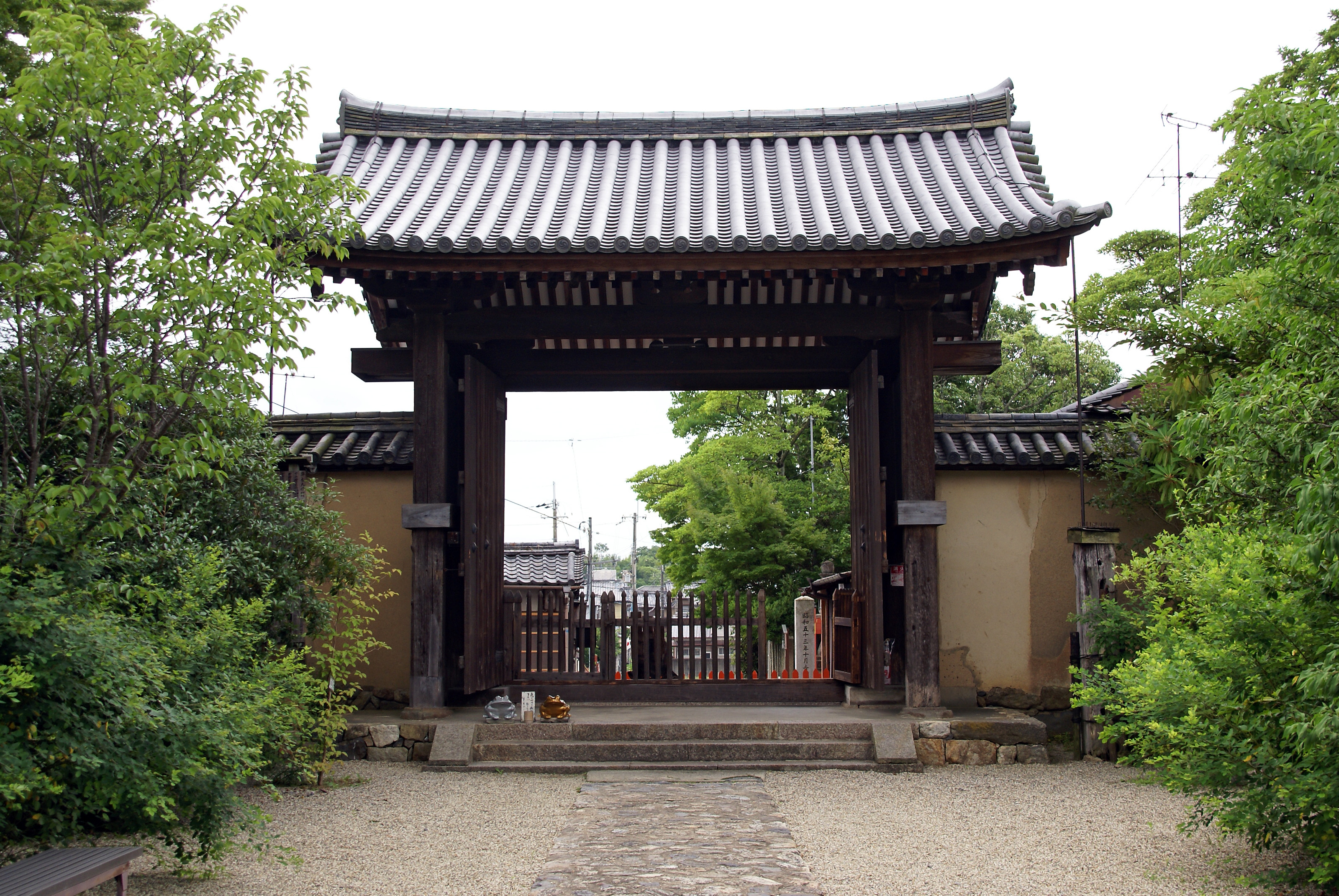
Shin-Yakushi-ji
Twelve clay warriors have stood in a circle for nearly thirteen centuries, their unbaked bodies frozen in postures of fierce vigilance. Inside the dim Hon-do of Shin-Yakushi-ji, these life-size Heavenly Generals surround a seated wooden Buddha with the stillness of sentinels who have never once been relieved. Founded in 747 by Empress Komyo in the ancient capital of Nara, this temple began as a wife's desperate prayer for her husband's failing eyesight. Emperor Shomu was going blind, and his empress turned to Yakushi Nyorai, the Buddha of Healing, commissioning an entire temple complex devoted to restoring what medicine could not.
A Prayer Made Architecture
The temple Empress Komyo built was originally vast. Records at nearby Todai-ji indicate she founded it in March 747 as Koyaku-ji, ordering a grand nine-bay Kon-do erected and seven statues of the Healing Buddha installed inside. The complex followed the Shichido garan layout, the full seven-hall arrangement that marked the most ambitious Buddhist temples of the Nara period. But ambition and permanence are different things. In 780, just thirty-three years after founding, a thunderbolt struck and fire consumed much of the complex. The original Kon-do was later destroyed during the Heian period, and the temple fell into decline. What survives as today's main hall was never designed for that role. Scholars believe it was originally the temple's shokudo, or refectory, pressed into service after the true main hall burned. This accidental promotion proved fortunate. The building has stood since the 8th century, making it one of the oldest wooden structures still in use in Japan.
The Healing Buddha in Hinoki
The seated figure of Yakushi Nyorai inside the Hon-do is carved from a single hinoki cypress tree, with no lacquer or paint applied to the wood except faint coloring on the face. The effect is austere and powerful. His lips protrude distinctively, his curls are deeply defined, and his nose is broad and prominent. His right hand rises in the Abhayamudra, the gesture of fearlessness, while his left palm rests open on his knee cradling a small medicine pot. The statue is generally dated to the late 8th century and considered a masterpiece of early Heian-period wooden sculpture. In 1975, investigators discovered a hidden treasure: eight scrolls of the Lotus Sutra from the early Heian period tucked inside the body of the statue, now designated as a National Treasure. Together with six small attendant figures on its halo, the main image forms a group of seven Healing Buddhas, the protective assembly that Empress Komyo originally envisioned.
The Oldest Guardians in Japan
The Twelve Heavenly Generals that ring Yakushi Nyorai are Shin-Yakushi-ji's most celebrated treasures. Created between 729 and 749 during the Nara period, they are the oldest extant set of Twelve Heavenly Generals in Japan. Fashioned from unbaked clay, they were originally painted in vivid colors: salmon-toned skin, ink-drawn beards, bright armor, and gold leaf accents. Time has stripped away most of that decoration, leaving the raw earth to speak for itself. Each figure stands roughly life-size, between 153 and 170 centimeters tall, and each holds a unique weapon or object. Bazara cries out with hair standing on end, gripping a sword. Anira inspects the nock of an arrow with scholarly precision. Shintara clutches a sacred gem and staff while standing on a demon. One figure, Haira, was destroyed in an earthquake during the late Edo period and replaced with a wooden replica in 1931. Eleven of the twelve are designated National Treasures; the modern replacement is not.
Meaning in the Name
Despite sharing the word Yakushi with the famous Yakushi-ji temple also located in Nara, Shin-Yakushi-ji has no institutional connection to its more prominent neighbor. The character shin in the name is typically translated as new, but in this temple's case it carries the meaning of true or genuine, reflecting the deep sincerity of Empress Komyo's devotion to the Healing Buddha. The temple belongs to the Kegon sect of Buddhism and sits on the eastern edge of Nara, on the lower slopes of Mount Kasuga, in a quiet residential neighborhood far removed from the tourist crowds that flock to nearby Todai-ji. Today, Shin-Yakushi-ji holds multiple National Treasure designations, including the Hon-do itself, the principal Yakushi Nyorai image, and the eleven original clay generals. Its belfry, built in 1279 during the Kamakura-period revival, is a designated Important Cultural Property featuring the distinctive flared skirt style popular from the late Heian period onward.
From the Air
Located at 34.676N, 135.846E in eastern Nara, on the lower slopes of Mount Kasuga. The temple sits about 1.5 km southeast of Todai-ji. Nearest airport is Osaka Itami (RJOO), approximately 35 km west. Nara is also accessible from Kansai International (RJBB), about 70 km south. From above, look for the wooded slopes of Kasugayama Primeval Forest to the east and the grid pattern of central Nara to the west. Best viewed at 2,000-3,000 feet AGL for context within the broader Nara temple district.