Shinas
In January 1810, a British naval force stormed the town of Shinas on the northern Omani coast, assaulting what they called a pirate stronghold guarding the Strait of Hormuz. Lieutenant Richard Temple sketched the scene from the sea: a fortified settlement hugging the coastline, cavalry charging across the sand. Two centuries later, Shinas is no longer a pirate haven, but the rectangular fortress near the beach still stands -- rebuilt, restored, and watching over the same waters where dhows once sailed to Zanzibar, Bombay, and Basra.
Fortress on the Sand
Shinas Fort dates to 1229 AD, built during the Nabhani dynasty as a rectangular fortress near the beach, surrounded by walls with three round towers and one rectangular tower. It served as defense post, dwelling, court, and school. Inside were rooms for storing weapons and food, spaces for guards, a mosque, a well, and five cannons. The fort was partially destroyed in the early 19th century during conflicts and was restored by the Ministry of Heritage and Culture in 1984, reopening in 1986 under Sultan Qaboos bin Said. Beyond the main fort, approximately 35 ancient watchtowers are scattered across the wilaya, remnants of a time when coastal defense was a constant necessity.
Water From the Mountains
The fertile plains of Shinas owe their productivity to the aflaj -- traditional irrigation channels that carry mountain water to farmland. These engineered waterways, recognized by UNESCO as part of Oman's cultural heritage, enabled cultivation of seasonal crops like watermelon, cantaloupe, and tomatoes on land that would otherwise be too arid. Shinas became particularly known for its Omani lemons, which were exported to countries across the region. The province covers roughly 2,800 square kilometers, stretching from the coastline through plains and into the mountains, with Wadi Fayd and Wadi Hameera cutting through the landscape.
Sailors to Zanzibar
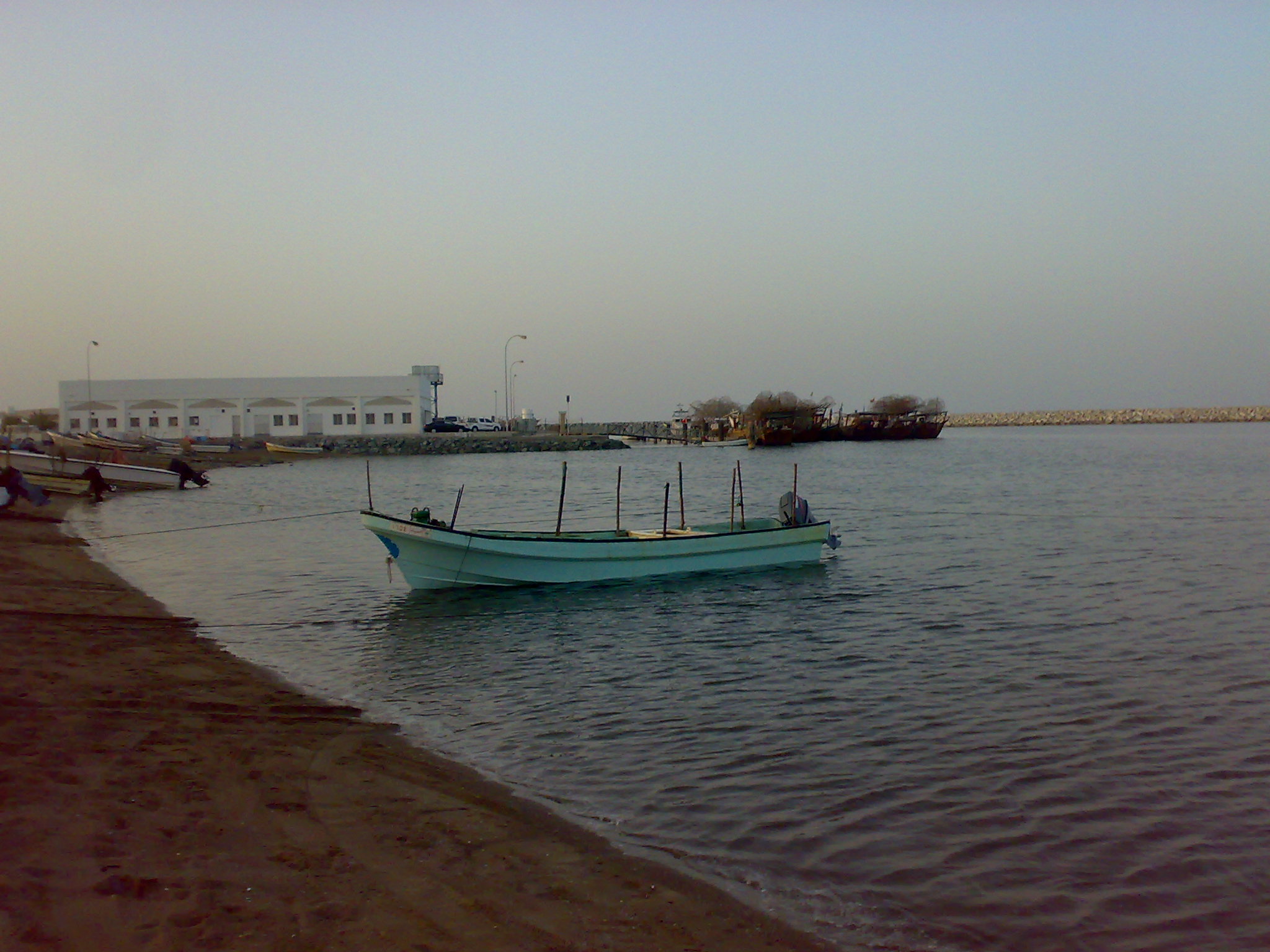
The sea defined Shinas long before agriculture did. Local traders established routes to Bombay, Zanzibar, Basra, Kuwait, and Malaysia, exporting dates, lemons, palm fronds, and handicrafts while importing wood, kerosene, salt, and spices. The remnants of old trading vessels can still be found along the shore, though only traces remain of the ships that once carried the town's merchants across the Indian Ocean. While Shinas never built ships itself, ship maintenance and boat construction flourished to service the merchant fleet. The port, established in 1996, continues to serve the fishing industry and local trade among the northern Batinah wilayats.
Border Town, Living Market
Shinas sits at the northernmost edge of Oman's Al Batinah coast, bordering the United Arab Emirates at the crossings of Khatmat Milaha, Al Wajajah, and Umm Al Ghaff. This border position has made it a meeting point between Omani and Emirati cultures. The town's souqs -- traditional marketplaces -- remain active. The Wilayat Market occupies the town center, while the Old Wilayat Market sits near the fort. Al Aqar Market, positioned at a crossroads, has attracted restaurants and service shops. Three hours from Muscat by car, Shinas preserves the rhythm of an Omani coastal town where the fishing boats still go out at dawn and the aflaj still run.
From the Air
Located at 24.75N, 56.47E on Oman's northern Al Batinah coast, near the UAE border. The town is visible as a coastal settlement with agricultural plains extending inland. Nearest major airport is Sohar Airport (OOSH) approximately 70 km to the south. The Strait of Hormuz is visible to the north.