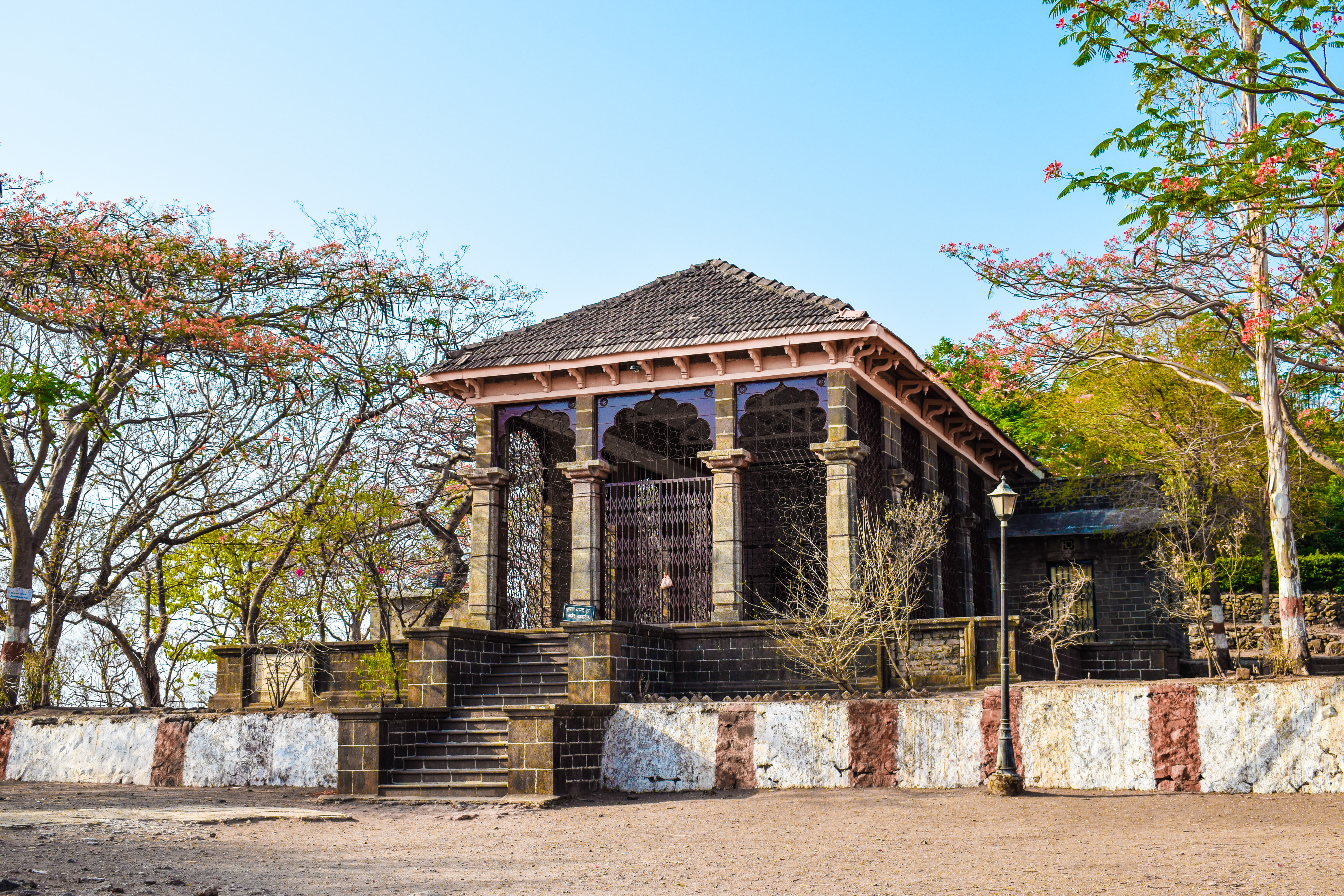
Shivneri Fort
On February 19, 1630, inside the walls of a hilltop fort near the town of Junnar, a boy was born who would grow up to found the Maratha Kingdom and reshape the political map of the Indian subcontinent. His mother, Jijabai, named him after the goddess Shivai Devi, whose temple still stands within the fort's walls -- though some accounts say the name flowed the other way, that Shivaji took his name from Shivneri itself. Either way, fort and founder are inseparable in the historical memory of Maharashtra. The fortress rises from a triangular hill about 90 kilometres north of Pune, its mud walls and seven spiral gates commanding views of the surrounding countryside that once made it virtually impregnable.
Five Empires, One Fortress
Shivneri's strategic value made it a prize that changed hands repeatedly over five centuries. The Yadavas of Devagiri held it first, using it to guard the old trading route from the Desh region to the port city of Kalyan. When the Delhi Sultanate weakened in the 15th century, the fort passed to the Bahmani Sultanate, and then to the Ahmadnagar Sultanate in the 16th century. In 1595, the Ahmadnagar Sultan Bahadur Nizam Shah granted the fort to Maloji Bhosale, a Maratha chief and the grandfather of Shivaji. It was under Bhosale stewardship that Shivaji was born here and spent his early childhood, absorbing the military culture that would define his life. An English traveller named Fraze visited in 1673 and pronounced the fort invincible, recording that it was stocked with enough provisions to feed a thousand families for seven years. The fort's final transfer came in 1819, when British forces took control after the Third Anglo-Maratha War.
Chains and Seven Gates
The architecture of Shivneri reflects centuries of military refinement. Its main entrance faces southwest, but the more dramatic approach is the chain gate on the western scarp, where climbers must grasp iron chains bolted into the rock face to haul themselves upward -- a route that modern trekkers with climbing equipment still attempt. Seven spiral gates defend the main approach, each positioned to force attackers into narrow, well-defended corridors. Mud walls encircle the entire perimeter, extending roughly a mile. Inside, the fort's buildings reveal the overlapping cultures that shaped it: a prayer hall, a tomb, a mosque, and the temple to Shivai Devi all coexist within the same walls. The Maha Darvaja, one of the principal gates, marks the transition from the outer defenses to the fort's interior spaces.
Water That Never Fails
At the center of the fort lies Badami Talav, a water pond flanked to the south by statues of Rajmata Jijabai and the young Shivaji. But the fort's most remarkable feature may be its two natural springs, named Ganga and Yamuna after India's sacred rivers. These springs flow year-round, an engineering and geological gift that made prolonged sieges survivable. In a region where water scarcity has shaped human settlement for millennia, the presence of permanent springs on a hilltop was nothing short of strategic gold. Two kilometres from the fort, the landscape shifts dramatically: the Lenyadri Buddhist rock-cut caves, dating back centuries, serve as one of the eight Ashtavinayak temples of Maharashtra, linking the area's military history to a far older spiritual tradition.
A Birthplace Preserved
Shivneri has been declared a protected monument, and it was added to UNESCO's tentative World Heritage list in 2021 and formally inscribed as a UNESCO World Heritage Site in 2024 as part of the Maratha Military Landscapes of India -- India's 44th UNESCO World Heritage Site. From the ramparts, the forts of Narayangad, Hadsar, Chavand, and Nimgiri are visible across the valley -- a reminder that Shivneri was not an isolated stronghold but part of a network of fortifications that controlled movement across the western Deccan. The nearest town, Junnar, sits just two to three kilometres away and is well connected by road to Pune. Today the fort draws pilgrims, history enthusiasts, and trekkers alike, all climbing toward the place where a future king first opened his eyes. The seven gates still stand, the springs still flow, and the temple to Shivai Devi still receives offerings from visitors who understand that some places are not merely old but foundational.
From the Air
Located at 19.20N, 73.86E, about 90 km north of Pune. The triangular hilltop fort is a distinctive visual landmark rising above the agricultural plain near Junnar. The Lenyadri Buddhist caves are visible about 2 km to the east. Nearest major airport is Pune (VAPO/Lohegaon). Best viewed at lower altitudes in clear conditions, with the chain of Maratha forts visible across the surrounding valleys.