Shou Qiu
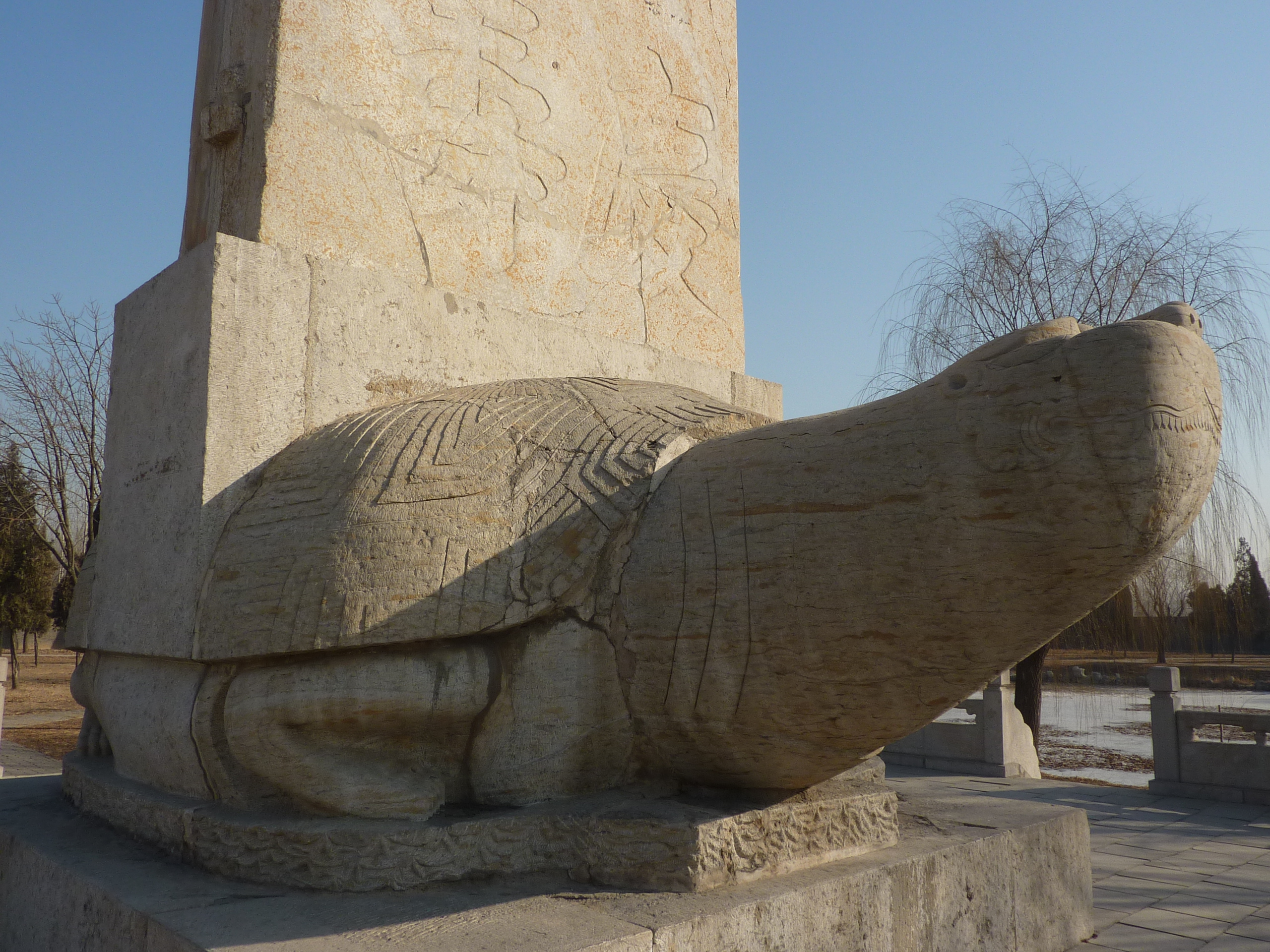
Two giant stone turtles sit near a small lake on the outskirts of Qufu, each bearing an enormous stele on its back. They have been sitting here since the 11th century, when Song dynasty masons carved them on site. The steles were never finished. Before the inscriptions could be completed, the Song dynasty lost control of this part of Shandong, and the great tablets were left lying on the ground for centuries. They stand now as monuments to ambition interrupted -- fitting guardians for Shou Qiu, the site where Chinese tradition places the birth of the Yellow Emperor himself.
Birthplace of a Legend
Shou Qiu is a historical site on the eastern outskirts of Qufu in Shandong Province, revered as the birthplace of the Yellow Emperor -- the mythical ancestor of the Chinese people and one of the most important figures in Chinese cultural identity. The original Shou Qiu was a natural hill, modest in size but immense in symbolic weight. Today, the hill itself is marked by a pyramidal monument, the result of a 12th-century project that encased the original mound in stone, creating a step-pyramid topped with a small pavilion. The structure visible today dates from the Qianlong era of the Qing dynasty. The pavilion contains a statue whose identity has shifted -- it is now identified as Shaohao, the Yellow Emperor's son, whose tomb stands just behind the pyramid.
The Song Emperor's Grand Ambition
In the 11th century, the Song dynasty built a large complex around Shou Qiu that included governmental buildings and a shrine to the Yellow Emperor. The reigning Song emperors venerated the Yellow Emperor as their ancestor, so the shrine was designed with exceptional grandeur. Two enormous stelae, each supported by a giant bixi -- the mythical turtle that bears inscriptions in Chinese tradition -- were commissioned at a scale much larger than was typical for temple monuments. The western stele is known as the Qing Shou Stele; the eastern stele as the Wan Ren Chou Stele, supposedly named because it took so many people to move it into position. But the Song dynasty's control over this region was precarious, and before the stelae could be finished, political upheaval intervened.
Unfinished Business
Today, the two stelae are all that remain of the original 11th-century complex. They stand near the Shou Qiu monument with a small lake between them -- the rest of the shrine, the governmental buildings, the temple to the Yellow Emperor, all gone. The steles themselves were carved on site, left lying on the ground unfinished when the Song dynasty lost the area to Jurchen invaders. Centuries later, they were raised to their present positions. For a site associated with cosmic origins and divine ancestry, the story of the stelae is remarkably human: a dynasty that dreamed big, overreached, and left its grandest work incomplete. The turtles carry their unfinished burdens patiently, as they have for nearly a thousand years.
Pyramid and Tumulus
The relationship between Shou Qiu and the adjacent Mausoleum of Shaohao confuses many visitors. Because Shaohao's tomb -- a large earthen tumulus -- sits only meters behind the stone pyramid, the pyramid is often mistaken for the tomb itself. In fact, the two were originally separate sites that were merged during the 12th-century renovation. The sacrificial hall in front of the pyramid was added in 1738, when the tomb was restored and the earlier shrine buildings had long vanished. Neolithic artifacts uncovered in 1978 within the enclosure grounds suggest that human activity here predates even the myths. Whoever first told the story of the Yellow Emperor's birth at Shou Qiu may have been drawing on a memory of habitation so ancient that only myth could contain it.
From the Air
Located at 35.60N, 117.03E on the eastern outskirts of Qufu, Shandong Province. The site includes a small step-pyramid and the adjacent Shaohao tomb, visible from lower altitudes. Nearest airport is Jining Qufu Airport (ZLJN). The small lake between the two stelae serves as a visual reference point from the air.