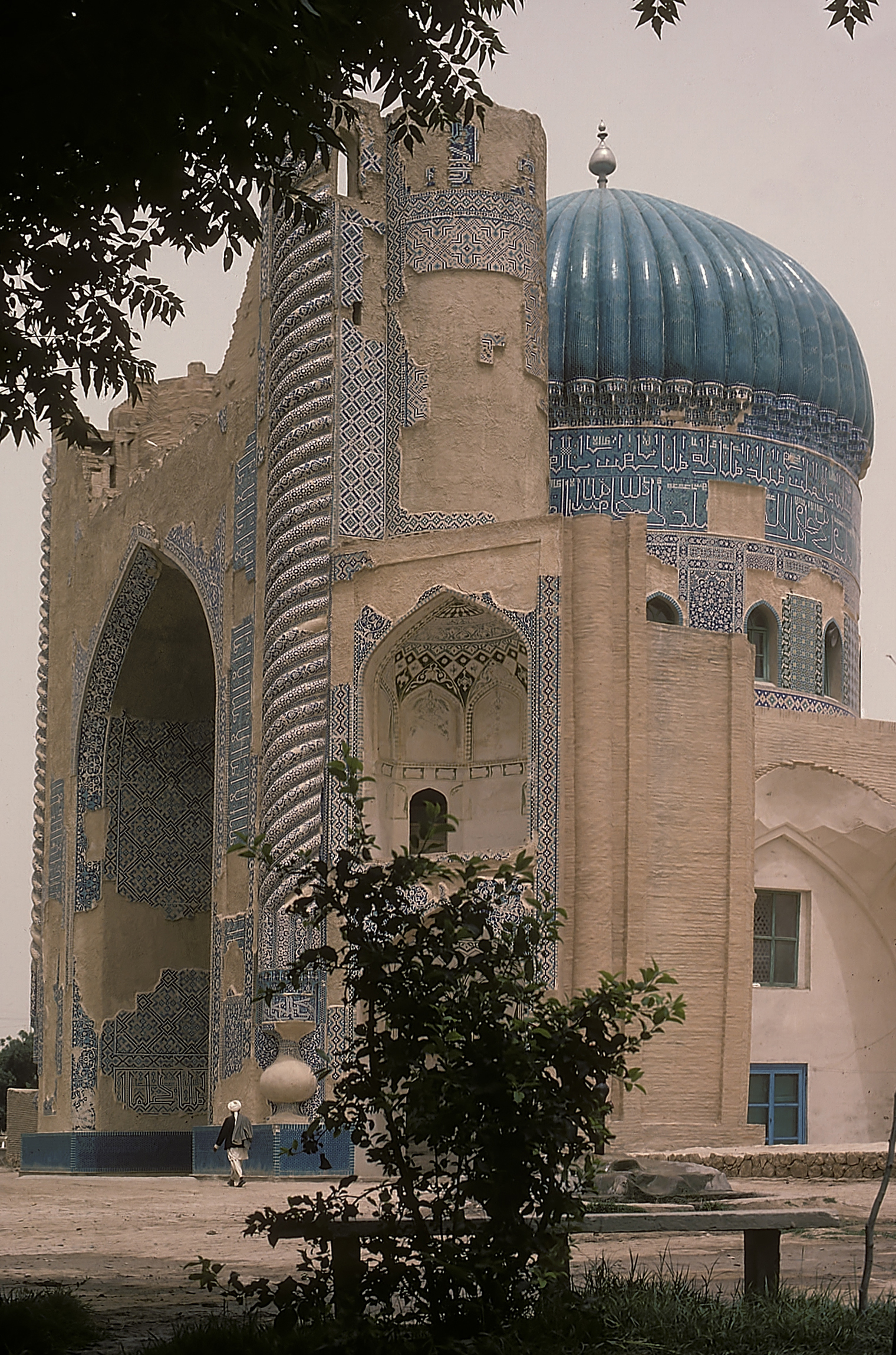
Shrine of Khwaja Abu Nasr Parsa
Somewhere beneath the cracked dome, in a crypt that local tradition long denied existed, lies an unmarked tomb. For centuries, pilgrims believed that the Sufi mystic Khwaja Abu Nasr Parsa rested outside the main entrance of the building that bears his name. They prayed at the wrong spot. Only when researchers excavated the crypt hidden below the domed chamber did they find the grave -- unmarked, unadorned, and precisely where the architecture had always pointed. The building kept its secret in plain sight, the way the best Sufi teachings tend to work.
The Mystic and the General
Khwaja Abu Nasr Parsa died in 1461, a Naqshbandi mystic and religious teacher whose influence extended well beyond the walls of Balkh. The Naqshbandi order, one of the most widespread Sufi brotherhoods, emphasized internal spiritual practice over dramatic external displays, a philosophy of quiet transformation that made its practitioners easy to underestimate and difficult to suppress. After the Khwaja's death, a mausoleum was erected over his grave by the Timurid general Mir Mazid Arghun, though some historical sources attribute the commission to the Timurid ruler Mir Jalal al-Din Farid Arghun instead. The distinction matters less than what it reveals: someone powerful enough to command armies considered this mystic important enough to build for. In the Timurid world, architecture was ideology made visible, and this building was a statement of reverence.
Geometry of Devotion
The shrine's architecture speaks a language of deliberate symbolism. Its plan is a chambered square that envelops a cross-shaped dome chamber, aligned along the southwest-northeast axis to face the qibla -- the direction of Mecca. A monumental portal screen rises above the entrance, drawing the eye upward before the dome behind it captures it entirely. Eight openings pierce the dome to admit light, though several have cracked over the centuries, exposing the inner structure in a way that was never intended but has become its own kind of beauty. The dome's base rests on a band of muqarnas, the honeycomb-like geometric ornamentation that is among Islamic architecture's most distinctive inventions. Below, floral designs and ceramic tiles cover the surfaces in patterns that reward long looking. Every element serves both structural and spiritual purpose -- the light entering from above is engineering and metaphor simultaneously.
Layers of Patronage
The building as it stands today is not solely a Timurid creation. In the late sixteenth century, the Shaybanid governor Abdul-Mo'min bin Abdullah Khan renovated both the mausoleum and the adjoining mosque, adding his dynasty's imprint to a structure already layered with meaning. This kind of palimpsest is common in Central Asian sacred architecture: each ruling power adds, modifies, repairs, and in doing so writes itself into the spiritual lineage of the site. The shrine became part of the Green Mosque complex, and the two buildings together formed a devotional center that anchored Balkh's religious life through centuries of political upheaval. When the Soviet-Afghan War brought modern warfare to the region, the site fell into disrepair -- a fate shared by much of Afghanistan's architectural heritage during those devastating years.
The Crypt Below
The discovery of the hidden crypt added a layer of mystery to an already resonant site. Local tradition had always maintained that the Khwaja's tomb was outside the main entrance iwan, the grand arched portal typical of Islamic architecture in the region. Pilgrims paid their respects there for generations. But below the dome chamber, underground, excavators found a crypt containing an unmarked tomb that researchers identified as the actual resting place of Abu Nasr Parsa. A column was added at some point to support the crown of the crypt vault, a structural intervention that suggests the space was known, or at least suspected, long before its formal discovery. The unmarked nature of the grave carries its own significance. For a Naqshbandi mystic, the absence of ornamentation on the tomb itself -- beneath a building lavished with tiles and geometric precision -- feels less like an oversight and more like a final teaching about where true value lies.
From the Air
Located at 36.758N, 66.897E in the town of Balkh, Afghanistan, approximately 20 km west of Mazar-e Sharif. The shrine and Green Mosque complex sit in the center of town, identifiable by the dome structure within the ancient walled perimeter of Balkh. Mazar-e Sharif International Airport (OAMS) is the nearest major airfield. Best viewed at low altitude, 2,000-5,000 feet AGL, in clear conditions. The dome and portal screen are most distinct from the south or southwest approach.