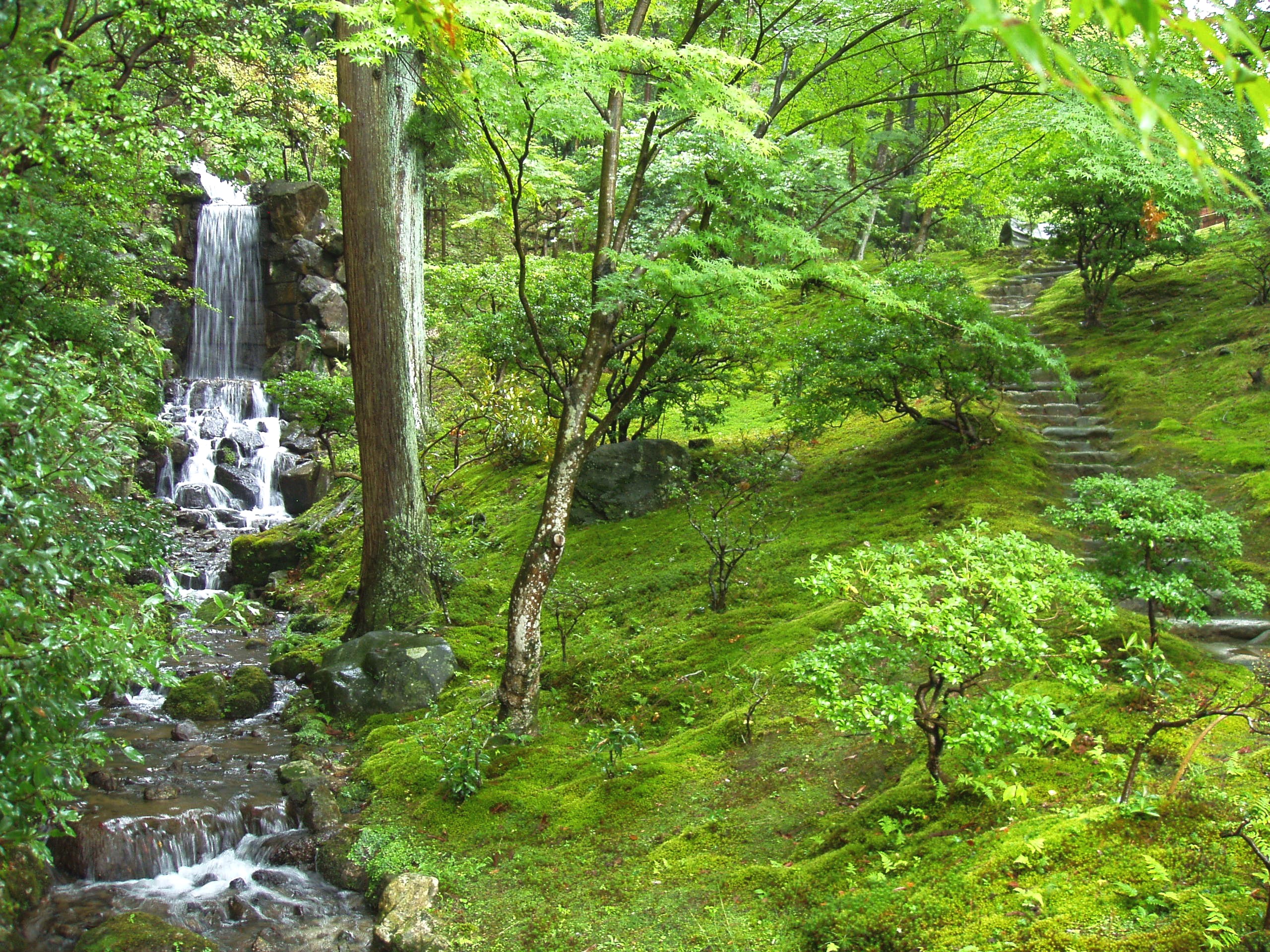
Shugakuin Imperial Villa
An emperor forced from his throne found his revenge not in politics but in landscape. In 1656, the retired Emperor Go-Mizunoo began reshaping the eastern hills of Kyoto into something no Japanese garden had attempted before: a composition so vast it would swallow entire mountainsides into its design. The technique is called shakkei, borrowed scenery, and while other gardens used it modestly, Go-Mizunoo deployed it on an unprecedented scale. From the pavilion at the summit of his Upper Garden, the distant ridgelines of Kyoto's surrounding hills become part of the garden itself, as if the emperor had claimed the horizon as his personal canvas.
An Emperor's Retreat
Go-Mizunoo abdicated in 1629 after years of friction with the Tokugawa shogunate, which had steadily stripped the imperial court of real power. Denied political authority, he channeled his considerable intellect into the arts. To build his villa, he first had to displace the Ensho-ji nunnery, founded by his own eldest daughter, Princess Ume-no-miya. The nunnery was relocated to Nara, and construction began on what would become three separate gardens spread across 53 hectares of hillside. There were never any grand palace buildings here, despite the name "imperial villa." Go-Mizunoo wanted teahouses and viewing pavilions, intimate spaces designed for contemplation rather than ceremony. The result is less a palace than a choreographed walk through landscape, each turn calculated to shift the visitor's relationship with the surrounding terrain.
Three Gardens, One Ascent
The Lower Garden greets visitors with restraint: white sand, stepping stones, a small brook dividing a quiet pond. The Jugetsu-kan villa here is deliberately modest, its largest room just fifteen tatami mats, though it holds a painting of the Three Laughing Sages of Kokei attributed to Ganku. The Middle Garden came later, built around a temple established by Go-Mizunoo's daughter Princess Mitsuko after she took religious vows. Its Kyaku-den reception hall contains the celebrated Shelf of Mist, carved from zelkova wood, and paintings by masters of the Kano school. But everything points upward, toward the Upper Garden, where the true genius of the design reveals itself. Two straight pine-lined allees, each about a hundred meters long, cut through surrounding rice paddies to connect the gardens, framing views of the working landscape that feeds the city below.
The View from Rinun-tei
The Upper Garden delivers its revelation through a simple act of choreography. Visitors climb through a gate and pass along a narrow path hemmed by clipped hedges that deliberately block all sightlines. Then the hedge falls away, and the full panorama opens at once: a vast artificial pond created by damming a ravine, scattered with small islands, flanked by the Chitose-bashi bridge with its twin pavilions topped by a gilt copper phoenix. Beyond the pond, the Kyoto hills stretch to the horizon, folded seamlessly into the garden's composition. The Rinun-tei pavilion, whose name means "Cloud Touching Arbor," sits at this commanding vantage. A ten-meter waterfall of rough-hewn stone tumbles nearby. The effect is neither purely natural nor purely designed but something in between, an imperial claim on the landscape made not through force but through framing.
Centuries of Neglect and Revival
After Go-Mizunoo's death, the gardens drifted toward ruin. Buildings were destroyed or dismantled. The careful plantings grew wild. It took the 11th Tokugawa shogun, Ienari, to order a thorough renovation. Then in 1883, the Imperial Household Department assumed control, moving a large building into the Middle Garden and constructing the fences and enclosed pathways that define the Shugakuin's character today. The surrounding rice paddies, still actively farmed, remain essential to the villa's design. They provide the middle-distance texture that connects the manicured gardens to the borrowed mountains beyond. The Imperial Household Agency now administers the site and accepts visitors strictly by appointment, preserving the sense of intimate discovery that Go-Mizunoo intended nearly four centuries ago.
From the Air
Shugakuin Imperial Villa sits at 35.054N, 135.802E, nestled against the eastern hills of Kyoto's Sakyo ward. From the air, look for the distinctive terraced gardens climbing the hillside northeast of central Kyoto, with the large Upper Garden pond visible as a reflective surface among the trees. The nearest major airport is Osaka Itami (RJOO), approximately 40 km southwest. Kyoto lacks a commercial airport but is served by nearby Kansai International (RJBB). Best viewed at 2,000-3,000 feet AGL to appreciate the three-garden layout and the borrowed scenery of the surrounding Higashiyama hills.