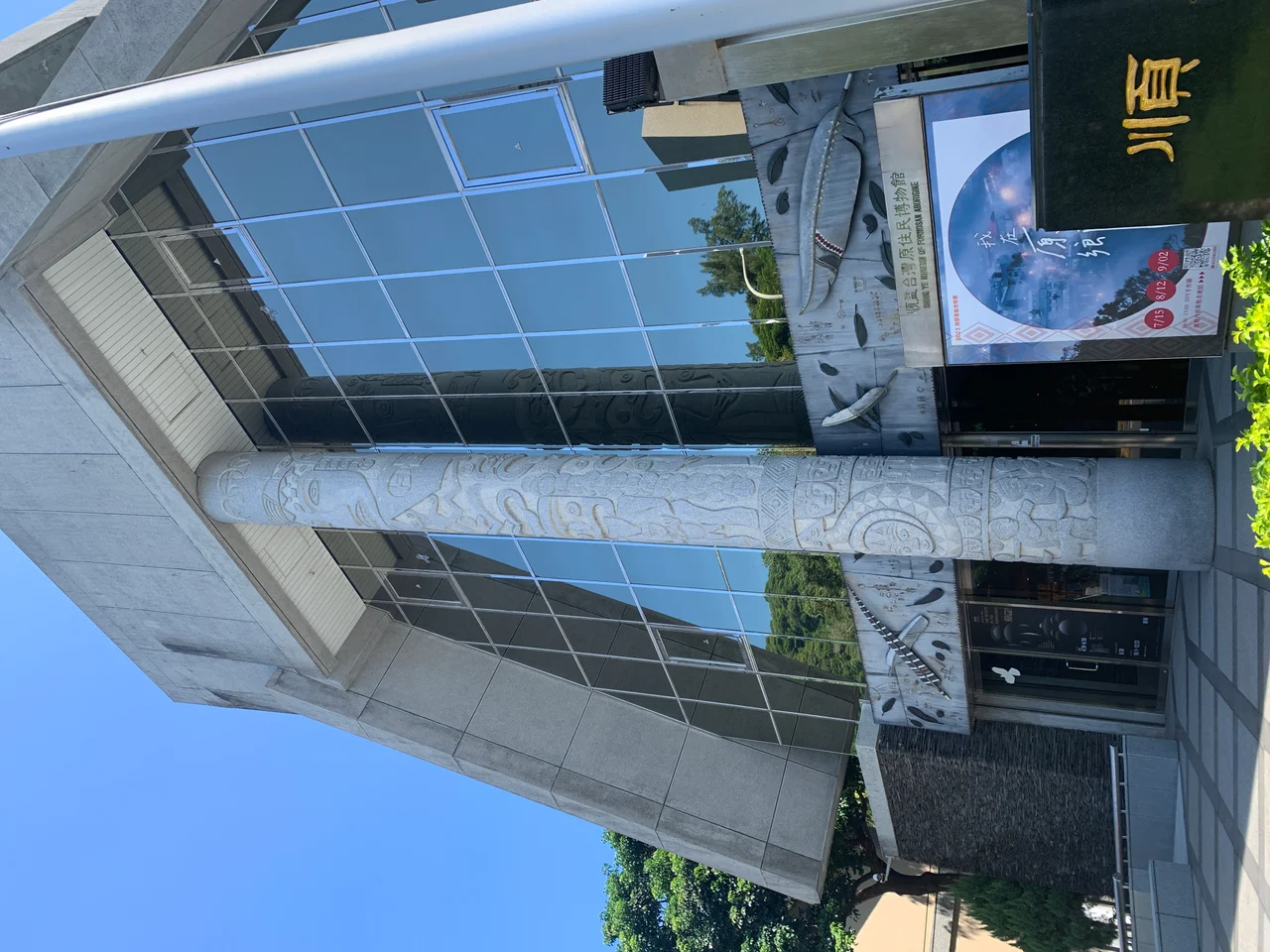

Shung Ye Museum of Formosan Aborigines
Two hundred metres from one of the world's great repositories of Chinese imperial art, a different kind of institution makes its case. The Shung Ye Museum of Formosan Aborigines, opened in June 1994 in Taipei's Shilin District, is Taiwan's first private museum devoted entirely to the cultures and histories of the island's indigenous peoples. It does not present these peoples as a past to be mourned or an artifact to be observed at a safe remove. The men and women whose traditional dress, tools, vessels, and ceremonial objects fill these galleries are Austronesian peoples with living languages, living communities, and living traditions — peoples who have called Taiwan home for millennia, long before the island had a name on any Chinese or European map.
Who the Museum Represents
Taiwan's government currently recognizes sixteen distinct indigenous peoples, each with its own language, social structure, ceremonial life, and territorial connection to specific regions of the island. The Amis, the Atayal, the Paiwan, the Bunun, the Rukai, the Truku — the names represent communities, not relics. Most live today in the mountainous eastern and southern regions of Taiwan, where their ancestors settled in landscapes that proved difficult for later arrivals to penetrate and transform. Their Austronesian languages are related to those spoken across a vast arc from Madagascar to Hawaii to New Zealand, evidence of the seafaring migrations that populated the Pacific and Indian Ocean worlds. The Shung Ye Museum collects and presents artifacts from across this diversity, refusing the temptation to flatten sixteen distinct peoples into a single category called 'aboriginal.'
A Collection Built Over Decades
The museum traces its origins to Lin Qing-Fu, chairman of the Shung Ye Group, who began collecting indigenous artifacts over more than twenty years before the museum opened. In 1985, he established the institution under the Lin Nai-Weng Foundation for Culture and Education, named after his father, making it a legacy project in more than one sense. The collection Lin built through personal acquisition was donated to the museum, forming the nucleus around which curators then conducted field research, gathered additional pieces from overseas collections, and accepted donations from other individuals interested in Formosan Aboriginal culture. The result is a collection assembled with personal commitment over decades — not a government institution's systematic acquisition, but something more driven by individual conviction about what mattered and what deserved to be preserved.
Permanent and Rotating Exhibitions
The museum maintains both permanent and rotating exhibitions, a structure that allows the core collection to anchor the visitor experience while temporary shows respond to current research, community events, and thematic explorations. The permanent galleries work through material culture — the objects that daily life and ceremony require: woven textiles whose patterns encode social identity and cosmological meaning, wooden carvings from traditions in which skilled carvers held recognized social status, tools shaped to specific landscapes, ceremonial vessels used in rituals that mark the passages of community life. These are not objects stripped of meaning by display; the museum makes sustained efforts to explain the contexts in which they were made and used, treating the makers and users as people with complex inner lives rather than as exotic others.
Across the Street from the Palace
The museum's location — directly across from the National Palace Museum, which holds one of the world's largest collections of Chinese imperial treasures — is geographic coincidence that takes on unavoidable significance. The National Palace Museum presents the cultural heritage of a dynastic civilization that arrived in Taiwan from outside; the Shung Ye Museum presents the cultural heritage of peoples who were here first. Together, they offer a compressed version of Taiwan's layered cultural history, available to visitors willing to cross the street and shift their frame of reference. The Shilin District setting, in the northern part of Taipei, puts both museums within reach of the city's cultural circuit. The Shung Ye Museum is smaller, quieter, and less visited than its famous neighbor — which makes the attention it does receive more deliberate, its visitors more likely to have come specifically for what it offers.
Living Cultures, Ongoing Work
A museum about indigenous peoples faces a particular responsibility: to present living cultures with accuracy and dignity rather than to freeze them in an ethnographic moment that flatters outsider nostalgia. The Shung Ye Museum's field research program and its ongoing work with communities and scholars represents an acknowledgment of this responsibility. Taiwan's indigenous peoples today navigate between traditional practices and contemporary life, between community languages and Mandarin, between territorial rights and modern governance structures. Their cultures are not static. What the museum documents is a particular moment in a long, ongoing story — one whose next chapters will be written by the communities themselves, in their own mountains and valleys and coastal villages, in languages that deserve to be heard.
From the Air
The Shung Ye Museum sits at approximately 25.101°N, 121.552°E in Taipei's Shilin District, on the northern edge of the city. Flying into Taipei Songshan Airport (RCSS, 25.069°N, 121.552°E), the museum lies roughly 3.5 km due north of the runway. From 2,000 feet on a clear day, the distinctive roofline of the National Palace Museum complex is visible on the slopes above Shilin; the Shung Ye Museum is immediately opposite, across the main road. Yangmingshan National Park rises steeply to the north and west, its volcanic ridgelines a prominent feature from the air. Taipei Taoyuan International Airport (RCTP) lies approximately 35 km to the northwest. The Danshui River and its tributaries provide useful orientation from altitude as they wind through the northern part of the city.
Nearby Stories
- Dapu Incident 9.3 km away
- Shuanglianpi Wetland 18 km away
- Toufen 41 km away
- North Jiangsu Main Irrigation Canal 980 km away
- General Cliff Rock Paintings 1050 km away
- Sinking of MV Sewol 1061 km away
- Yellow Sea 1111 km away
- Twin Forts of Romblon 1358 km away