Siam Society
The motto took two princes to compose. Prince Damrong Rajanubhab and Prince Dhani Nivat settled on five words: "Knowledge Gives Rise to Friendship." A third prince, Narisara Nuwattiwong, designed the emblem that carries it -- an elephant holding a garland of flowers in its trunk. Since 1904, when fifty people gathered at Bangkok's Oriental Hotel to form a society dedicated to the investigation of art, science, and literature in relation to Siam, that motto has served as the operating principle of one of Southeast Asia's most enduring cultural institutions. The Siam Society's membership today spans sixty nationalities, and its compound on Asok Montri Road houses rare books, a UNESCO-recognized archive, and a 19th-century teakwood house transported piece by piece from Chiang Mai.
An Uncommon Founding
The Siam Society emerged from a particular moment in Thai history, when the kingdom was modernizing rapidly and both Thai and foreign scholars saw value in systematic research into the country's culture and natural world. On 26 February 1904, the founding meeting resolved that attendees would form a society for "research and investigation in matters appertaining to Siam." One hundred and three people signed up as members before the first Annual General Meeting on 7 April 1904. Prince Vajiravudh, the future King Rama VI, became the first patron, establishing a tradition of royal association that continues today. In 1925, the Natural History Society of Siam, which had been founded separately in 1913, merged into the Society. The name briefly changed to the Thailand Research Society in 1939, following Field Marshal Plaek Phibunsongkhram's nationalist renaming of the country from Siam to Thailand. The original name was restored in 1945.
The Compound on Asok Montri Road
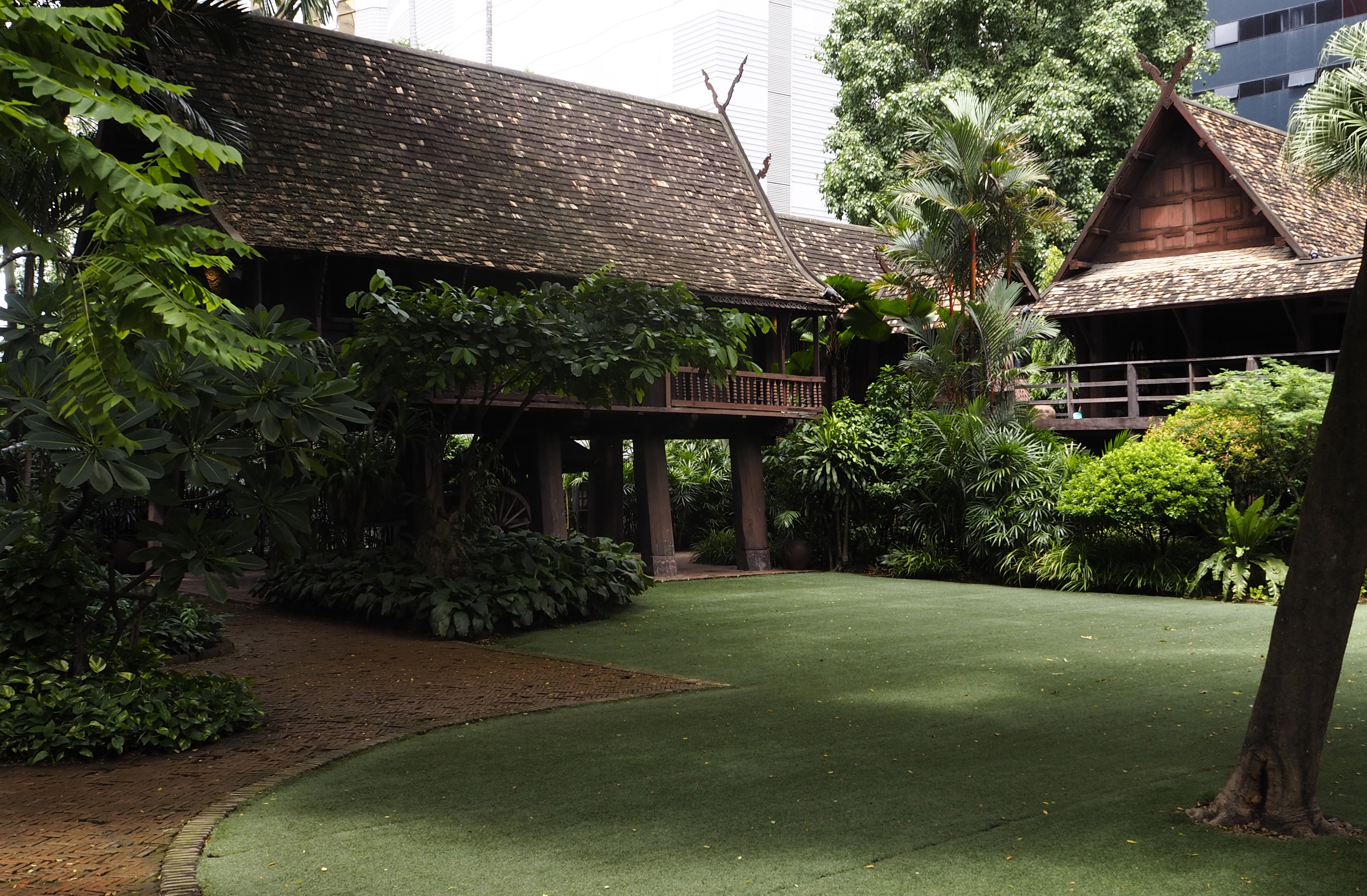
In 1931, Ahamad Ebrahim Nana, a businessman of Indian origin born in Thonburi, gifted the Society three rai -- just under half a hectare -- of land on what was then Bangkok's outskirts. British architect Edward Healy designed an auditorium and library building that opened on 28 February 1933. The auditorium, with its high ceilings and three-meter-tall glass doors opening onto gardens, remains the heart of the compound. Antique carved woodwork from across Southeast Asia decorates the interior. In 1993, the Nimmanhaeminda family of Chiang Mai donated the Kamthieng House, an outstanding example of northern Thai teakwood architecture. Originally built in the mid-19th century on the banks of the Ping River, the house was disassembled and reassembled on the Society's grounds, resting on 36 octagonal teak pillars with walls that lean slightly outward and a peaked roof adorned with v-shaped galae. It now houses a museum of Lanna ethnology and arts.
Keeper of the Record
The Society's two scholarly journals have been published continuously since 1904. The Journal of the Siam Society covers archaeology, epigraphy, history, ethnology, religion, art, and performing arts; it joined the Scopus database of academic journals in 2019. The Natural History Bulletin documents the flora and fauna of Thailand and neighboring countries. In 2012, the complete back-catalog of over two thousand articles was made available online. The Society's library holds rare books and palm leaf manuscripts, including early European works on Siam and the papers of Prince Prisdang. Among the Society's own publications, The Orchids of Thailand by Gunnar Seidenfaden and Tem Smitinand, published in six volumes between 1959 and 1965, remains the authoritative reference. In 2000, the Society published The Royal Chronicles of Ayutthaya, a synoptic translation of all known versions of the chronicles.
Living Heritage
In 2013, the Society's Council Minutes books from 1904 to 2004 were inscribed in UNESCO's Memory of the World International Register. The citation praised a century of recording international cooperation in research and knowledge dissemination. The recognition capped a long list of honors: the Association of Siamese Architects cited the Society for building preservation in 2002, the Ministry of Culture named it Thailand's best cultural organization in 2012, and the Thai Library Association recognized its library as an outstanding specialist collection in 2014. Through its Siamese Heritage Trust, established in 2011, the Society works on cultural heritage advocacy and education. Its auditorium hosts lectures in English most weekday evenings -- on topics from archaeological discoveries to contemporary Thai design -- and stages concerts ranging from classical Thai music to Japanese Taiko drumming and Spanish flamenco. In 1990, the Society cast a gold Footprint of Lord Buddha using 35 kilograms of gold, consecrated by King Bhumibol Adulyadej at Wat Phra Kaew in 1994.
From the Air
The Siam Society compound is located at 13.74N, 100.56E on Asok Montri Road (Sukhumvit Soi 21) in central Bangkok. The compound is small and not individually visible from cruise altitude, but the Sukhumvit Road corridor and nearby Asok BTS/MRT interchange provide orientation. Don Mueang International Airport (VTBD/DMK) is 18 km north; Suvarnabhumi Airport (VTBS/BKK) is 25 km southeast.