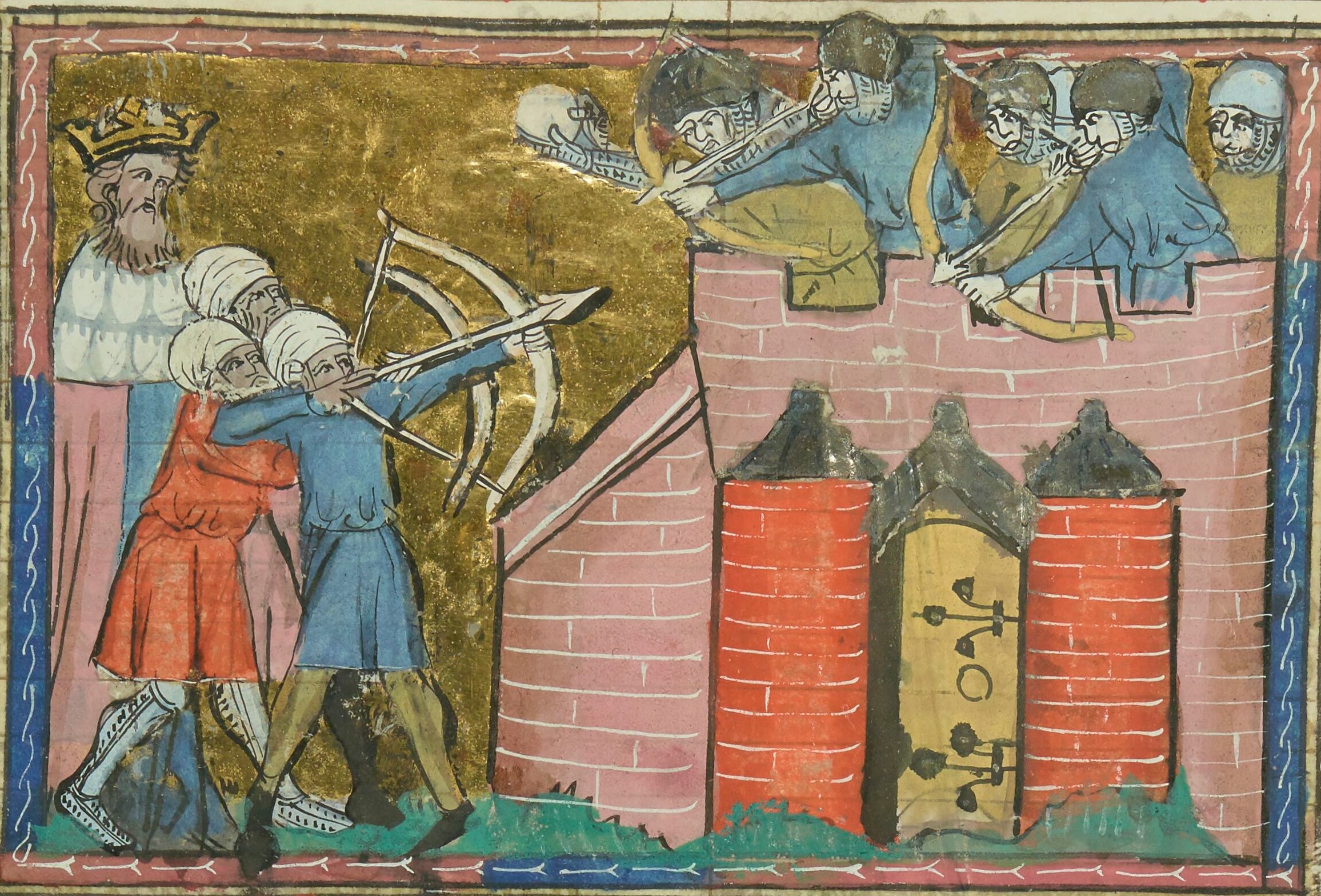
Siege of Antioch
For eight months, the Crusaders starved outside the walls of Antioch. They ate their horses, then their leather, then nothing at all. One in seven died before a single breach was made. Knights deserted in the night, including Peter the Hermit, who had to be dragged back in shame. And when the city finally fell -- not through force but through the treachery of a single Armenian guard -- the Crusaders had barely hours to celebrate before a massive Seljuk relief army arrived and besieged them inside the city they had just taken. The Siege of Antioch in 1097-1098 was not a military triumph. It was a survival story.
The Walls That Could Not Be Breached
Antioch -- modern Antakya -- covered more than 3.5 square miles, enclosed by walls studded with 400 towers dating from the reign of Emperor Justinian I. The city sat in the Orontes River valley, with Mount Silpius rising 1,000 feet above the valley floor on its southern flank, crowned by a citadel that relied on sheer inaccessibility for defense. There were six gates, but the valley slopes made approach from most directions impractical for a large army. The Crusaders arrived on October 21, 1097, and quickly realized they could neither storm the walls nor completely encircle a city this vast. Raymond IV of Toulouse was alone in advocating a direct assault. He was overruled. The leaders resolved to wait, hoping to starve the city into submission -- a strategy that, as the months wore on, proved nearly as lethal to the besiegers as to the besieged.
Hunger and Desertion
The Crusaders stripped the surrounding countryside bare within weeks. Foraging parties had to range ever farther from camp, exposing themselves to ambush by the Antioch garrison and by relief forces. On December 31, 1097, a foraging party under Bohemond and Robert of Flanders stumbled into an army under Duqaq of Damascus marching to relieve Antioch. They fought the Damascenes off at the village of Albara but lost the livestock they had gathered for food. Winter brought earthquakes, flooding rains, and famine so severe that by early 1098 desertion became epidemic. Peter the Hermit and William the Carpenter fled in January; Bohemond sent men to bring them back. Peter was pardoned. William was humiliated and forced to swear he would stay. The arrival of Genoese ships at the port of St. Symeon in November brought some supplies, but the route from port to city ran close enough to Antioch's walls that the garrison could -- and did -- attack the supply convoys.
Two Relief Armies Broken
In early February 1098, Ridwan of Aleppo advanced toward Antioch with a relief force. Bohemond proposed a bold response: send all the cavalry to meet Ridwan while the infantry guarded the siege lines. The Crusader knights, numbering perhaps 700, found Ridwan near the Iron Bridge on the morning of February 9. The terrain -- river on one side, lake on the other -- prevented Ridwan from exploiting his numerical superiority. The Crusaders charged twice. The Seljuk army broke and fled in disorder. Simultaneously, Yaghi-Siyan led Antioch's garrison out against the Crusader infantry, nearly overrunning the camp until the returning cavalry forced the defenders back inside the walls. An English fleet arrived at St. Symeon on March 4 carrying materials for siege engines, though these too were nearly lost when the garrison sortied against the escort. The Crusaders lost 100 people and part of their supplies, but a counterattack killed between 1,200 and 1,500 of Antioch's defenders.
The Tower of the Two Sisters
By late May, news arrived that Kerbogha, atabeg of Mosul, was approaching with the largest relief army yet -- reinforced by troops from Persia, Ridwan, Duqaq, and the Ortuqids of Mesopotamia. The Crusaders had to take the city before Kerbogha arrived or face destruction between the walls and the approaching army. Bohemond had been secretly negotiating with an Armenian guard named Firouz, who controlled the Tower of the Two Sisters on the southern wall. Firouz's motives were unclear -- perhaps greed, perhaps a personal grudge -- but he offered to open the tower in exchange for money and a title. On the night of June 2, Bohemond's Normans scaled the walls. By dawn on June 3, the Crusaders were inside Antioch. In the chaos that followed, Armenian and Greek Christians joined the Crusaders in fighting the Turkish garrison, though the killing extended to non-Turkish civilians as well, including Firouz's own brother.
Besieged Inside Their Conquest
Kerbogha arrived on June 7, and suddenly the Crusaders found themselves trapped inside the city they had spent eight months trying to enter. The citadel on Mount Silpius still held out under a Seljuk garrison, meaning the Crusaders were squeezed between enemies above and below. Starvation returned. Morale collapsed. Then a Provencal priest named Peter Bartholomew came forward claiming visions of Saint Andrew that revealed the Holy Lance -- the spear that had pierced Christ's side -- was buried beneath the Cathedral of Saint Peter in Antioch. A dig produced an iron lance point. Whether planted or genuinely ancient, the discovery electrified the army. On June 28, the Crusaders marched out of the city in six divisions to face Kerbogha. Factional divisions within the Seljuk coalition undermined its cohesion -- many emirs suspected Kerbogha of pursuing personal ambitions rather than defending their shared interests. The Seljuk army broke. The citadel garrison surrendered to Bohemond personally. Antioch belonged to the Crusaders, and the road to Jerusalem was open.
From the Air
Located at 36.20N, 36.16E at the site of ancient Antioch, now the modern city of Antakya in Hatay Province, Turkey. The city is situated in the Orontes (Asi) River valley with Mount Silpius (Habib-i Neccar) rising steeply to the south. Remnants of the ancient walls and citadel are visible on the mountainside above the modern city. The Iron Bridge (Jisr al-Hadid) crossing of the Orontes lies to the northeast. Hatay Airport (HTY) is approximately 25 km to the south. The Mediterranean port of Samandag (ancient St. Symeon) is about 25 km to the southwest.