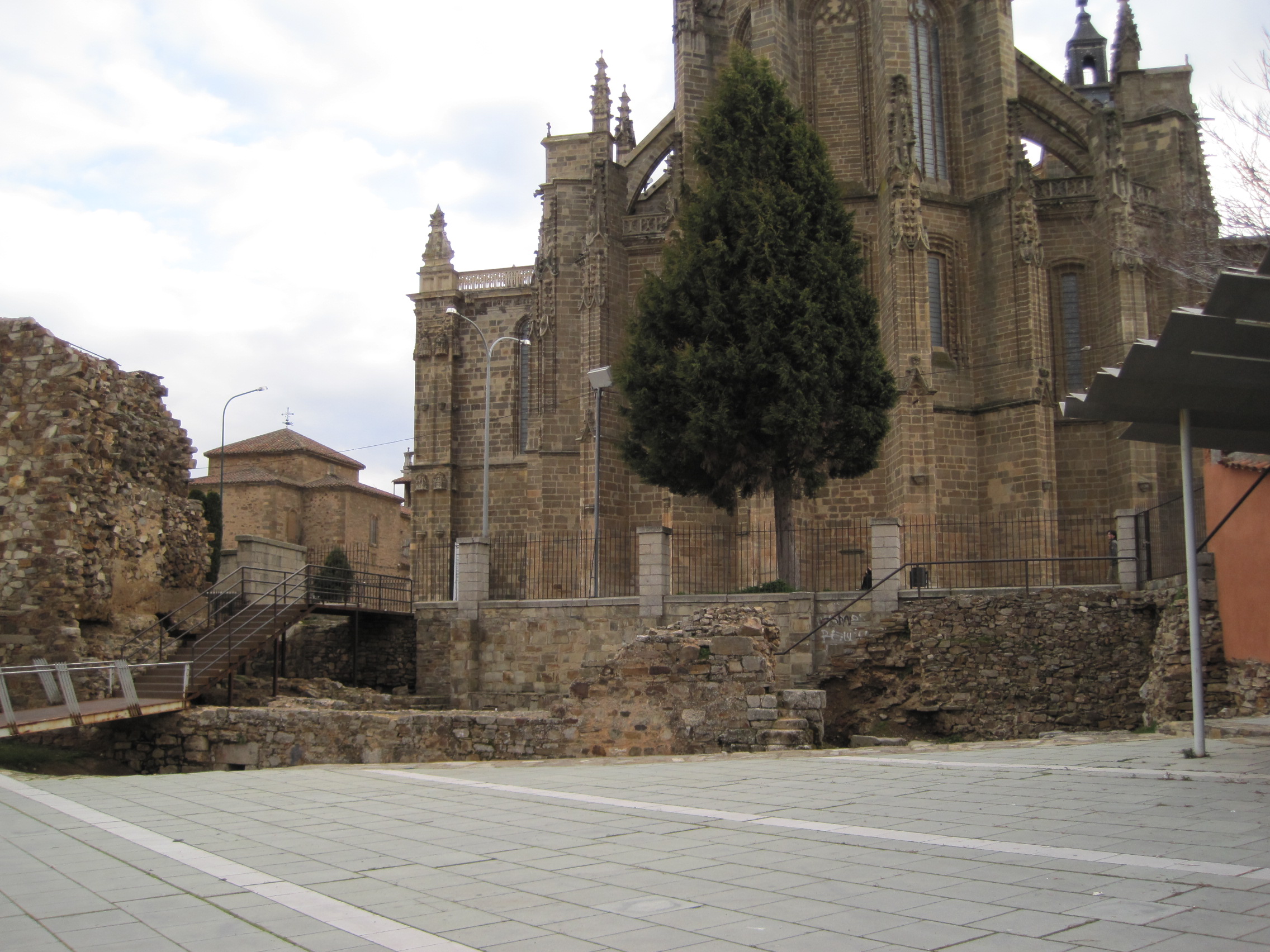
Siege of Astorga
Captain John Allen's company drummer boy had lost both legs in the assault on the breach and was lying in the rubble of Astorga's city wall. He kept beating the charge. For this, the French awarded him the Legion of Honor -- an extraordinary distinction from the army that had just spent a month trying to take the city he was defending against. The siege of Astorga in the spring of 1810 was a small action in the vast machinery of the Peninsular War, but it contained enough drama, endurance, and improbable courage for a conflict ten times its size.
A City on the Flank
Astorga sits on a hill in Leon province in northwestern Spain, built into the slopes of the Manzanal mountains with natural defenses that have attracted fortification since Roman times. In 1810, the city occupied a strategically awkward position on the flank of the French army's advance into Spain and Portugal. The French needed it as a headquarters; leaving a hostile garrison on their supply line was not an option. General La Romana had repaired Astorga's walls after a failed French attempt to take the city in September 1809, and the Spanish garrison under Colonel Jose Maria de Santocildes had prepared for another siege. But Santocildes had no siege guns, no prospect of relief from Wellington's forces in Portugal, and a civilian population he could not feed. He evacuated 3,000 residents before the French arrived.
Weeks Without Guns
When General Loison first approached Astorga in February 1810, he found defenses far stronger than he expected and was forced to retreat. Jean-Andoche Junot arrived on 21 March with Napoleon's 8th Corps -- 12,000 men including 1,200 cavalry -- but had brought no siege artillery. For nearly a month, the two armies faced each other with neither side able to force a decision. The French dug trenches; the Spanish sent out skirmish parties. Junot had only light guns, enough for harassment fire but not enough to breach medieval walls reinforced with modern earthworks. Inside the city, Santocildes stockpiled what supplies he could and waited. The situation was a stalemate measured in shovelfuls of dirt and the occasional crack of a musket.
Breach and Storm
On 15 April, Junot's 18 siege guns finally arrived from Valladolid, hauled across the meseta by teams of horses and oxen. Within five days the bombardment had opened a breach in Astorga's ancient walls. Junot ordered the assault on the evening of 21 April. The Irish Legion, fighting as part of Napoleon's army, led the charge over the rubble. The first wave was thrown back with 300 casualties, the defenders pouring musket fire into the breach at close range. But the surviving attackers did not withdraw entirely -- they dug in just inside the broken wall and held their position through the night, clinging to the edges of the gap while the Spanish tried to drive them out. By dawn on 22 April, Santocildes saw the French preparing a second assault and knew his situation was finished.
Thirty Rounds and a Surrender
The arithmetic of the surrender tells the story of the defense. Santocildes handed over 2,500 prisoners, but his garrison had lost only 51 dead and 109 wounded. The French, despite their overwhelming numbers, suffered 160 killed and 400 wounded -- most of them in the final assault on the breach. Santocildes had fewer than 30 rounds of ammunition left per man and only 8 rounds of artillery. He had stretched his supplies to their absolute limit and fought until continuing was physically impossible. The French had won the city but at a cost that revealed how effectively a determined garrison could exploit medieval walls and difficult terrain. Two years later, when Wellington's Anglo-Spanish forces recaptured Astorga, they encountered the same problem: walls too strong for the guns available, terrain too rough for rapid assault.
An Inscription on the Arc de Triomphe
The siege of Astorga is inscribed on the Arc de Triomphe in Paris, one of the battles the French considered significant enough to carve into their monument to Napoleonic glory. For the Spanish, the significance is different. Santocildes and his garrison held a small walled city against a corps-sized force for a month, inflicting disproportionate casualties and surrendering only when ammunition was exhausted. The Irish Legion's role adds another layer of complexity: Irishmen fighting under the French tricolor against Spain, driven by anti-British sentiment into Napoleon's service. Today, Astorga's walls still bear the scars of the bombardment, and the breach where the Irish Legion charged is visible along the circuit of fortifications that pilgrims pass as they walk the Camino de Santiago through the city.
From the Air
Located at 42.46N, 6.06W in the city of Astorga, Leon province, northwestern Spain. The walled hilltop city is visible from moderate altitude, with the breach site along the southern wall circuit. Nearest major airport: LELN (Leon Airport, ~45 km east). The city sits where the meseta meets the western mountains, a terrain transition visible from the air.