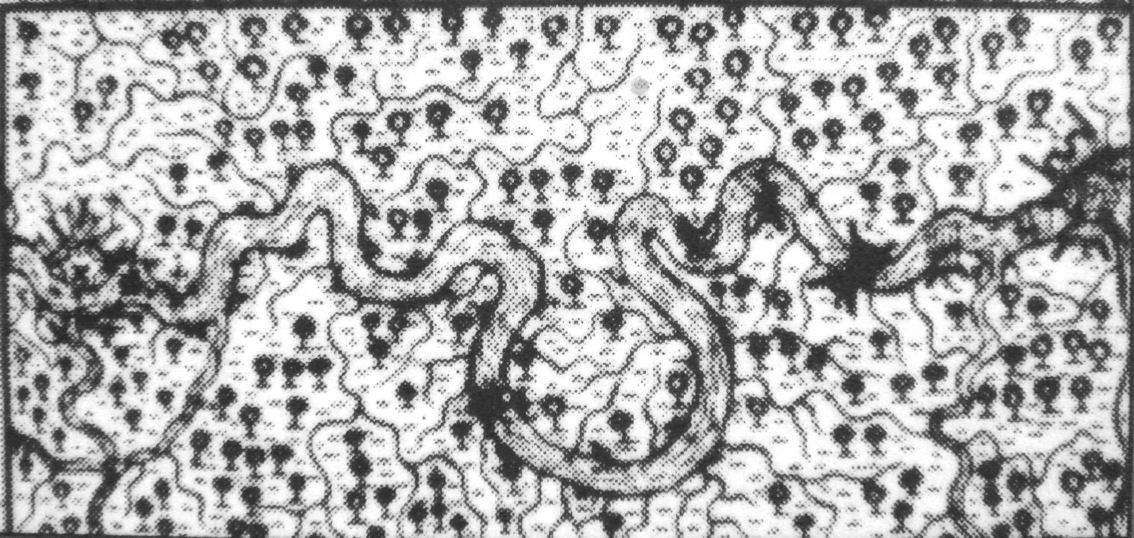
Siege of Bangkok
The arithmetic was absurd: 40,000 Siamese soldiers with over a hundred cannons, arrayed against 200 French troops dug into a fortress on the banks of the Chao Phraya. By every conventional measure, the siege of Bangkok in 1688 should have ended in days. Instead, it dragged on for more than four months, resolved not by force but by negotiation, producing an outcome that neither side wanted but both could accept. The French left Siam. The Siamese closed the door behind them. That door would not fully reopen for nearly 170 years, until Napoleon III sent an embassy to King Mongkut in 1856.
The Greek, the King, and the French Gamble
The story begins with an unlikely figure: Constantine Phaulkon, a Greek adventurer who rose to become the most powerful foreign advisor in King Narai's court. At Phaulkon's urging, Narai pursued a French alliance as a counterweight to the Portuguese and Dutch, whose commercial influence in Siam was growing uncomfortably strong. Embassies crossed the ocean in both directions -- the Chevalier de Chaumont traveled to Siam in 1685, and the celebrated diplomat Kosa Pan visited the court of Louis XIV in 1686. These diplomatic overtures culminated in 1687, when the Marquis de Seignelay organized a French expeditionary force of 1,361 soldiers, missionaries, envoys, and crew aboard five warships. General Desfarges took command of the fortress at Bangkok with 200 men, while Du Bruant held Mergui with 90. The French presence was modest in numbers but enormous in implication -- foreign troops garrisoned on Siamese soil, protecting a king whose subjects were beginning to resent his Western leanings.
A Palace Coup and a Broken Promise
In 1688, the court faction led by Phetracha struck. King Narai, already gravely ill, was deposed in a coup. Phaulkon was arrested, tortured, and eventually beheaded by Phetracha's own son, Ok-Phra Sorasak. The king's adopted son, Mom Pi, was executed on 20 May. Phetracha then summoned General Desfarges to Lopburi, plying him with promises -- a prestigious government position for his eldest son, guarantees of continued French influence. The price was simple: hand over the Bangkok fortress and send troops to fight Phetracha's wars against the Lao and Cochin-Chinese. Desfarges traveled to Lopburi, made vague pledges, and left his two sons behind as hostages. When he returned to Bangkok on 6 June, accompanied by Kosa Pan and another mandarin to whom he was supposed to surrender the fortress, his officers held a council of war. The decision was unanimous: they would not obey Phetracha. They would fight.
Cannons Across the River
Phetracha responded with overwhelming force. Forty thousand troops encircled the French position, supported by Dutch advisors who helped construct twelve small forts around the main fortress, each bristling with seven to ten cannons. The Chao Phraya itself was sealed -- seven batteries holding 180 cannons lined its banks downstream, and the river mouth was blocked with rows of massive tree trunks, an iron chain, and a flotilla of boats. The French initially held two fortresses straddling the river, one on the Bangkok side and one across in Thonburi. Realizing the Thonburi position was untenable -- communication between the two became nearly impossible at low tide -- they abandoned it, destroying fortifications and splitting eighteen cannons to prevent capture. When Desfarges sent a longboat commanded by Sieur de Saint-Christ to break through the blockade and summon help from French India at Pondicherry, the boat was overwhelmed by Siamese defenses. Saint-Christ detonated his own vessel, killing hundreds of Siamese soldiers and most of his own crew. Only two Frenchmen survived.
The Negotiated Retreat
While the siege ground on, Phetracha consolidated his grip on power by eliminating every rival. King Narai's two brothers were executed on 9 July. Narai himself died on 11 July, possibly poisoned. Phetracha was crowned on 1 August 1688 in Ayutthaya. With the throne secured, he needed the French problem resolved, not escalated. By late September, Desfarges negotiated an agreement: the French would leave aboard the Oriflamme and two Siamese vessels, the Siam and the Louvo. Phetracha returned all French prisoners. The deal required hostages on both sides -- two Siamese held by the French, three Frenchmen remaining in Siam. One figure was betrayed in the process. Maria Guyomar de Pinha, Phaulkon's Japanese-Portuguese Catholic wife, had been promised French protection and ennobled as a countess of France. Desfarges, fearing the peace would collapse, handed her back to the Siamese on 18 October. She was condemned to slavery in Phetracha's kitchens until his death in 1703.
A Door Slammed Shut
Desfarges departed Bangkok on 13 November 1688. The aftermath brought no glory. Two of the three French hostages managed to flee aboard the Oriflamme, leaving only the Bishop of Metellopolis behind. Desfarges attempted a last gesture of imperial ambition by capturing the tin-producing island of Phuket in April 1689, but the occupation led nowhere. He died on his return voyage. The Oriflamme sank off Brittany in February 1691, taking most of the surviving French troops and both of Desfarges' sons to the bottom. France, consumed by the War of the League of Augsburg and then the War of the Spanish Succession, never came back. Siam entered a long period of wariness toward Western powers, permitting only a handful of French missionaries to remain while trading cautiously with the Portuguese, Dutch, and English. The siege had lasted four months. Its consequences shaped Siamese foreign policy for more than a century and a half.
From the Air
Located at 13.750N, 100.517E along the Chao Phraya River in Bangkok. The site of the 1688 fortress is in the historic Rattanakosin area, near the modern Grand Palace complex. The Chao Phraya River -- which played a central role in the siege, being blocked by the Siamese with tree trunks and iron chains -- is clearly visible from the air. Best viewed at 2,000-4,000 feet. The Thonburi side of the river, where the second French fortress stood, is directly across. Nearest airports: Don Mueang (VTBD) approximately 15 nm north; Suvarnabhumi (VTBS) approximately 17 nm east-southeast.