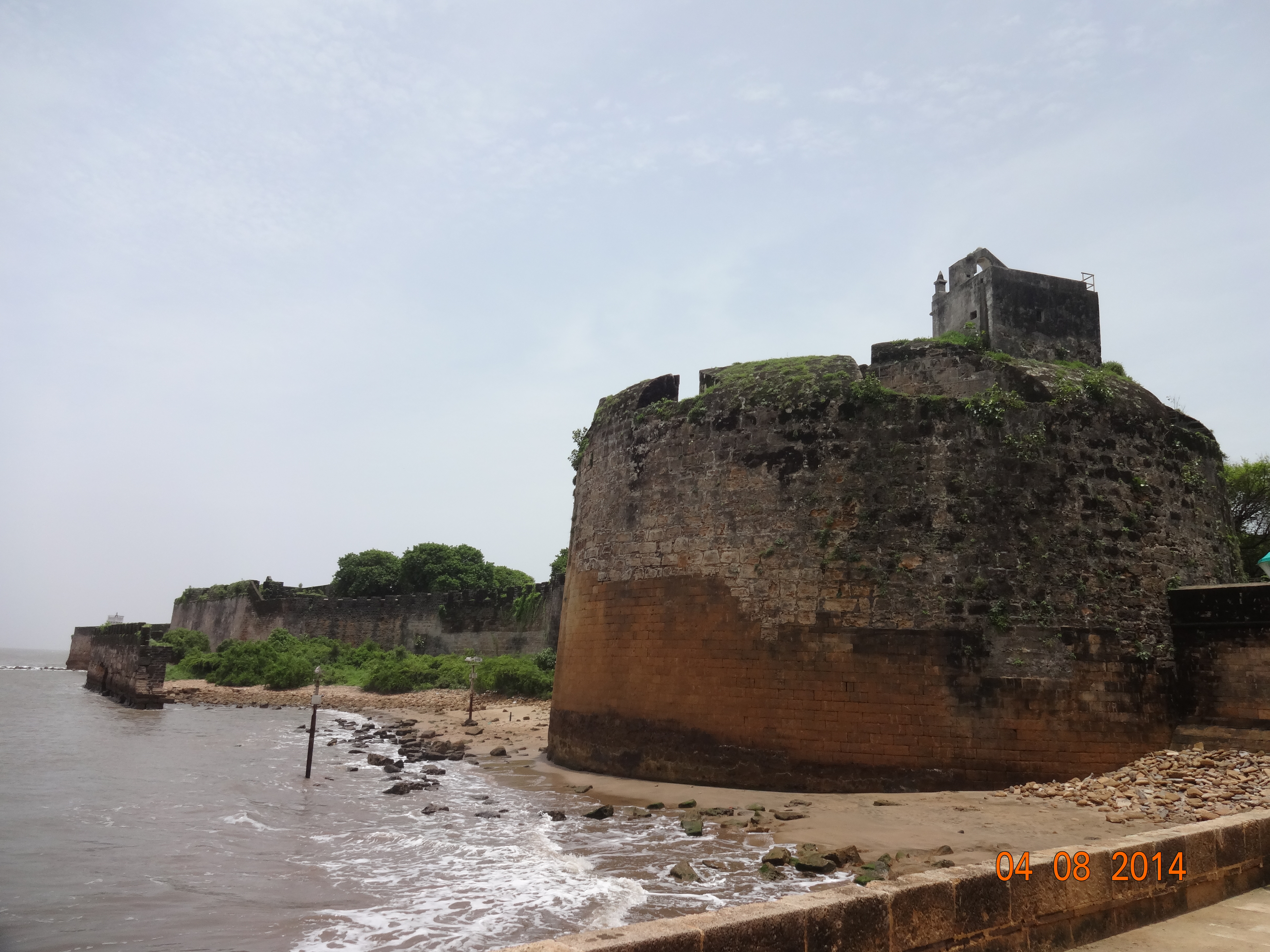
Siege of Diu (1538)
Captain Antonio da Silveira had fewer than 600 men behind the walls of the Portuguese fortress at Diu when the Ottoman fleet appeared on the horizon in September 1538. What followed was one of the most desperate sieges of the Age of Exploration -- a four-month contest -- the Gujarati siege had begun in June before the Ottoman fleet arrived in September -- between the largest armada the Ottoman Empire had ever sent to India and a garrison so reduced by the end that women fought alongside the last surviving soldiers.
Empire Against Outpost
The Ottoman Pasha Suleiman arrived with an overwhelming force: nine basilisks, five great bombards, fifteen heavy guns, and 80 medium and smaller cannon, backed by thousands of troops including elite janissaries. Allied Gujarati forces under Khadjar Safar pressed from the mainland. Across the Diu channel, a small Portuguese redoubt called Vila dos Rumes -- "Village of the Turks" -- fell first. Its 30 to 40 defenders under Captain Francisco Pacheco held out through multiple assaults, including an attack by 700 janissaries, before Pacheco finally surrendered on October 1 after the Pasha promised safe passage to the main fortress. Suleiman broke the promise immediately, imprisoning the garrison on his galleys. He then forced Pacheco to write a letter urging Silveira to lay down arms. The letter was delivered by a Portuguese renegade named Antonio Faleyro, who had converted to Islam and dressed in Turkish fashion, making him unrecognizable to his former comrades.
Twenty-Seven Days of Bombardment
Silveira's reply to the surrender demand has been remembered for centuries. He seized paper and ink and wrote a defiant refusal. By October 5, the Ottoman siege works were complete, and the full battery opened fire on the fortress for 27 consecutive days. After a week of bombardment, part of the bulwark collapsed and Turkish troops surged forward with banners raised, only to be thrown back by bombs and arquebus fire. When the Ottomans forced laborers into the moat to mine beneath the walls and blew a breach with gunpowder, they found the Portuguese had already built a barricade behind it. Each night, when the cannon fell silent, the defenders repaired their crumbling walls under cover of darkness. The Sea Fort -- the Baluarte do Mar standing in the river mouth -- held firm against repeated attempts by Ottoman galleys to storm it, repelling attackers with fire bombs.
The Final Assault and the Women of Diu
On October 30, Pasha Suleiman attempted one last gambit: he faked a withdrawal, embarking a thousand men to lull the garrison. Silveira was not deceived. At daybreak, 14,000 troops in three columns stormed the walls while Ottoman artillery fired without regard for its own soldiers in the breach. A few hundred attackers scaled the ramparts and planted banners, but the Portuguese drove them off from the Sao Tome bastion, killing 500 and wounding another 1,000. By early November, the Pasha's relationship with his Gujarati allies was fraying, and fear of a Portuguese relief fleet from Goa grew pressing. He began re-embarking his forces, leaving 1,200 dead and 500 wounded behind. When a small flotilla of 24 galleys appeared on the horizon, Suleiman fled, believing it was the vanguard of the governor's armada. It was actually a modest relief force -- but by then the deception no longer mattered. The fortress had held. Inside, fewer than 40 defenders remained fit for service. Portuguese records note that in the final stages, women fought in the defense. Catarina Lopes and Isabel Madeira are named as two female captains who led squads of women soldiers through the siege's last desperate hours.
An Empire Turned Back
The failure at Diu ended Ottoman ambitions in the Indian Ocean for a generation. Never again would the Ottomans send so large an armada to India. Without a base on the western Indian coast, their campaign in the subcontinent was effectively finished, leaving the Portuguese uncontested in the region's sea lanes. The retreating Ottomans fortified Aden with 100 pieces of artillery and reorganized Yemen and Aden as an Ottoman province, consolidating their position in the Arabian Peninsula instead. The Pasha also left behind several enormous cannon too heavy to evacuate quickly -- Persian authors would call them "Sulaimani guns." The governor of Junagadh salvaged several and moved them to his city. One Ottoman cannon from this era traveled an even stranger path: captured during the British seizure of Aden in 1839, it sits today in the Tower of London, a physical remnant of the day an empire's Indian ambitions broke against the walls of a small island fortress.
From the Air
Diu island sits at approximately 20.72N, 70.99E at the southeastern tip of Gujarat's Kathiawar Peninsula, at the mouth of the Gulf of Cambay. The fortress occupies the eastern tip of the island, with the channel separating it from the mainland clearly visible from the air. The Sea Fort (Panikota) stands in the water between fortress and mainland. Nearest airport: Diu Airport (DIU/VADU). From 3,000-5,000 feet, the fortress walls, the moat cut through sandstone, and the bastions are distinguishable against the coastline.