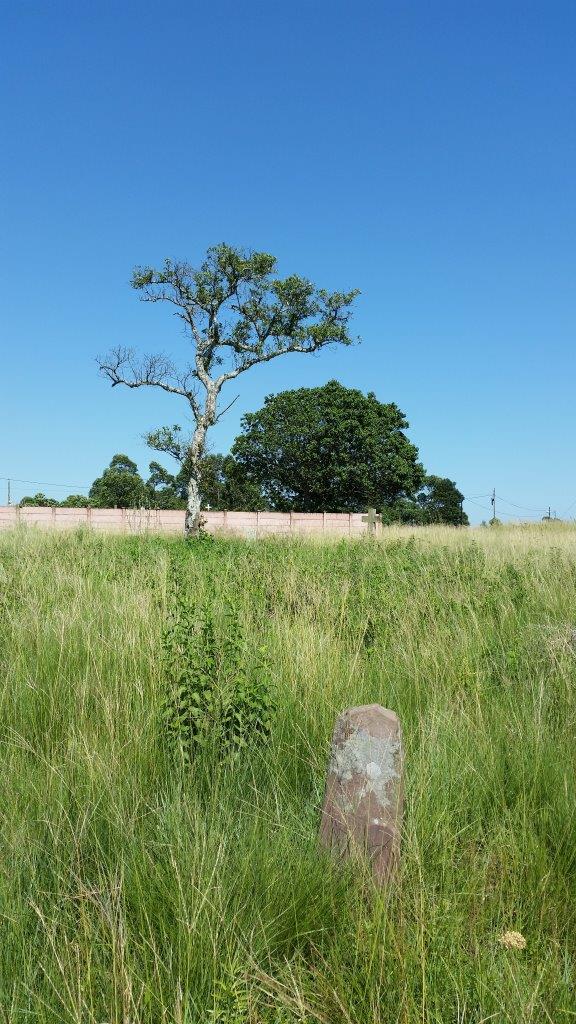
Siege of Eshowe
For two months, Colonel Charles Pearson's garrison at Eshowe could see the Indian Ocean from their hilltop fort - and nothing else that offered hope. No reinforcements were coming. No orders arrived. The runners who might have carried messages through the Zulu-controlled countryside had simply stopped appearing. Pearson's 1,300 men occupied a rectangle of loopholed walls and sharpened-stake ditches built around an abandoned Norwegian Lutheran mission, rationing their food, burying their sick, and watching Zulu impis gather on the surrounding hills. The siege of Eshowe, from late January to early April 1879, was the Anglo-Zulu War's forgotten ordeal - less dramatic than Isandlwana, less celebrated than Rorke's Drift, but a slow-grinding test of endurance that killed men not with assegais but with disease, hunger, and isolation.
Marching Into a Trap
Pearson's No. 1 Column crossed the Tugela River into Zululand on 12 January 1879, ordered to fortify the mission station at Eshowe as a supply base. He pushed inland without opposition until 22 January - the same day the centre column was being destroyed at Isandlwana. At the Inyezane River, a 6,000-strong Zulu impi attempted to halt his advance. Its left horn charged prematurely after Lieutenant Hart's NNC company stumbled into them on a ridge, and British firepower repulsed the attack, killing 350 Zulu warriors at a cost of 10 British dead and 16 wounded. Pearson continued to Eshowe the next day: a deserted church, a schoolhouse, and the home of a Norwegian missionary on a hilltop, surrounded by low hills on three sides with the Indian Ocean shimmering to the south.
News from the Abyss
On 24 January, news arrived that Durnford's No. 2 Column had been destroyed. Chelmsford's communication two days later was deliberately vague - all orders cancelled, Pearson should 'take such action as he thought fit.' His subordinates advised withdrawal. The decision to stay was settled when supply wagons returned with five additional companies as reinforcement. By early February, Zulu forces had appeared on the surrounding hills. A week later, Pearson learned the full truth about Isandlwana and was told no reinforcement was possible. Eshowe was on its own.
Walls of Mud and Sharpened Sticks
The fort Pearson's men built around the Norwegian mission was a rough rectangle with loopholed walls surrounded by a broad ditch embedded with sharpened stakes. Wagons were laagered inside as a secondary defence. An abattis of felled trees extended outward, and the garrison cleared fields of fire in every direction. Inside this perimeter, 1,292 European and 65 African combatants settled into the grinding routine of a siege. Sickness was the real enemy. Twenty men died of disease during the two months, their graves multiplying in the compound. Rations dwindled steadily; by early March, Pearson calculated they would run out at the beginning of April. The Zulu maintained pressure through sniping and patrol skirmishes but never launched a full assault - they did not need to. Time was doing their work. In early March, a flash of light appeared on the horizon: a heliograph signalling from Fort Tenedos, twenty-two miles away. The garrison improvised a reply apparatus, and for the first time in weeks, Pearson could communicate with the outside world.
Relief at Gingindlovu
The heliograph brought word of a relief column marching on 13 March. Then another signal: delayed until 1 April. On that date, Chelmsford finally set out with 3,390 European soldiers, 2,280 NNC troops, artillery, Gatling guns, and 120 wagons. By evening, Pearson's observers could see the column laagering ten miles away. Chelmsford ordered a waist-high earthwork square with a four-foot trench - he had learned from Isandlwana. At dawn on 2 April, a 12,000-strong Zulu impi attacked in the Battle of Gingindlovu. Veterans of Isandlwana were among them, attempting to replicate that triumph. Against entrenched defenders with concentrated fields of fire, the assaults were repulsed throughout the day.
The Pipers at the Gate
On 3 April, the relief column entered Eshowe. The pipers of the 91st Highlanders led the way, their music carrying across the hilltop where Pearson's men had endured seventy days of isolation. The two-month siege was over. But Chelmsford, surveying the position, concluded that Eshowe was not worth holding. The laboriously constructed fort - every wall built by hand, every ditch dug in African soil, every sharpened stake planted by men who did not know if rescue would come - was demolished. Pearson's column marched out on 6 April. That night, bivouacking on the road south, his men looked back to see flames rising from the hilltop. The Zulu had set the abandoned encampment ablaze. The glow would have been visible for miles, a signal fire marking the end of a siege that cost no dramatic last stand but ground men down through weeks of uncertainty, disease, and the slow erosion of hope. Eshowe's story lacks the heroic narrative arc of Rorke's Drift, but it captures something more common in war: the endurance of ordinary soldiers waiting in a place they cannot leave, watching supplies diminish, burying their companions, and holding on because the alternative is unthinkable.
From the Air
Located at 28.91S, 31.46E in KwaZulu-Natal, South Africa. The site of the siege fort is on a hilltop near the modern town of Eshowe, with remains of the original foundations still visible. The Indian Ocean is visible to the south on clear days. The Inyezane River battle site lies to the southwest along Pearson's approach route. The Tugela River crossing (Lower Drift) is approximately 60km to the southwest. Nearest airports: Richards Bay (FARB) approximately 80km southeast; Ulundi (FAUL) approximately 100km north; King Shaka International, Durban (FALE) approximately 150km south-southwest. Elevation approximately 530m ASL. The hilltop position with surrounding lower ground is identifiable from altitude. Subtropical climate with good visibility except during summer thunderstorms.