Siege of Fort Nashwaak
Governor Villebon had chosen the junction of the Nashwaak and Saint John rivers for a reason. When he relocated Acadia's capital from Fort Jemseg in 1691, he wanted distance from the coast, proximity to the Maliseet capital at Meductic, and access to the portage routes that threaded through the New Brunswick interior. Fort Nashwaak -- a four-sided log palisade he called Fort St. Joseph -- sat on the north bank of the Nashwaak, commanding the river approach from the south. In October 1696, those advantages would be tested when a New England force of 400 men arrived to burn it down.
Retaliation Up the River
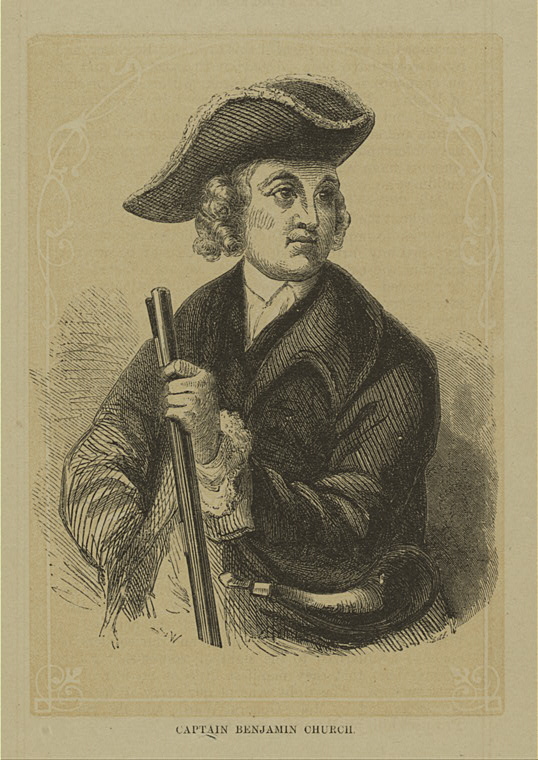
The siege grew from tit-for-tat warfare between French Acadia and English New England. Earlier in 1696, French and Indigenous forces had destroyed Fort William Henry at Pemaquid in present-day Maine -- a fort that Major Benjamin Church himself had helped build. Church, a veteran frontier fighter in his late fifties, was sent to strike back alongside Colonel John Hathorne. He raided Chignecto first, devastating Acadian settlements, then turned his sights on the capital itself. Six English vessels entered the harbour at Saint John in early October, landing troops that began a cautious advance upriver. Sieur Neuvillette, sent to reconnoiter with seven men, tracked their progress and sent warnings back to Villebon at the fort.
Allies from Meductic
Villebon did not wait passively for the English. On October 11, he sent word to Father Simon-Gerard de La Place at Meductic, requesting Maliseet militia. Five days later, Father Simon and Acadian officer Sieur de Clignancourt arrived with 36 Maliseet warriors. Pierre Maisonnat dit Baptiste, the Acadian privateer, reached the fort on October 17 with ten settlers from the Saint John River valley. The garrison was a patchwork of French regulars, Acadian militia, and Indigenous allies -- a coalition that would prove more resilient than the English expected. Villebon prepared methodically, dismantling a nearby house to clear his field of fire, hiding surplus powder in caches away from the fort, and assigning each man his position on the palisade.
Two Days of Cannon Fire
On October 18, the New England forces under Colonel John Hathorne and Major Benjamin Church landed opposite the fort and set up earthworks on the south bank of the Nashwaak. They brought three cannons ashore, though one was positioned too close to the French lines and drew withering musket fire that rendered it useless. The remaining two traded volleys with Villebon's guns for two days. The French cannons, sited higher and better protected behind the palisade, held the advantage. Along the Nashwaak River, Clignancourt and Baptiste, with their Mi'kmaq allies, clashed with English-allied Indigenous fighters advancing along the bank. At noon on the second day, reinforcements under M. de Falaise arrived from Quebec and immediately joined the defense. The French knocked out one of the two effective English cannons and slowed fire from the last with continuous volleys from the fort.
Retreat and Pursuit
The New Englanders withdrew having suffered eight killed and seventeen wounded. The French lost one killed and two wounded, including Mathieu d'Amours. As Church's men retreated downriver, the defenders harassed them with musket fire and let them believe a larger Indigenous force was in pursuit -- a bluff that hastened their departure. In their rush, the English abandoned two small boats. Baptiste claimed them and sailed to Grand Pre, where he armed the vessels, recruited Acadian crews, and launched raids along the New England coast. By March 1697, despite being wounded three times, he had captured eight English fishing vessels within three leagues of Casco Bay, fighting off two New England privateer ships before returning to Grand Pre with his prizes.
The Capital Moves On
The New Englanders' failure at Fort Nashwaak did not end the border conflict. Church had warned the Acadians at Chignecto that he would return if New Englanders continued to suffer -- a promise he kept during Queen Anne's War, when he raided Chignecto again and struck at Grand Pre. Two years after the siege, Acadia's capital shifted briefly to Saint John before settling permanently at Port Royal in Nova Scotia. Today, the site of Fort Nashwaak lies beneath modern Fredericton, where the Nashwaak still meets the Saint John River. No trace of the palisade remains above ground, but the geography Villebon chose -- the high bank, the river junction, the inland distance from the coast -- still reads clearly from the air.
From the Air
Located at 45.96N, 66.64W on the north bank of the Nashwaak River at its confluence with the Saint John River, in present-day Fredericton, New Brunswick. Best viewed at 2,000-3,000 feet AGL. The river junction is the key landmark. Nearest airport: Fredericton International Airport (CYFC), approximately 8 nm southeast. The Saint John River valley provides clear visual reference in any season.