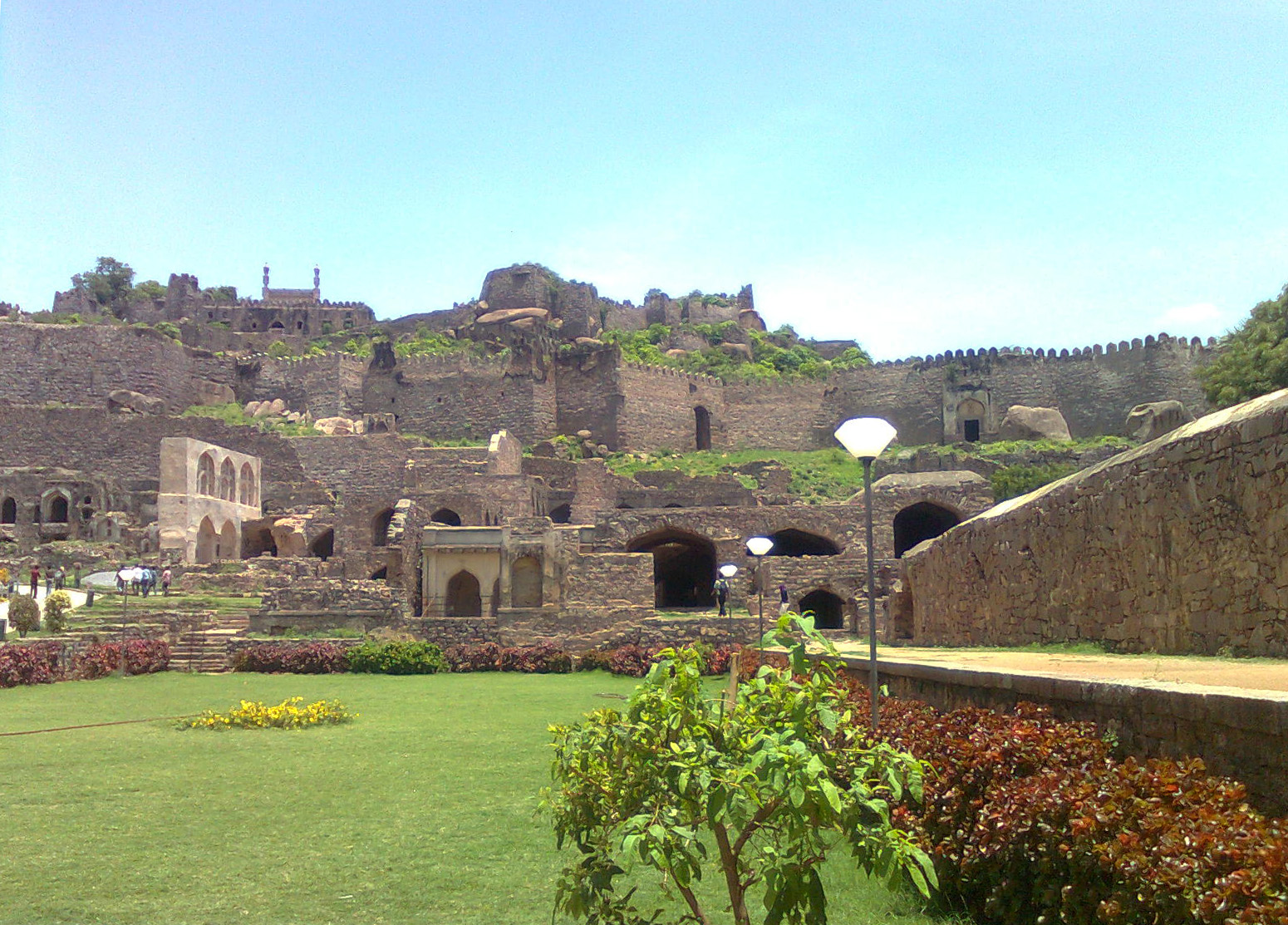
Siege of Golconda
Three mines lay tunneled beneath the walls of Golconda Fort, each packed with 37,000 pounds of gunpowder. At dawn on June 20, 1687, Mughal emperor Aurangzeb ordered the first detonated. The fort's garrison had already discovered two of the mines and countermined them. The first explosion backfired, killing over a thousand of Aurangzeb's own soldiers. The second produced similar carnage among the attackers. The third failed to ignite at all. Meanwhile, the defenders hurled huqqa -- hand grenades -- down onto the besiegers. After eight months of siege, the largest army in the subcontinent could not breach walls that a mud-fort builder from the Kakatiya dynasty had first raised six centuries earlier. Golconda would fall, but not to force. It would fall to a man named Sarandaz Khan, who opened a back door in the dark.
A Forty-Year Obsession
Aurangzeb had wanted Golconda since he was a prince. In 1656, serving as a commander under his father Shah Jahan, he besieged the fort for the first time. Shah Jahan overruled him and negotiated peace with Golconda's ruler, Abdullah Qutb Shah, who promptly extended the fort's defenses -- the extension known today as Naya Qila. When Aurangzeb finally crowned himself emperor, he bided his time. He moved his camp to the Deccan in 1682, ostensibly to counter the rebellion of his own son, Prince Muhammad Akbar. Once that threat was neutralized, the emperor turned to his real ambition: swallowing the Deccan's last independent sultanates. Bijapur fell after a siege in 1685-1686. Golconda, with its diamond mines, agricultural wealth, and strategic trade routes, was next. The Maasir-i-Alamgiri, a chronicle of Aurangzeb's reign, supplied additional justifications -- the sultanate's Shi'i faith, its tolerance of Hindu practices, its alleged support of Maratha raids into Mughal territory.
The Emperor's Own Son Betrays Him
Aurangzeb's problems began inside his own camp. His son Prince Muazzam, sent to take Hyderabad, preferred negotiation to conquest. Muazzam's forces entered the city and plundered its palaces, but when Sultan Abul Hasan Qutb Shah retreated into Golconda Fort, Muazzam pushed for a diplomatic settlement. Aurangzeb viewed this as treason. He offered the sultan terms of his own -- cede territory, pay a large sum, dismiss the Brahmin ministers Madanna and Akkanna -- but the sultan dragged his feet. In March 1686, pressure from within the kingdom led to the assassination of Madanna and Akkanna. It was not enough. On 14 January 1687, Aurangzeb marched on Golconda personally. Once the siege began, his commander Ghaziuddin Khan uncovered that Muazzam had been secretly sharing Mughal military tactics with the sultan and smuggling food into the fort. Aurangzeb placed his son under house arrest; Muazzam would not be freed until 1695.
Famine, Flood, and Stubborn Granite
The siege was brutal for both sides. Aurangzeb deployed 50,000 infantry, a comparable number of cavalry, and around 100 siege guns, including the Azhdaha-Paikar, a 1647 iron-bronze cannon capable of firing 33.5-kilogram projectiles. The Mughal army encamped at Fateh Maidan, just over a mile from the fort. By the end of January they had invested the full circumference, but Golconda's garrison fought back ferociously. Qilich Khan, father of the commander-in-chief, led a frontal assault only to have his shoulder shattered by a cannonball; he died three days later. A relief force of 40,000 Golconda cavalry was routed in the first two weeks, the only major attempt to break the siege from outside. Rivalries between Mughal generals stalled progress on the siege trenches. Famine from the previous year's monsoon failure left the army without food. When the actual monsoon arrived, the Manjira River overflowed and flooded the encampment. Epidemic spread through the ranks, worsened by disease from unburied corpses.
A Door Opens in the Dark
After the mine catastrophe in June, Aurangzeb shifted strategy. He ordered mud and wood walls built around the fort's entire circumference, sealing it completely. He proclaimed Golconda annexed into the Mughal Empire, giving it the epithet Dar-ul-Jihad. Reinforcements arrived under Prince Azam and paymaster-general Ruhullah Khan in July, but they only strained food supplies further. Then Aurangzeb waited. With no supplies reaching the garrison, time was on his side. On 21 September 1687, a Golconda noble named Sarandaz Khan betrayed the sultanate and provided the Mughal forces access to a rear entrance. Ruhullah Khan led a night assault through it, and the main gate was thrown open. Sultan Abul Hasan was arrested and sent to Daulatabad Fort, where he died three years later. Riches valued at over sixty million rupees were loaded onto camels and sent north. Aurangzeb had fulfilled his forty-year ambition -- but the administrative burden of governing the conquest would contribute to a crisis of land grants that historians consider a key factor in the Mughal Empire's rapid decline after his death.
From the Air
The Siege of Golconda took place at Golconda Fort (17.38N, 78.40E), on a prominent hill on the western outskirts of Hyderabad. The Mughal army encamped at Fateh Maidan, roughly 1.25 miles east of the fort in what is now central Hyderabad. The fort's 10 km outer wall with 87 bastions is visible from altitude. Nearest airport is Rajiv Gandhi International (VOHS/HYD), approximately 25 km southeast. The Manjira River, which flooded during the siege, lies to the north. Elevation roughly 480 meters on the Deccan Plateau.