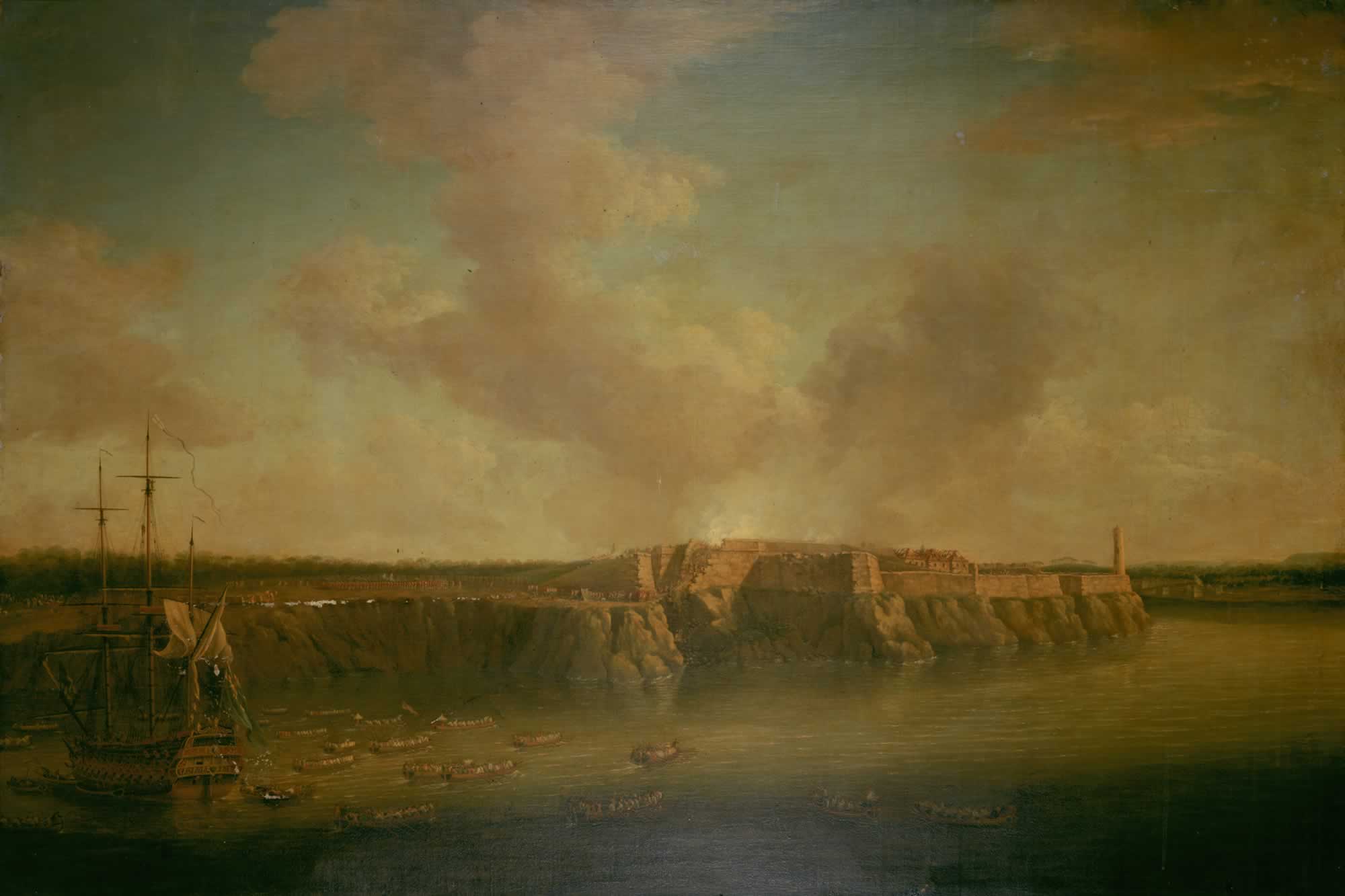
Siege of Havana
The Spanish were certain it could not be done. The Old Bahama Channel, a narrow passage threading between Cuba's northern coast and the shallow reefs of the Bahamas, was considered far too dangerous for large warships. But in late May 1762, a British frigate captain had already surveyed the route, leaving men stationed on cays to mark the channel's edges. On June 6, the entire British invasion fleet -- 21 ships of the line, 24 lesser warships, 168 transports carrying nearly 14,000 seamen and 12,826 soldiers -- appeared off Havana from a direction nobody in the city had thought possible. Governor Juan de Prado and Admiral Gutierre de Hevia stared at the largest amphibious force ever assembled in the Caribbean and realized their strategy of relying on advance warning had just collapsed.
The Key to the New World
Havana in 1762 was the crown jewel of Spain's American empire. Its royal shipyard, supplied by Cuba's abundant hardwood forests, could build first-rate ships of the line and ranked as the most important of Spain's three naval shipyards. The harbor itself was superb -- a deep anchorage accessed through a channel just 180 meters wide and 800 meters long, defended by formidable fortresses on both sides. Morro Castle, perched on the rocky Cavannos Ridge on the north bank, bristled with 64 guns and a garrison of 700 men. San Salvador de la Punta guarded the southern approach, and each night a heavy boom chain was stretched between the two fortresses to seal the harbor. The city behind these defenses held 12 Spanish ships of the line, around 100 merchant vessels, and a garrison of regulars, militia, and sailors numbering roughly 10,000 men. Britain chose Havana as its target just two days after declaring war on Spain in January 1762, believing that taking the city would cripple Spanish influence across the Caribbean.
The Hill Nobody Fortified
The siege's outcome turned on a single, catastrophic Spanish oversight. La Cabana, a hill on the eastern heights above the harbor, commanded both Morro Castle and the city below. King Charles III himself had ordered Prado to fortify it as his most urgent priority. The work had started, but when the British arrived, not a single gun had been installed. On June 11, a British party stormed a detached redoubt on the La Cabana heights, and within days, Colonel Patrick Mackellar's engineers were erecting heavy batteries among the trees overlooking the Morro from above. By June 22, four batteries mounting twelve heavy guns and 38 mortars opened fire downward into the fortress. The bombardment was devastating. By month's end, British gunners were landing 500 direct hits per day on Morro Castle. The fortress commander, naval officer Luis Vicente de Velasco, was losing 30 men daily and rotating fresh troops in every three days because the exhausting nighttime repair work left soldiers unable to fight.
Velasco's Defiance
Velasco became the siege's tragic hero. While Prado and Hevia dithered in the city, Velasco fought with everything he had. He convinced Prado to launch a dawn raid on June 29 -- 988 men attacked the British batteries from the rear, reaching the guns and beginning to spike them before being driven back. When four British ships of the line attempted a naval bombardment on July 1, Morro Castle's elevated position turned the attack against them: thirty Spanish guns inflicted 192 casualties and so badly damaged the warships that one had to be scuttled. But the next day, British breastworks caught fire, and weeks of siege construction burned to nothing. Velasco seized the moment, remounting guns and repairing breaches. Time and disease were his allies. Malaria and yellow fever had cut the British army to half strength, and hurricane season was approaching. On July 24, Albemarle offered Velasco surrender on his own terms. Velasco's answer: the matter would be settled by force of arms. Five days later, the British detonated a mine beneath the Morro's right bastion. The blast partly filled the protective ditch, and 699 picked men stormed through. Velasco fell, mortally wounded. He died on July 31. Spain's King Charles III later ennobled his family and decreed that a Spanish warship would forever bear the name Velasco.
Surrender and Spoils
With Morro Castle fallen, British batteries commanded both the city and the harbor. On August 11, 47 guns, 10 mortars, and 5 howitzers opened fire on Havana from 500 to 800 meters. Fort la Punta was silenced in a single day. Prado surrendered on August 12. The haul was staggering: nine intact Spanish ships of the line -- a full fifth of Spain's naval strength -- along with military equipment worth 1,828,116 pesos and goods valued at another million. Admiral Hevia had neglected to burn his fleet, handing it whole to the British. Nearly 100 merchant ships were also captured. The British commanders grew rich: Albemarle and Pocock each received prize money of 122,697 pounds, while ordinary privates got just over four pounds. But victory came at a terrible cost. British forces suffered 2,764 combat casualties during the siege, and by October 18, another 4,708 men had died of disease. Three ships of the line were ultimately lost to damage sustained from Spanish gunfire.
An Empire Reshaped
The fallout reshaped the geopolitics of the Americas. Spain recovered Havana in the 1763 Treaty of Paris that ended the Seven Years' War, but the humiliation drove profound military reforms across the Spanish Empire. Cuba's colonial militia expanded to 7,500 men organized into eight infantry battalions and two cavalry regiments. Prado was court-martialed, found guilty of treason, and sentenced to death -- later commuted, though he died in prison. Hevia received a decade of house arrest and the loss of his titles, though he was eventually pardoned. Spain ceded Florida and the Mosquito Coast to Britain, which only heightened Cuba's strategic value as a defensive front line. The French compensated Spain with Louisiana for the loss of Florida. And on La Cabana hill -- that fateful unfortified height -- Spain finally built what became the largest fortress in the Americas, ensuring the mistake that cost them Havana would never be repeated.
From the Air
The siege centered on Havana Harbor at 23.10N, 82.37W. Morro Castle is prominently visible at the harbor entrance on the north side of the channel. La Cabana fortress sprawls along the eastern heights above the harbor. The narrow harbor entrance -- just 180 meters wide -- is the key geographic feature. Best viewed from 2,000-5,000 feet AGL approaching from the north or east. Jose Marti International (MUHA) is approximately 10 nm southwest. The Old Bahama Channel, through which the British fleet approached, runs between Cuba's north coast and the Bahamas to the northeast.