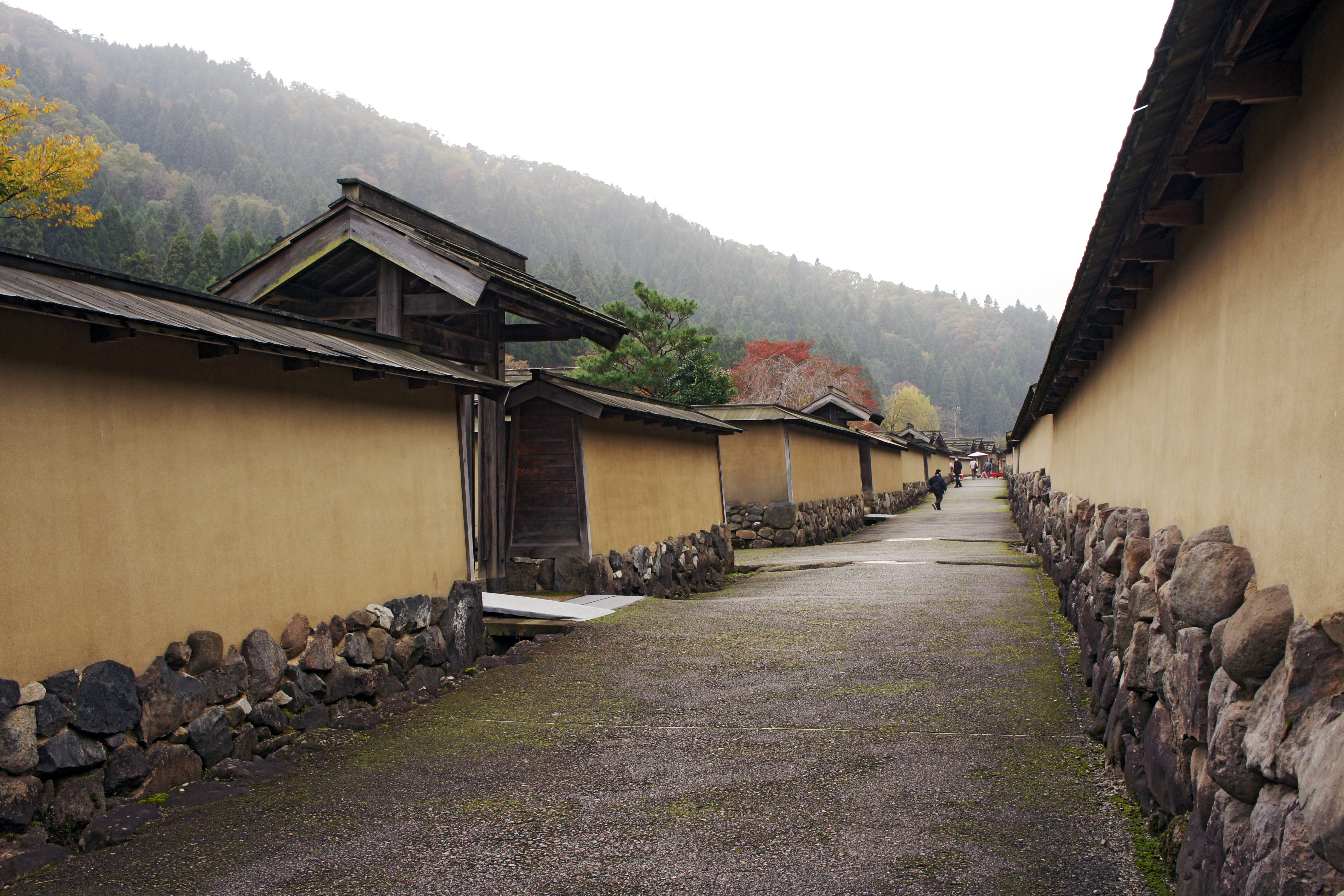
Siege of Ichijōdani Castle
The betrayal came from inside the family. In September 1573, as Oda Nobunaga's armies closed in on the mountain-ringed castle town of Ichijodani, Asakura Yoshikage -- lord of Echizen Province, head of one of Japan's most cultured warrior clans -- fled his burning capital with only a handful of loyal troops. His kinsman Asakura Kageakira offered sanctuary at a remote monastery. Yoshikage accepted. It was the last mistake he would make. Kageakira's troops surrounded the monastery, and Yoshikage, with no escape and no hope of rescue, took his own life. A hundred and three years of Asakura rule ended not on a battlefield but in a monk's quarters, with the stink of smoke drifting in from a city that was already ash.
A Castle That Was Really a City
Ichijodani was no ordinary fortress. Archaeological excavations have revealed that the castle home of Asakura Yoshikage rivaled the finest residences of the era -- a luxury compound with a library, landscaped gardens, and rooms decorated with an elegance that typified the Azuchi-Momoyama period. Researchers have compared it to Toyotomi Hideyoshi's later castle at Fushimi. But Ichijodani was more than a single residence; it was the heart of a thriving castle town of over 10,000 people, nested in a valley with mountains on three sides and the Asuwa River guarding the north. The Asakura had transformed this natural stronghold into both a military headquarters and a cultural capital, welcoming refugees from war-torn Kyoto and cultivating the arts alongside military power.
Nobunaga Marches
The chain of events that doomed Ichijodani began with political loyalty to the wrong man. The Asakura clan had long maintained ties to the Ashikaga shogunate. When Oda Nobunaga seized Kyoto and marginalized the shogun, Ashikaga Yoshiaki turned to Yoshikage for help, appointing him regent and pleading for military intervention. Nobunaga's response was invasion. He departed Gifu Castle at the head of 30,000 soldiers, marching first into Omi Province to besiege Odani Castle, held by his other rival, Azai Nagamasa. Yoshikage mobilized 20,000 men to relieve the Azai garrison, but Nobunaga wheeled his forces around and struck the Asakura army directly. Yoshikage fell back to Hikida Castle, which Nobunaga's troops stormed on August 10. The Asakura lord fled home to Echizen with his forces in disarray.
Fire in the Valley
Nobunaga followed. In September 1573, his army crossed into Echizen Province and met the Asakura at Tonezaka. The battle was decisive. Yoshikage's forces crumbled, and among the dead was Saito Tatsuoki, a guest commander fighting alongside the Asakura, killed at the age of 26. Nobunaga pushed on to Ichijodani itself, seizing the town and putting it to the torch. The castle, the mansions, the merchant quarters, the temples, the gardens that refugees from Kyoto had helped create -- all of it burned. Yoshikage escaped the flames with a remnant of his personal guard, but the town his ancestors had built over a century was gone in a single day of destruction.
Betrayal at the Monastery
What followed the burning was grimmer still. Fleeing with only his closest retainers, Yoshikage accepted an offer of refuge from his kinsman Asakura Kageakira, who proposed the Rokubo-kensho monastery as a safe haven. It was a trap. Once Yoshikage arrived, Kageakira's soldiers surrounded the monastery. The retainers fought and died. Yoshikage, cornered and alone, committed suicide. Kageakira then presented Yoshikage's severed head to Nobunaga, along with Yoshikage's mother, wife, and children as hostages, hoping to negotiate for his own life and status. Nobunaga accepted the hostages but showed no mercy to the traitor -- the Oda army executed Kageakira. Within weeks, Nobunaga turned his forces back to Omi Province and besieged Odani Castle, destroying the Azai clan as well. The twin pillars of resistance to Nobunaga's rise had both been broken in a single autumn.
From the Air
Located at 36.00N, 136.30E in a mountain valley southeast of Fukui city, Fukui Prefecture. The ruins of Ichijodani Castle sit in a narrow valley of the Asuwa River, enclosed by ridges on three sides. From altitude, the valley's constricted shape is clearly visible amid the surrounding mountains. The nearest major airport is Komatsu Airport (RJNK), about 55 km north-northeast. Fukui Airport (RJNF) is a smaller field roughly 15 km to the northwest. The valley runs north-south, and the hilltop castle ruins are visible on a ridge above the valley floor.