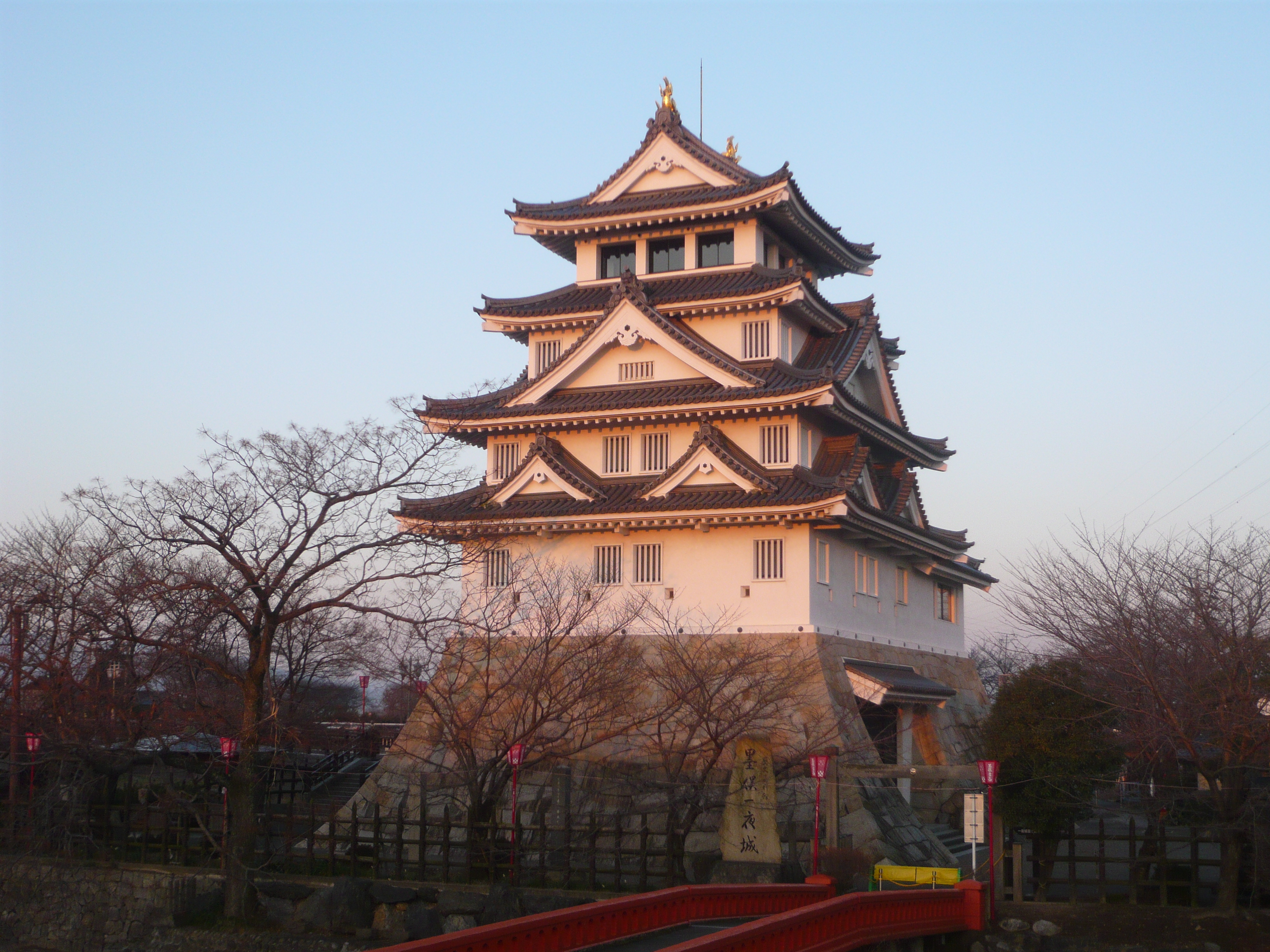
Siege of Inabayama Castle
A sandal-bearer changed the course of Japanese history. In September 1567, as Oda Nobunaga's army massed on the plains below Inabayama Castle, a former servant named Kinoshita Hideyoshi led a small strike force up the sheer north face of Mount Inaba, slipped inside the fortress walls, and flung open the gates. Within two weeks, the mountaintop stronghold that had resisted six years of attacks fell to Nobunaga, ending the Saito clan's dominion over Mino Province and giving Japan's most ambitious warlord the base from which he would attempt to unify an entire nation. That sandal-bearer would later take the name Toyotomi Hideyoshi and complete the unification himself.
A Marriage, a Murder, and a Weak Heir
The roots of the siege reach back to a political marriage. Nobunaga, second son of the Oda clan leader, wed Nohime, daughter of the formidable Saito Dosan, lord of neighboring Mino Province. The union ended years of border skirmishes between the two clans. Dosan saw something remarkable in his son-in-law and changed his will to name Nobunaga his legal heir. But before the document could matter, Dosan was killed by his own son Yoshitatsu at the Battle of Nagaragawa. When Yoshitatsu died of leprosy in 1561, his son Saito Tatsuoki inherited the clan. Tatsuoki proved so ineffective that his retainers viewed him with contempt, his subordinates with disdain, and even the local peasantry despised him. The Saito clan, once formidable, was hollowing out from within.
The Castle Built Overnight
Nobunaga tried direct assaults on Mino in 1561 and 1563, each time leading just 700 troops against forces that quickly swelled to 3,000. He was driven back both times. In 1564, he attacked Inabayama Castle itself but could not hold it. The fortress, perched atop what is now called Mount Kinka at 329 meters elevation, was considered nearly impregnable. So Nobunaga changed tactics. He dispatched Hideyoshi, then still called Kinoshita Tokichiro, to bribe and persuade Mino warlords into switching allegiance. The most significant defection was Takenaka Hanbei, the Saito clan's ablest military mind, who privately acknowledged his clan could not survive under Tatsuoki's leadership. Then, in 1566, Hideyoshi pulled off his most audacious feat: with help from Hachisuka Koroku, he constructed Sunomata Castle on the bank of the Sai River, directly opposite enemy territory. Legend holds it was built in a single night, though more likely the skeleton framework went up rapidly enough to astonish observers on the far bank.
Fourteen Days on the Mountain
In September 1567, Nobunaga committed his full strength. His army of roughly 13,000 troops crossed the Kiso River organized into multiple divisions: 3,000 under Nobunaga and Niwa Nagahide in the main force, 4,000 split between Shibata Katsuie and Ikeda Tsuneoki, 3,000 more under Mori Yoshinari, Maeda Toshiie, and Sassa Narimasa, with 2,000 in reserve under Sakuma Nobumori. Hideyoshi commanded a 1,000-strong vanguard alongside Kuroda Kanbei, supplemented by the Mino Triumvirate, three powerful Saito vassals who had been persuaded to defect. As the army swept across the plain, skirmishes failed to slow their advance. Nobunaga's forces breached the castle's outer defenses while Hideyoshi led his climbers up the treacherous north face. When the gates swung open from within, the fortress that had held for years collapsed in days.
From Inabayama to Gifu
Victory transformed both castle and region. Nobunaga renamed Inabayama Castle to Gifu Castle, drawing the name from Chinese history: Qishan, the mountain from which King Wu of Zhou launched his campaign to unify ancient China. The castle town of Inoguchi became Gifu, a name it carries to this day. The message was deliberate. Nobunaga was not merely claiming a province; he was declaring his intent to unify all of Japan. Gifu Castle became his primary residence and military headquarters until he relocated to the partially completed Azuchi Castle in 1575. The mountaintop fortress served as the launchpad for campaigns that would reshape the political map of Japan, and the former sandal-bearer who scaled its walls would eventually rise to become the second of Japan's three great unifiers.
From the Air
Located at 35.43N, 136.78E atop Mount Kinka (329 meters) in present-day Gifu city. The reconstructed Gifu Castle is visible on the summit, overlooking the Nagara River to the north. Best viewed from 2,000-4,000 feet. The Kiso River, which Nobunaga's army crossed, lies to the south. Nearby airport: Gifu Air Base (RJNG) approximately 10 km south. Nagoya Airfield/Komaki (RJNA) lies about 25 km southeast. The castle tower on the mountaintop is a distinctive landmark visible from considerable distance.