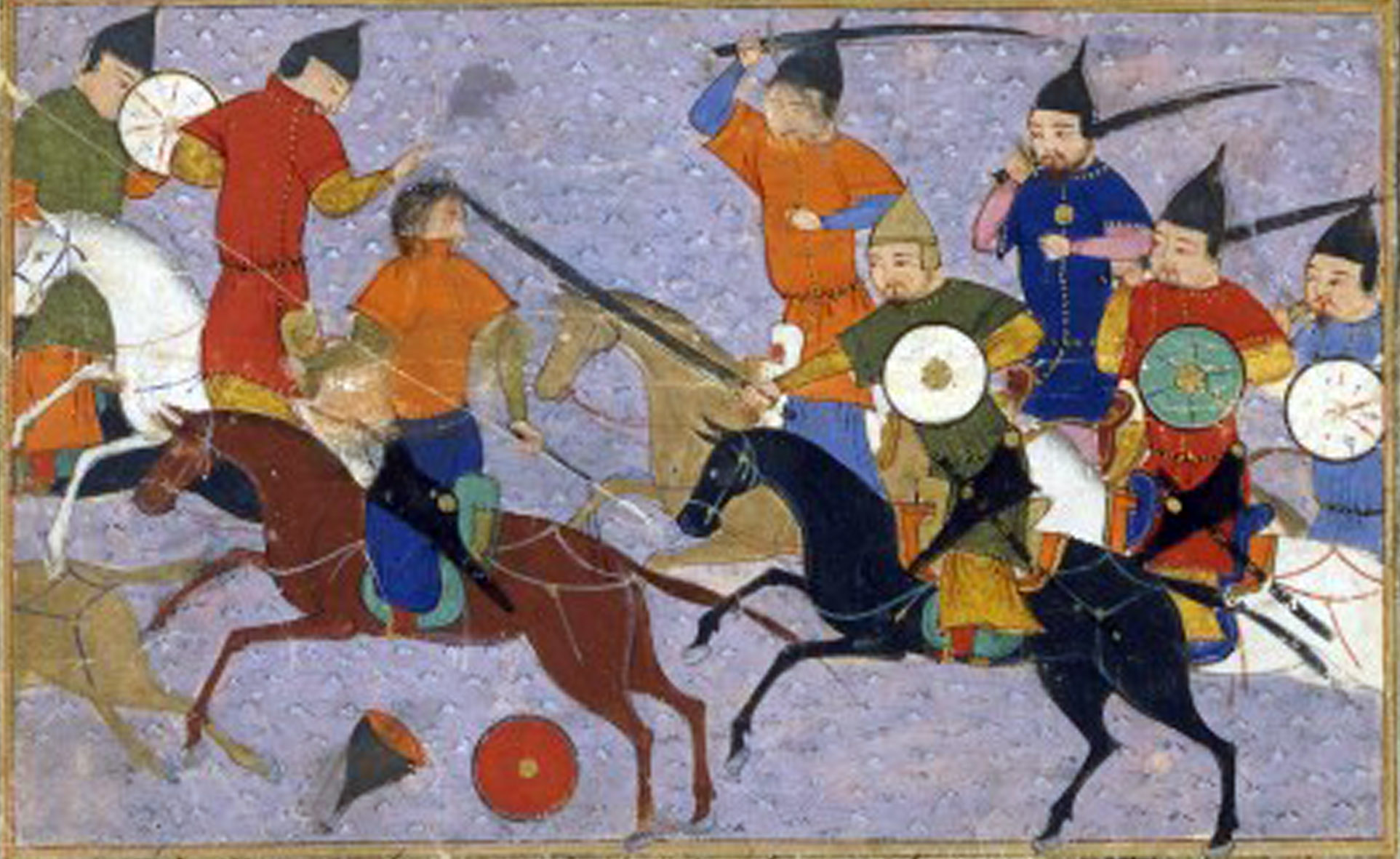
Siege of Kaifeng (1232)
The Jurchen soldiers on the walls of Kaifeng carried something the Mongols had never faced. Attached to the tips of their spears were tubes packed with a mixture of sulfur, charcoal, saltpeter, ground porcelain, and iron filings. When ignited, these fire lances shot flames three meters from the spear tip. If the gunpowder was spent, the weapon could still be wielded as a conventional polearm -- or a fresh tube could be slotted in. Alongside these weapons, trebuchets hurled gunpowder bombs that detonated on impact, punching through armor and setting grassland ablaze. It was 1232, and the defenders of a doomed city were deploying the earliest well-documented gunpowder weapons in the history of warfare.
Twenty Years of War
The Mongol-Jin conflict had been building since 1211, when the Jurchen-led Jin dynasty refused to submit as a vassal to the rising Mongol Empire. Genghis Khan dispatched two armies into Jin territory, but the fortified cities proved difficult to crack. The Mongols besieged the Jin capital Zhongdu in 1213, failed to breach its walls, but intimidated the emperor into paying tribute. When the Jin court moved south to Kaifeng in 1214, fearing another siege, the Mongols took Zhongdu the following year. By the time Genghis Khan died in 1227, much of northern China was under Mongol control, but the Jin dynasty survived in a diminished state around its new capital. His successor Ogedei Khan renewed the campaign in 1230, dispatching armies from both north and south under the overall command of the legendary general Subutai.
Fire and Famine Inside the Walls
The Mongols reached the Yellow River on January 28, 1232, and began encircling Kaifeng by February 6. The siege formally began on April 8. Inside the walls, the Jin deployed their gunpowder arsenal with devastating effect. Bombs launched by trebuchets could penetrate armor and ignite fires across the battlefield, though they were primitive enough to sometimes detonate prematurely or fail entirely. Mongol soldiers adapted by digging trenches covered with cowhide shields, approaching the walls beneath this improvised protection. The standoff lasted months. As summer turned to fall, plague swept through the crowded city. Starvation became rampant as stored supplies ran out. Paranoia gripped the population, and several residents were executed on suspicion of treason. The Jin attempted peace negotiations, but when their soldiers assassinated the Mongol diplomat Tang Qing and his entourage, all hope of a negotiated end vanished.
An Emperor Flees, a General Surrenders
By late 1232, Emperor Aizong of Jin recognized that the city could not hold. He escaped with a retinue of court officials, reaching the city of Guide in February 1233, then Caizhou by August. His departure gutted the defenders' morale. General Cui Li, left in command, responded to the crisis by executing the emperor's loyalists who had remained behind. Recognizing that continued resistance was suicidal, Cui opened the gates on May 29, 1233. The Mongols entered and looted the city, though in an unusual departure from standard siege practice, they permitted trade afterward. The wealthiest residents sold their luxury possessions to Mongol soldiers in exchange for desperately needed food. Male members of the royal family were captured and executed. Imperial concubines, including the empress dowager, were taken north as captives.
The Prophecy Fulfilled
Emperor Aizong fled to Caizhou and sent diplomats to the Song dynasty, warning that the Mongols would attack the Song once the Jin fell. The Song refused to help. They had fought too many wars against the Jurchens to feel sympathy, and instead allied with the Mongols. In December 1233, the Mongols besieged Caizhou. Aizong committed suicide rather than be captured. His intended successor, Emperor Mo, was killed in battle the next day -- his reign lasting less than forty-eight hours. The Jin dynasty was finished. One year later, Aizong's warning proved prophetic: the Mongols began their conquest of the Song dynasty. For historians of military technology, the siege of Kaifeng stands as a landmark -- the moment when gunpowder weapons, still crude and unreliable, first demonstrated the potential that would eventually transform warfare across the globe.
From the Air
Located at 34.79N, 114.34E at the site of historic Kaifeng, Henan province. The modern city of Kaifeng sprawls across the flat Yellow River plain, with the river itself visible to the north. Nearest major airport is Zhengzhou Xinzheng International (ZHCC/CGO), approximately 75 km west. The terrain is uniformly flat, characteristic of the Central Plains of China.