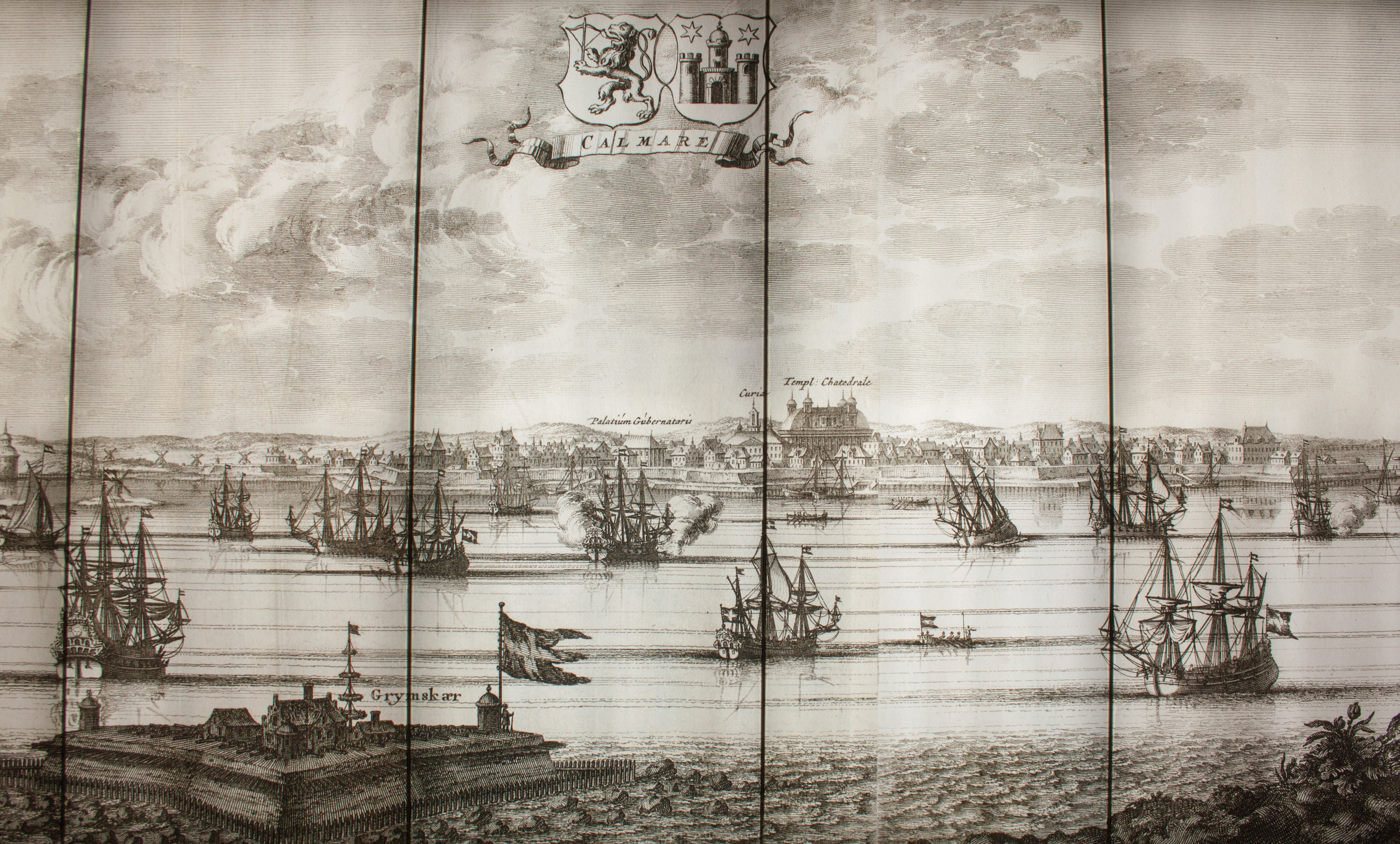
Siege of Kalmar (1525)
It began with dinner. In 1524, during the Swedish invasion of Gotland, commander Berend von Melen accepted an invitation to dine with the enemy, Soren Norby, who held the island for Denmark. King Gustav Vasa called it treason. Berend was summoned to Stockholm under promise of safe passage, then arrested upon arrival. The castle at Kalmar, which Berend controlled, would not accept this betrayal quietly. What followed was a siege that tested the limits of loyalty, a defense mounted by fifty against thousands, and an ending so bloody it earned the name of massacre.
Brothers Against the Crown
When Gustav Vasa arrested Berend, he sent a fleet and thousands of troops to seize Kalmar Castle. The townspeople opened their gates to the royal army, but the castle itself remained closed. Berend had transferred command to his brother Henrik von Melen, who declared that only Berend could authorize opening those gates. Gustav Vasa thought he had a solution: send Berend himself to Kalmar under escort. The escorts, Nils Eriksson and Jon Olofsson, apparently celebrated their mission too well. Berend escaped into the castle while his guards lay drunk. Other accounts claim he was allowed in under oath to surrender the fortress the next morning. That surrender never came.
Whitsun Eve Raid
Inside the castle, Berend found his situation precarious. He sent word to Oland, securing oaths from four knights who swore to defend the fortress and not surrender. When Berend attempted to escape, these same knights dragged him back. They had sworn to fight, and fight they would. On the eve of Whitsun, the garrison launched a surprise sortie into the sleeping town. Nils Eriksson barely escaped an attack on his lodgings. Fourteen citizens died and the raiders carried valuables and prisoners back behind the castle walls. The garrison of roughly fifty had drawn first blood against an army of thousands.
The Walls Hold Twice
Gustav Vasa built earthworks between the town and the castle moat, positioning artillery to breach the curtain wall. When the guns opened a gap, Swedish troops stormed through, launching simultaneous assaults along the entire perimeter to divide the defenders. The garrison, men and women fighting together, met them with boiling water and burning pitch. The assault failed with heavy casualties. The king, enraged, stripped off his royal cloak and donned armor, swearing to lead the next attack personally. His troops talked him out of it, then swore to try again. A second breach, a second assault. Peder Fredag led his company through the gap. Jon Pederson Ulfsax followed with four hundred men. They scaled the walls and reached the outer courtyard, where the defenders had dug a trench. At that trench, the assault died. Fredag and nearly all his men fell. Ulfsax retreated with only four soldiers still standing.
A King's Tears, Then Vengeance
Gustav Vasa wept. His army had suffered catastrophic losses against a garrison of fifty. But the defenders had paid equally. Roughly half lay dead or gravely wounded. On the morning after the second assault, the survivors offered to surrender, likely requesting safe passage. The king refused. He would drag them out by the hair, he said, for the casualties they had inflicted. With no hope of relief and their oath to Berend expired, the garrison capitulated on July 20, 1525, as Swedish artillery resumed its bombardment.
The Bloodbath
When Swedish troops entered the castle, they found that Berend, Henrik, and Berend's wife Margareta had escaped to Soren Norby on June 9th, more than a month before the final surrender. The garrison had held out for their lord even after he had abandoned them. Two notable prisoners were taken: one of Soren Norby's daughters and Nils Stensson Sture. The rest of the garrison, between sixty and seventy-six people by various accounts, was executed. Historians have called it a massacre, a bloodbath. The fortress that had defied a king with fifty defenders was cleansed with their blood, a brutal end to one of the most desperate sieges in Swedish history.
From the Air
Located at 56.661N, 16.363E on Sweden's southeastern coast at Kalmar Castle, the same fortress featured in the siege. The castle sits on a peninsula extending into Kalmarsund strait, with the town of Kalmar to the west. From the air, the moat surrounding the castle and the strategic chokepoint of the strait are clearly visible. The earthworks Gustav Vasa built would have occupied the open ground between town and moat. Nearest airport is Kalmar Airport (ESMQ), approximately 4 nautical miles west. The island of Oland, from which the defending knights came, lies directly east across the narrow strait.