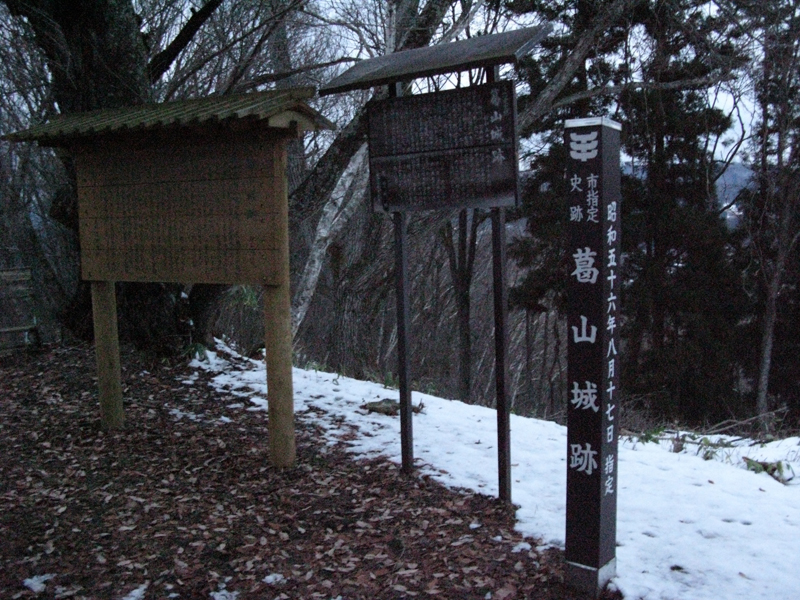
The Siege of Katsurayama: White Rice and a Last Stand in the Snow
The defenders poured white rice down the castle walls, watching it cascade like a waterfall toward the 6,000 enemy soldiers below. From the Takeda siege lines, the torrent of grain looked exactly like rushing water -- proof, the attackers believed, that Katsurayama's garrison had supplies to burn. It was a brilliant deception. The mountain fortress west of Nagano had no fresh water source within its walls, and its garrison was slowly dying of thirst. Everything depended on the ruse holding long enough for the mountain passes to thaw and reinforcements to arrive from Echigo. Then the chief priest of Joshoji temple, at the foot of the mountain, told the besieging general exactly where the castle's only spring was located.
A Province Caught Between Tigers
Shinano Province -- the mountainous heart of central Japan -- spent the 1550s being torn apart by two of the Sengoku period's most formidable warlords. From the south, Takeda Shingen had swept out of Kai Province, conquering most of Shinano's lowlands by 1550. From the north, Uesugi Kenshin marched from Echigo to check Shingen's expansion. Their armies had already clashed inconclusively on the Kawanakajima plain in 1553 and 1555, and Shingen needed a new strategy. Rather than confront Kenshin head-on again, he would seize the mountain passes running west from Kawanakajima toward Togakushi, outflanking the Uesugi castles at Iiyama and Takanashi and opening a path to strike directly into Echigo. But one fortress blocked his route: Katsurayama, a wooden mountain castle that Kenshin had built in 1553 on a peak west of Zenko-ji temple. Its garrison of Ochiai and Murakami warriors, sworn enemies of the Takeda, stood between Shingen and his grand strategy.
The Race Against the Thaw
In early 1557, heavy late-season snows sealed the mountain passes between Echigo and Shinano. Katsurayama was cut off from Uesugi reinforcements. Shingen saw his opening and dispatched 6,000 samurai and ashigaru under Baba Nobuharu, one of the renowned Twenty-Four Generals of Takeda Shingen, to take the fortress before spring could arrive. It was a race against time: if the passes thawed before the castle fell, Kenshin would send an army south and the opportunity would be lost. Nobuharu's men threw themselves against the wooden walls in wave after wave, but the garrison under Ochiai Haruyoshi -- a samurai from Saku known as Ochiai Bitchu no kami -- fought with savage determination. The Takeda warrior Chino Yugeinojo, who collected eight enemy heads across all the Kawanakajima campaigns, took four of them at Katsurayama alone. After the initial assaults failed, Nobuharu settled into a siege, not yet realizing how precarious the defenders' position truly was.
The Waterfall of Rice
Katsurayama had food but no water. The castle's only source of fresh water was a spring at Joshoji temple on the mountain's lower slopes, outside the walls. As long as the Takeda troops did not occupy the spring, the garrison could send parties to fetch water under cover. But the secret could not last. According to popular accounts, the Ochiai devised a famous stratagem: they poured torrents of white rice over the castle walls, creating what appeared from the siege lines to be a waterfall of wasted water. The message was clear -- the defenders had so much water they could afford to pour it away in contempt. Whether this deception actually occurred or was borrowed from other siege legends in Japanese history is debated by historians, including Stephen Turnbull, but the story has become inseparable from Katsurayama's memory. Either way, the ruse failed when the chief priest of Joshoji temple revealed the spring's location to Baba Nobuharu. The Takeda army immediately occupied the water source, and the castle's fate was sealed.
Fire on the Mountain
With their water supply cut off, the defenders of Katsurayama could only hold on for days, not weeks. Baba Nobuharu launched a final assault. This time, his soldiers managed to set fire to the wooden buildings inside the walls, and the mountain fortress blazed. Through the smoke and flames, the last Ochiai and Murakami warriors fought a desperate last stand alongside their commander, Ochiai Haruyoshi. Nearly all of them died with weapons in hand. When the fighting ended, the wives, female attendants, and children of the garrison chose their own end rather than face capture, throwing themselves from the mountain cliffs. Katsurayama castle burned to the ground, the culmination of what one historian called a 'long and desperate struggle.' Nothing was left standing.
The Road to Kawanakajima
With Katsurayama destroyed, Baba Nobuharu pushed into the mountains and seized Nagahama castle on the border of Echigo, gaining control of a crucial pass and the nearby Togakushi Shrine -- a spiritual prize that boosted Takeda morale. The Takeda army then turned east to besiege Iiyama castle, but this time the spring thaw came in time: Uesugi reinforcements arrived in late April 1557 and relieved the garrison. The subsequent maneuvering produced the Third Battle of Kawanakajima that autumn, an inconclusive series of skirmishes. But the strategic calculus had shifted. Katsurayama's fall gave the Takeda a grip on Shinano's western passes that they never relinquished. When the Takeda-Uesugi conflict finally ended in 1564, Shingen held almost all of Shinano Province. Today, the forested peak where Ochiai Haruyoshi's garrison made their stand is quiet, the wooden walls and watchtowers long gone. Only the slope of the mountain and the spring at its base remain to mark where white rice fell like water and a castle died in fire.
From the Air
Located at 36.67°N, 138.17°E on a mountain peak in Nagano Prefecture, west of Zenko-ji temple. The castle site sits on a forested hilltop above the Susohanagawa river. From altitude, the terrain shows the strategic significance: the mountain passes running west toward Togakushi are visible, as is the broad Kawanakajima plain to the east where the famous battles took place. The Chikuma River curves through the valley below. Best viewed at 3,000-5,000 feet AGL. The nearest major airport is Matsumoto Airport (RJAF), approximately 40 nautical miles to the south. Nagano city lies to the east with the distinctive Zenko-ji temple compound visible in the urban area.